


Modern motion-control systems are designed around precision, repeatability, and reliability. Whether used in automated assembly lines, material handling equipment, packaging machinery, or process automation, linear motion must be monitored accurately over long operating cycles. At the same time, these systems are expected to perform in environments that are far from ideal—subject to vibration, dust, temperature variation, and mechanical wear.


As motion-control architectures have evolved, engineers have moved away from treating position sensing as a purely mechanical concern. Instead, it is now understood as a system-level function that directly affects control stability, maintenance effort, and operational risk. Linear position sensors, in particular, play a critical role in bridging mechanical movement and electronic control logic. Among the available technologies, magnetic linear sensing has emerged as a practical solution for many industrial applications where robustness and consistency matter as much as accuracy.
How Magnetic Linear Sensors for Position Detection Applications Fit Into Motion-Control Architectures
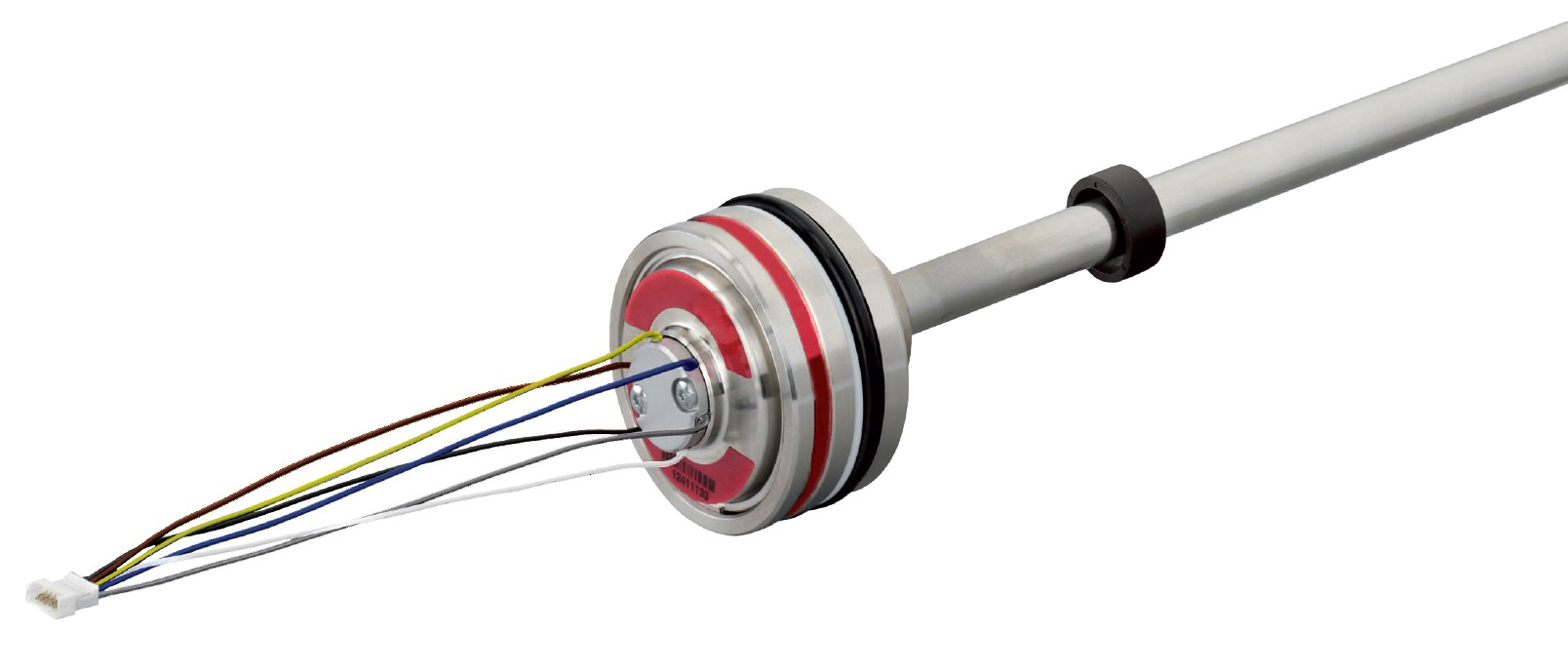
Magnetic Linear Sensors for Position Detection Applications are used to measure linear displacement by detecting changes in a magnetic field along a defined path. In modern motion-control systems, they typically sit at the feedback layer, providing continuous or discrete position information to PLCs, motion controllers, or drives that regulate movement.
These sensors work by pairing a sensing element with a magnet attached to the moving component. As the magnet travels along the sensor’s measurement range, variations in the magnetic field are translated into position data. Because this method does not rely on physical contact or optical visibility, magnetic linear sensors integrate cleanly into motion-control architectures that operate under demanding industrial conditions.
Linear Position Feedback as a Control Requirement
Linear motion without reliable feedback is inherently unstable. Controllers may issue precise commands, but without accurate position data, they cannot confirm whether movement has occurred as intended.
Linear position feedback supports:
- Closed-loop control of actuators and slides
- Repeatable positioning across cycles
- Detection of drift, binding, or mechanical degradation
Magnetic linear sensors provide this feedback in a form that controllers can use consistently, even when environmental conditions fluctuate.
Role in Closed-Loop Motion Control Systems
Closed-loop motion control depends on continuous feedback to correct deviations between commanded and actual movement. Linear sensors are a foundational component of this loop.
Magnetic linear sensors support closed-loop control by:
- Delivering stable position data over the full stroke
- Maintaining signal integrity under vibration
- Reducing noise caused by mechanical wear
Reliable feedback allows controllers to adjust motion smoothly, improving accuracy and reducing mechanical stress.
Environmental Tolerance in Industrial Applications
Many linear motion systems operate in environments where dust, oil mist, moisture, or debris are unavoidable. Optical and mechanical sensing technologies often struggle under these conditions.
Magnetic linear sensors perform well because:
- Magnetic fields are unaffected by surface contamination
- Sealed sensor designs protect internal components
- Performance remains consistent despite environmental exposure
This tolerance makes them suitable for applications such as packaging lines, conveyor systems, and hydraulic actuators.
Advantages in High-Duty-Cycle Equipment
Industrial motion systems often run continuously for extended periods. Sensors exposed to constant movement and vibration must maintain accuracy without frequent adjustment.
Magnetic linear sensors are well suited to high-duty-cycle operation because:
- They operate without physical contact
- There is no friction-induced wear
- Calibration remains stable over time
Long-term stability reduces maintenance demands and unplanned downtime.
Installation Flexibility and Mechanical Integration
Motion-control system design often involves tradeoffs between mechanical constraints and sensing requirements. Sensors that require precise alignment or direct contact can complicate integration.
Magnetic linear sensors offer flexibility by:
- Allowing greater mounting tolerance
- Supporting internal or external installation
- Integrating into compact or enclosed designs
This flexibility simplifies mechanical design and reduces commissioning effort.
Use in Linear Actuators and Cylinders
Linear actuators and cylinders are common in automation, robotics, and process control. Accurate position feedback is essential for repeatable motion and safe operation.
Magnetic linear sensors are frequently used in these applications because they:
- Can be integrated directly into actuator bodies
- Provide continuous position information
- Remain reliable despite internal movement and vibration
Their non-contact nature is particularly valuable in hydraulic and pneumatic systems.
Supporting Incremental Automation Strategies
Many facilities modernize motion systems incrementally rather than through complete replacement. New sensors must coexist with legacy controllers and mechanical designs.
Magnetic linear sensors support incremental upgrades by:
- Working with standard industrial control inputs
- Requiring minimal changes to existing architecture
- Improving feedback quality without redesigning systems
This compatibility aligns with real-world modernization constraints.
Maintenance and Diagnostic Benefits
When motion systems experience performance issues, clear position feedback helps maintenance teams identify root causes quickly.
Magnetic linear sensors assist diagnostics by:
- Providing consistent signals that reflect true movement
- Helping distinguish mechanical issues from control problems
- Reducing ambiguity during calibration or inspection
Faster diagnosis leads to shorter downtime and lower repair costs.
Consistency Across Machines and Lines
In facilities with multiple machines or production lines, consistency in sensing technology simplifies training and maintenance.
Magnetic linear sensors support consistency by:
- Offering uniform behavior across applications
- Enabling standardized configuration practices
- Reducing variation in sensor performance
Standardization improves operational efficiency and reduces error risk.
Human Factors and Operator Confidence
Operators and engineers rely on sensor feedback to assess system health. Inconsistent or noisy signals undermine confidence and lead to unnecessary intervention.
Magnetic linear sensors build confidence by:
- Delivering stable, predictable readings
- Reducing unexplained signal fluctuations
- Supporting intuitive understanding of motion behavior
Clear feedback helps operators make informed decisions.
Comparison With Optical and Mechanical Linear Sensors
Optical linear sensors can offer high resolution but are sensitive to contamination and alignment. Mechanical sensors provide simplicity but suffer from wear and limited lifespan.
Magnetic linear sensors strike a balance by:
- Providing sufficient accuracy for many industrial tasks
- Maintaining reliability in harsh environments
- Avoiding physical contact and optical dependencies
This balance explains their widespread adoption in industrial motion control.
Integration With PLCs and Motion Controllers
Magnetic linear sensors are designed to interface with common industrial control platforms. Their outputs are compatible with PLCs, motion controllers, and drives used in automation systems.
This integration allows:
- Direct use in existing control loops
- Simplified commissioning and scaling
- Easier replacement and spare-parts management
Compatibility reduces long-term system complexity.
Relationship to Motion-Control Fundamentals
Linear position sensing is a core element of motion-control theory. General explanations of motion-control fundamentals, such as those outlined in the Wikipedia overview of motion control, help contextualize why accurate, stable feedback is essential for controlled movement.
Magnetic linear sensors support these principles by providing dependable real-world feedback.
Avoiding Over-Specification in Linear Sensing
Not every application requires extreme resolution or complexity. Over-specifying sensors can increase cost without improving outcomes.
Magnetic linear sensors are appropriate when:
- Environmental robustness is a priority
- Moderate accuracy meets process requirements
- Long-term reliability matters more than fine resolution
Matching sensor capability to actual needs improves system performance.
Supporting Safety and End-Position Detection
In addition to continuous measurement, linear sensors are often used for end-position detection and safety functions.
Magnetic linear sensors support safety by:
- Providing reliable confirmation of position limits
- Reducing false signals caused by contamination
- Supporting interlocks and safe motion boundaries
Reliable detection helps prevent mechanical damage and unsafe conditions.
Scalability Across Facilities
As organizations scale automation across sites, repeatable sensing solutions reduce complexity.
Magnetic linear sensors support scalability by:
- Enabling standardized designs
- Simplifying training across facilities
- Supporting consistent maintenance practices
Scalability improves long-term operational control.
Conclusion: A Practical Role in Modern Motion-Control Systems
Magnetic linear sensors for position detection applications play a defined and practical role in modern motion-control systems. By delivering reliable, non-contact linear position feedback, they support closed-loop control, reduce maintenance effort, and perform consistently in harsh industrial environments.
Their flexibility, durability, and integration compatibility make them well suited to real-world automation challenges. Rather than replacing all other linear sensing technologies, magnetic linear sensors complement them, providing a robust solution where environmental tolerance, stability, and long-term reliability are critical. In modern motion-control architectures, they remain an essential component of dependable industrial design.









