


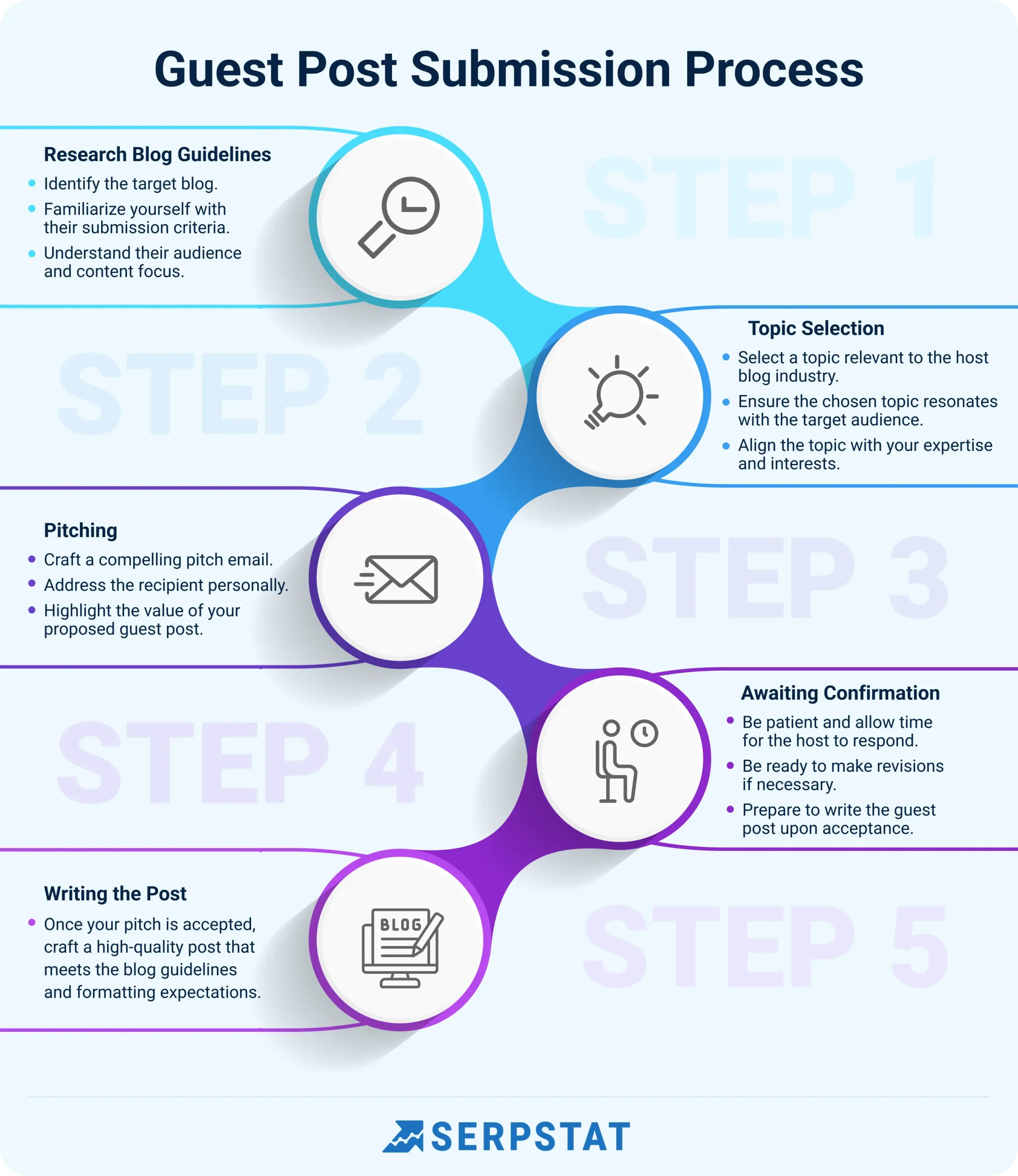
Guest posting works best when a contribution gives readers something they can use, not when it exists only to place a link. To create useful marketing guest post content, start with the audience’s questions and the publisher’s editorial standards. A well-planned article can introduce a fresh perspective, build credibility, and bring relevant readers to your business over time.


That outcome depends on more than the number of posts published or the authority score of a website. Strong campaigns combine careful publisher selection, a worthwhile subject, a realistic budget, and a way to assess results. Treat each placement as part of a broader marketing effort, and the work becomes more consistent and easier to improve.
Choose publishers for audience fit
It can be tempting to judge a potential site by a single metric such as domain authority or domain rating. Those figures may offer context, but they do not show whether the publication reaches people who care about your subject. A smaller specialist site with an active, relevant readership may be more valuable than a larger site whose audience has little connection to your offer.
Review the publisher’s recent articles before pitching. Consider the topics it covers, the level of detail readers expect, and whether the writing is practical, analytical, or opinion-led. Check that your expertise fits naturally into that environment. Also look at signs of editorial care: clear authorship, useful original content, and a consistent focus. If every post appears unrelated or written primarily to host links, the placement may do little for readers or your reputation.
Find an angle worth reading
A topic that matters to your business is not automatically a strong guest post idea. The article needs to solve a problem, explain a decision, or offer a perspective that readers will not find repeated across dozens of similar pages. Start by identifying a specific audience need. For example, instead of writing broadly about online marketing, explore how a small team can decide which campaign metrics deserve attention.
Useful angles often come from real questions asked by customers, lessons learned during projects, or common mistakes that waste time and money. Make the scope manageable, then support your advice with clear examples and steps. Avoid turning the article into a disguised sales pitch. A brief mention of your service may be appropriate when it genuinely illustrates a point, but the main value should remain with the reader.
For a more structured approach, this guest posting campaign guide covers publisher selection, content angles, budgeting, and ways to evaluate placements.
Set standards before work begins
Guest content is easier to manage when expectations are clear from the outset. Before commissioning a draft, agree on the audience, article purpose, desired length, editorial requirements, delivery dates, and revision process. Confirm whether the publisher allows a relevant author biography or contextual link, and make sure any link supports the article rather than interrupting it.
Give writers a useful brief, not just a keyword and a word count. Include the reader problem, the key points to cover, any claims that need evidence, and the tone the publication expects. At the same time, allow room for the writer to shape a natural argument. Overly rigid instructions can produce repetitive prose that feels assembled for a search engine instead of written for people.
Budget for quality and consistency
Costs vary according to the publisher’s audience, editorial process, and the work involved in creating a suitable article. A low price is not necessarily a bargain if the placement is irrelevant or the draft requires extensive rewriting. Equally, a high fee does not guarantee a useful outcome. Compare the likely value of a placement with your campaign goals, and decide what you can spend across several opportunities rather than concentrating the entire budget on one post.
Include the full cost of the work: research, writing, editing, publisher fees, coordination, and any follow-up needed. Establishing a reasonable budget helps prevent rushed decisions and makes it easier to compare opportunities on consistent terms.
Measure results and learn from them
Decide what success means before a post goes live. Depending on the goal, you might track referral visits, engaged sessions, inquiries, assisted conversions, or the quality of new audience relationships. Search visibility can be part of the picture, but it should not be the only measure. A relevant article may build recognition or send a modest stream of valuable visitors without producing an immediate ranking change.
Record each placement, publication date, topic, cost, and performance over a suitable period. Compare results across publishers and content angles, while allowing enough time for readers to discover the work. Repeat placements that consistently reach the right audience and meet editorial standards. If an article attracts little attention, examine the topic, presentation, and distribution before assuming that guest posting as a whole has failed.
Build a process you can maintain
As a campaign grows, planning and delivery can place pressure on a small marketing team. Some agencies use a seo fulfilment model that combines strategy and client communication in-house with specialist delivery from freelancers. The important part is keeping quality control, reporting, and responsibility clear rather than handing off work without oversight.
For teams considering that approach, Osdire’s explanation of a white-label SEO fulfilment model outlines how agencies can work with freelancers and organize delivery. Whichever arrangement you choose, define who checks facts, edits drafts, handles publisher communication, and reviews results. A dependable process protects both the client relationship and the reader’s experience.
Final thoughts
Effective guest posting is not a volume contest. It is a disciplined way to share useful expertise with an audience that has a reason to care. Choose publishers for relevance, develop specific ideas, set realistic standards and budgets, then review what each placement actually contributes. With those habits in place, guest content can strengthen your reputation while giving readers information worth their time.









