


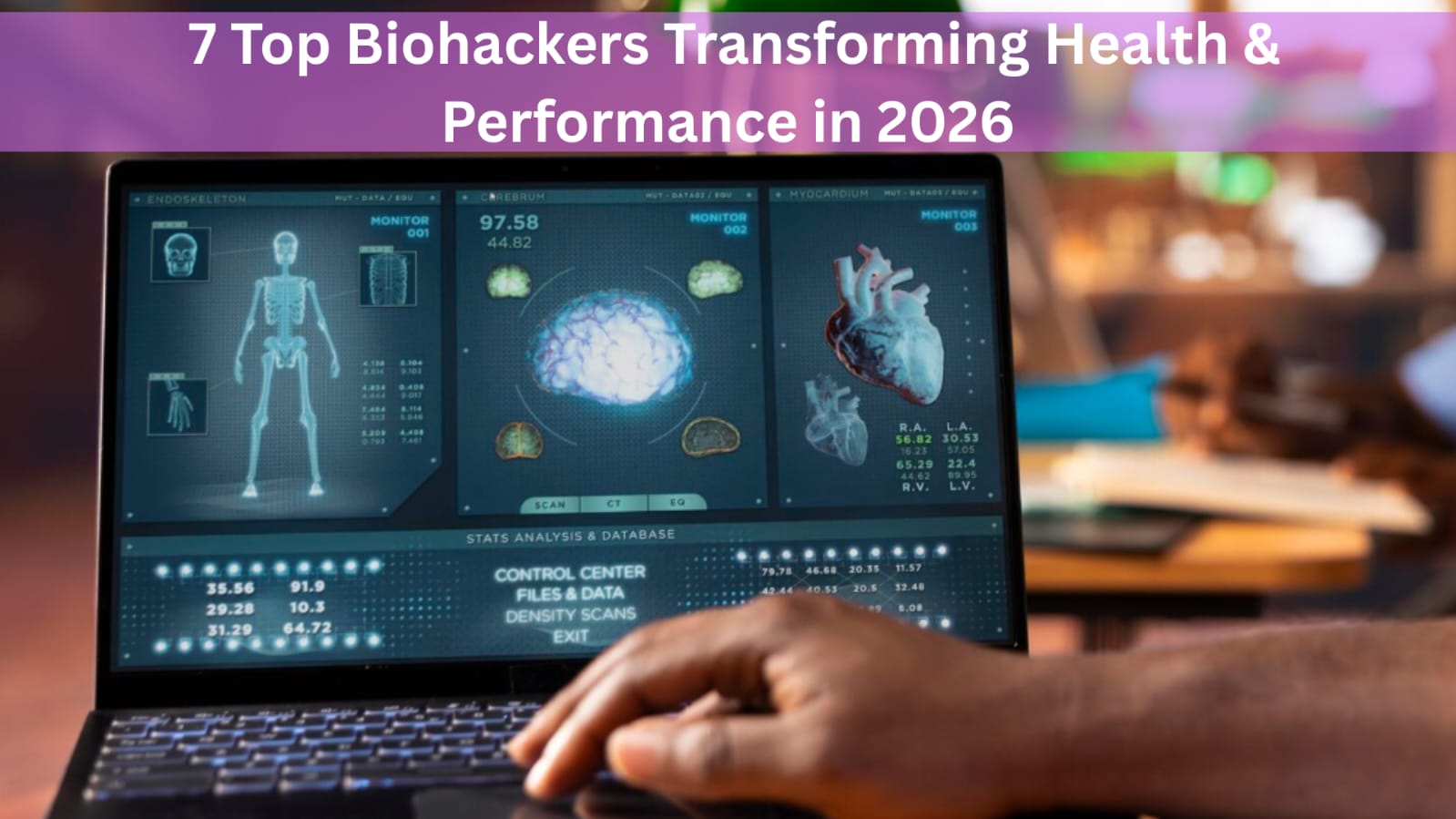
Optimizing health and performance in the present day can be challenging. You have already been working out regularly, eating healthily, or following the sleep tracking, but still, you have fatigue, lack of concentration, slow adaptation, or unstable performance.


The frustration is not normally due to a deficit of effort–rather, it is more due to a deficit of personalization. The generic wellness information does not account for your unique responses to stress, nutrition, technology, and lifestyle.
This is the reason why there has been a growing interest in biohacking blogs and expert-led optimization. Biohacking puts the emphasis on the results rather than the trends. Unlike guessing, it focuses on testing, monitoring, and fine-tuning strategies compatible with your biology.
Coaches are the most trustworthy sources of information because they actively experiment, analyze the data, and present realistic conclusions based on evidence.
Here is the list of seven coaches who are modernizing the future of performance optimization and longevity in 2026 and who have a unique, practical approach to biohacking coaching.
1. Nick Urban

Nick Urban, one of the top biohackers, is a neurotech enthusiast and performance consultant who analyzes health and wellness tools in a data-driven, experimental manner. Urban follows root-cause and holistic methodologies. His research is on cognitive improvement, recovery maximization, longevity, boosting energy levels, and long-term biological resilience.
Nick uniquely combines time-tested insights from ancient medical systems such as Ayurveda, with state-of-the-art biohacking protocols. He coined the term BioHarmony framework to evaluate a supplement, technology, intervention, or protocols’ benefit versus risk. Working with the body’s innate intelligence instead of fighting it for powerful, long-term results.
Rather than encouraging short-term hacks, he focuses on the mechanisms, outcomes, and individual bio-variability.
Clients in Nick’s high-performance longevity coaching program learn exactly how to apply the best interventions for their unique lifestyle and biology.
Overall, his practical experiments and transparent analysis have made Outliyr one of the best biohacking blogs for evidence-based decisions.
2. Dave Asprey
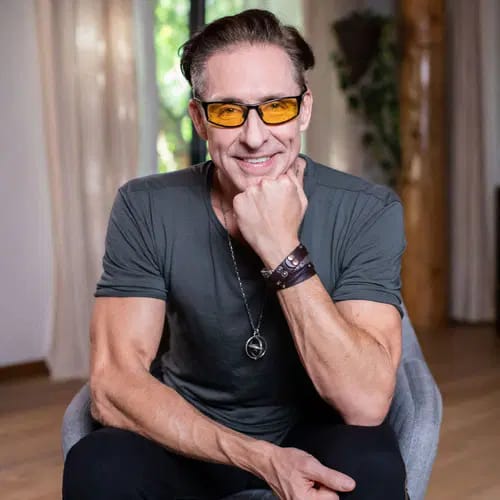
Dave Asprey has become known as the pioneer who has brought biohacking to the mainstream crowd. His work is focused on enhancing energy, mental acuity, and lifespan through nutrition, supplementation, and environmental optimization as a founder of Bulletproof.
The philosophy of Asprey focuses on minimizing redundant biological stress. Intermittent fasting, planned fat consumption, and specific supplementation are aimed at stabilizing energy instead of causing spikes and crashes.
He also puts emphasis on the quality of sleep, circadian synchrony, and minimizing environmental toxins as some of the external leverages to performance.
His contribution to the field has been long-lasting and has influenced leading biohacking blogs in their approaches to longevity and cognitive optimization, making his work particularly relevant to anyone seeking scalable, lifestyle-compatible biohacking systems.
3. Ben Greenfield
Ben Greenfield has an approach to biohacking based on performance science and longevity. His coaching unites the elements of strength training, mobility, recovery measures, and nutrition into a unified system that is adapted to the physiology of an individual.
Instead of fixating on short-term gains, Ben focuses on sustainable approaches. Cold exposure, infrared therapy, and structured recovery are some of the practices that are combined with the basic principles of fitness.
His work attracts an audience seeking a biohack coach focused on long-term resilience and peak performance.
4. Dr. John Douillard
Dr. John Douillard integrates Ayurvedic wisdom with the modern science of wellness. His strategy is based on digestion, alignment of the circadian rhythm, and effectiveness of metabolism as the pillars of health.
He highlights the importance of daily routines, breathing exercises, and seasonal foods in proving that optimization does not necessarily need to be done with the aid of advanced technology. His work appeals to biohacking blogs’ readers, who would like to have rhythm-based, physiology-aligned strategies rooted in tradition and science.
5. Paul Chek
Paul Chek is known for his holistic view of human performance. His coaching emphasizes movement quality, posture, stress management, and nutrition as interconnected systems rather than isolated variables.
Through detailed assessments, Paul helps clients identify root causes of dysfunction that limit recovery and performance. His philosophy reinforces that effective biohacking coaching must address physical, mental, and emotional inputs together to create lasting change.
6. Jay Feldman
Jay Feldman blends mental performance training with physical conditioning. His coaching focuses on stress regulation, sleep quality, and cognitive resilience—particularly for individuals operating in high-pressure environments.
By using wearable data and structured feedback, Jay helps clients understand how nervous system overload affects recovery, focus, and motivation. Rather than pushing intensity, his strategies emphasize consistency, recovery, and adaptive capacity.
7. Dr. Kelly Brogan
Dr. Kelly Brogan brings a mind-body perspective to biohacking, emphasizing the connection between mental health, nutrition, and lifestyle. Her work focuses on restoring balance through foundational changes rather than reliance on short-term interventions.
By addressing biological, environmental, and emotional factors together, she supports sustainable improvements in clarity, resilience, and overall performance.
Biohacking Coaching Is Redefining Health and Performance
Health optimization is most effective when guided by experts who combine science, experience, and personalization. These seven coaches—Nick Urban, Dave Asprey, Ben Greenfield, Dr. John Douillard, Paul Chek, Jay Feldman, and Dr. Kelly Brogan—demonstrate how thoughtful biohacking can produce meaningful, measurable outcomes.
From neurofeedback and infrared saunas to movement, nutrition, and cognitive resilience, their approaches address fatigue, brain fog, recovery challenges, and longevity goals. Learning from these leaders allows you to make informed decisions and apply strategies that support sustainable performance in 2026 and beyond.









