The garage has undergone a quiet revolution over the past two decades. Once considered purely utilitarian—a place to park vehicles and store forgotten belongings—the modern garage has evolved into an extension of the home itself. At the center of this transformation lies a single material choice that changed everything: polished concrete.


From Industrial Floors to Residential Spaces
Polished concrete originated in industrial and commercial settings during the 1990s. Warehouse managers and factory operators discovered that grinding and polishing existing concrete slabs created surfaces that were easier to maintain and more resistant to heavy machinery traffic. The technique involved progressively finer diamond grinding tools that transformed rough, porous concrete into a smooth, reflective surface.
By the early 2000s, architects and homeowners began noticing these floors in retail spaces and showrooms. The clean, minimalist appearance aligned perfectly with emerging design trends that favored simplicity and raw materials. It was only a matter of time before this industrial aesthetic found its way into residential garages.
The shift represented more than a surface-level change. It signaled a fundamental rethinking of what a garage could be. Rather than accepting the standard gray slab as an afterthought, homeowners started viewing their garage floors as design opportunities.
The Aesthetic Appeal of Reflective Surfaces
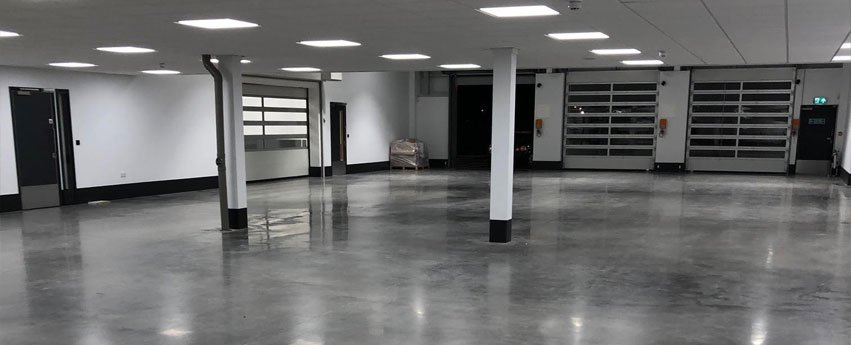
One of the most striking characteristics of polished concrete is its ability to reflect light. The grinding and polishing process densifies the concrete surface and creates a sheen that can range from a subtle satin finish to a high-gloss mirror effect. This reflectivity has practical implications for garage design.
Natural and artificial light bounces off polished floors, brightening spaces that traditionally suffered from poor illumination. A garage with a polished floor requires fewer light fixtures to achieve the same visibility as one with a matte surface. The effect creates an atmosphere that feels less like a storage area and more like a curated space.
The material also offers unexpected visual depth. Depending on the aggregate composition of the original concrete, polishing can reveal patterns of stone, sand, and mineral deposits embedded in the slab. These natural variations give each floor a unique character that cannot be replicated by coatings or overlays. Some homeowners specifically request exposed aggregate finishes to emphasize these organic textures.
Color options have expanded considerably as well. While natural gray remains popular for its industrial authenticity, integral dyes and chemical stains allow for customization. Earth tones, blacks, and even subtle blues can be achieved without sacrificing the material’s inherent qualities.
Durability That Justifies the Investment
Beyond aesthetics, polished concrete addresses the practical demands placed on garage floors. Vehicles track in water, oil, road salt, and debris. Tools get dropped. Heavy equipment gets dragged across surfaces. Traditional concrete, with its porous nature, absorbs these insults and shows wear quickly.
The polishing process fundamentally changes the concrete’s surface structure. Densifying agents penetrate the material and react chemically to fill microscopic pores. The result is a surface that resists staining, repels moisture, and withstands abrasion far better than untreated concrete or epoxy coatings.
This durability translates to longevity. A properly installed and maintained polished concrete floor can last decades without requiring replacement. Unlike epoxy coatings that may peel or chip under heavy use, polished concrete wears gradually and can be refinished to restore its original appearance. For homeowners interested in understanding what professional installation involves, providers of polished concrete floors offer detailed explanations of the process and its long-term benefits.
The low maintenance requirements further contribute to the material’s practical appeal. Routine cleaning involves little more than dust mopping and occasional damp mopping. There are no waxes to reapply, no sealers to refresh annually, and no concerns about coating adhesion failure.
Influence on Broader Garage Design Trends
The adoption of polished concrete has influenced other aspects of garage design. When the floor becomes a design element rather than an afterthought, other choices follow suit. Cabinetry, wall treatments, and lighting fixtures are selected with greater intentionality.
The clean lines of a polished floor encourage minimalist organization systems. Clutter becomes more visually disruptive against a refined surface, motivating homeowners to invest in storage solutions that maintain the space’s aesthetic coherence. Wall-mounted cabinets, slat wall systems, and ceiling-mounted storage keep items off the floor and preserve the visual continuity of the polished surface.
Garage conversions have also benefited from this flooring option. Home gyms, workshops, and hobby spaces built within garages gain legitimacy when the floor matches the quality of interior living spaces. The boundary between garage and home becomes less defined, both functionally and visually.
A Material That Shaped Expectations
Polished concrete did not merely offer a new flooring option for garages. It redefined what homeowners expect from these spaces. The material demonstrated that durability and beauty need not be mutually exclusive, that industrial origins do not preclude residential elegance, and that a garage floor can be as thoughtfully designed as any room in the house.
This influence continues to shape construction and renovation decisions. Builders increasingly offer polished concrete as a standard upgrade rather than a specialty request. The material has moved from architectural novelty to established practice, a testament to its genuine merits rather than passing trends.
The modern garage, with its bright surfaces and intentional design, owes much of its character to this single material innovation.