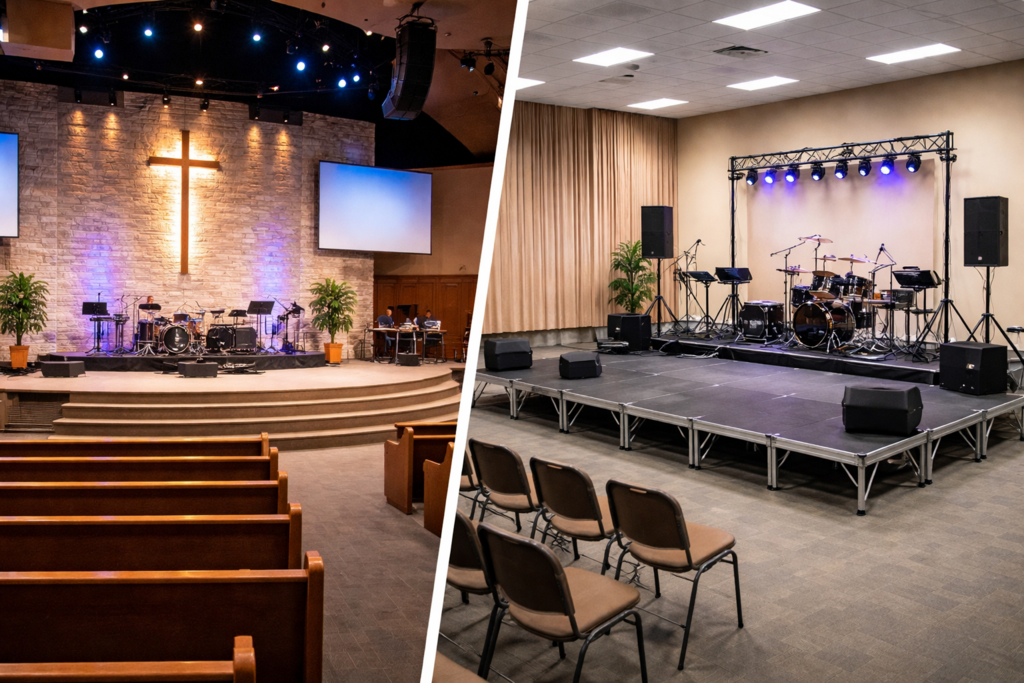
Modern church worship spaces are evolving rapidly. Congregations today host not only traditional services, but also worship nights, youth events, conferences, seasonal programs, and community outreach gatherings. As churches adapt to these changing needs, one important question often arises: should a church invest in a portable stage or a concert stage for its worship space?


This decision goes far beyond aesthetics. It affects how worship services are conducted, how flexible a church can be in hosting events, how safely performers and speakers can lead, and how effectively the space serves the congregation and wider community. Understanding the trade-offs between different staging approaches is essential for church leaders, worship pastors, and facilities teams who want to make informed, long-term decisions.
Understanding the Role of Staging in Church Worship
In a church environment, staging serves a unique purpose. Unlike commercial venues, churches balance spiritual goals with practical considerations. A stage is not just a platform—it shapes visibility, acoustics, engagement, and the overall worship experience. It must support musicians, speakers, choirs, and sometimes theatrical presentations, while remaining welcoming and accessible.
As worship styles become more dynamic, staging choices must also accommodate evolving production needs. Lighting, sound equipment, visual media, and movement on stage all influence how effectively a message is delivered. This makes the choice between a permanent installation and a flexible setup particularly significant.
Fixed Staging: Stability and Visual Continuity
A fixed performance platform is often associated with traditional sanctuaries or large worship centers. Permanently built into the structure, this type of setup offers consistency and a strong visual identity.
Advantages of a Fixed Setup
One of the primary strengths of a fixed installation is stability. Because it is built as part of the building, it can support heavier equipment such as large instruments, speaker systems, and extensive lighting rigs. This can be especially valuable for churches that host regular large-scale worship services or concerts with full bands and choirs.
Another advantage is visual continuity. A permanent structure allows designers to integrate materials, finishes, and architectural elements that align with the church’s identity. Over time, this can create a recognizable worship environment that congregants associate with consistency and reverence.
From a technical standpoint, fixed platforms often allow for more predictable acoustics and cable management. Sound engineers and worship teams benefit from knowing that the layout remains the same week after week.
Challenges of a Fixed Setup
Despite these benefits, fixed staging presents limitations. The most significant challenge is lack of flexibility. Once built, the structure cannot easily adapt to different event formats. Churches that wish to rearrange seating, host community events, or transform the space for seasonal programs may find a permanent installation restrictive.
Cost is another major consideration. Construction, design, permits, and potential renovations represent a significant upfront investment. For smaller churches or those with limited budgets, this expense can divert funds from other ministry priorities.
Additionally, permanent platforms can unintentionally create barriers. If not designed carefully, they may reduce accessibility for speakers or performers with mobility needs, or create a physical distance that affects how connected the congregation feels during worship.
Flexible Staging: Adaptability and Multi-Purpose Use
In contrast, flexible staging systems—often referred to as a mobile stage or modular stage—have gained popularity among churches seeking adaptability. These systems are designed to be assembled, reconfigured, and stored as needed.
Advantages of a Flexible Approach
Flexibility is the defining benefit. Churches that host a variety of activities can adapt the setup to suit each event. A worship service may require a raised platform for musicians, while a youth gathering or community meeting might benefit from an open floor plan.
This adaptability supports modern ministry goals. Many churches today view their buildings as community hubs rather than single-purpose sanctuaries. Being able to transform a worship space into an event stage for conferences, outreach programs, or seasonal productions increases the building’s overall value.
Cost efficiency is another important factor. While quality modular systems represent an investment, they often cost less than permanent construction and avoid renovation-related expenses. Over time, the ability to reuse and reconfigure components can provide better long-term value.
Storage and portability also make these systems appealing. Churches that rent spaces, share facilities, or host outdoor services benefit from equipment that can be transported and used in different locations.
Challenges of a Flexible Approach
Flexibility, however, comes with trade-offs. Setup and teardown require time and trained volunteers or staff. For churches with limited manpower, this can place additional strain on teams, especially for frequent events.
Durability and load capacity must also be carefully evaluated. Not all modular systems are designed for heavy equipment or high-traffic use. Choosing the wrong system can lead to safety concerns or performance limitations.
There is also the question of visual consistency. Because these setups are temporary by nature, achieving a polished, cohesive look may require additional accessories such as skirting, railings, or custom finishes.
Worship Experience and Congregational Impact
Beyond technical and financial factors, churches must consider how staging choices affect the worship experience itself. The goal of worship staging is not to impress, but to support meaningful engagement.
A permanent structure can create a strong focal point, which may enhance clarity and visibility for larger congregations. However, it can also reinforce a sense of separation between leaders and attendees if not thoughtfully designed.
Flexible systems allow churches to experiment with layouts that bring leaders closer to the congregation. This can foster intimacy and participation, especially in smaller services or prayer-focused gatherings. The ability to lower or remove the platform altogether may also help create inclusive environments for discussions, testimonies, or communal worship.
Technical and Operational Considerations
Sound, lighting, and visual media play a growing role in modern worship. A fixed performance stage often simplifies technical planning, as wiring and equipment placement remain constant. This predictability can reduce errors and streamline rehearsals.
Flexible systems, on the other hand, require adaptable technical solutions. Cable routing, lighting angles, and speaker placement may change depending on the configuration. While this demands more planning, it also encourages creative use of technology and space.
Churches must balance these operational demands with their available resources. A technically complex setup may offer greater creative freedom, but only if the team has the skills and time to manage it effectively.
Safety, Accessibility, and Compliance
Safety is a non-negotiable factor in any church environment. Permanent installations are typically built to meet local building codes, providing reassurance regarding load capacity and structural integrity.
Modular systems must be evaluated carefully to ensure they meet safety standards, especially when used frequently or with multiple configurations. Proper training, regular inspections, and clear setup procedures are essential.
Accessibility is equally important. Churches are increasingly mindful of creating inclusive spaces for all members. Flexible staging can make it easier to adjust heights or layouts to accommodate different needs, while permanent structures require thoughtful design from the outset.
Long-Term Vision and Stewardship
Ultimately, the choice between fixed and flexible staging reflects a church’s long-term vision. Churches committed to a single worship format may benefit from the permanence and stability of a built-in solution. Those embracing adaptability and outreach may find greater alignment with reconfigurable systems.
Stewardship also plays a role. Church leaders must consider not only immediate needs, but how resources are allocated over time. A solution that supports multiple ministries and events may offer greater overall value, even if it requires more operational effort.
Finding the Right Balance
There is no universally correct answer. Some churches successfully combine both approaches, maintaining a modest permanent platform while supplementing it with modular elements for special events. This hybrid strategy allows for consistency without sacrificing flexibility.
The key is intentional decision-making. By evaluating worship style, congregation size, event frequency, volunteer capacity, and long-term goals, churches can choose a staging approach that supports both practical needs and spiritual mission.
Final Thoughts
Choosing between a fixed setup and a flexible event stage is not merely a technical decision—it is a ministry decision. The right choice enhances worship, supports community engagement, and reflects responsible stewardship. By understanding the strengths, limitations, and impacts of each approach, churches can create spaces that serve their congregations today while remaining adaptable for the future.