


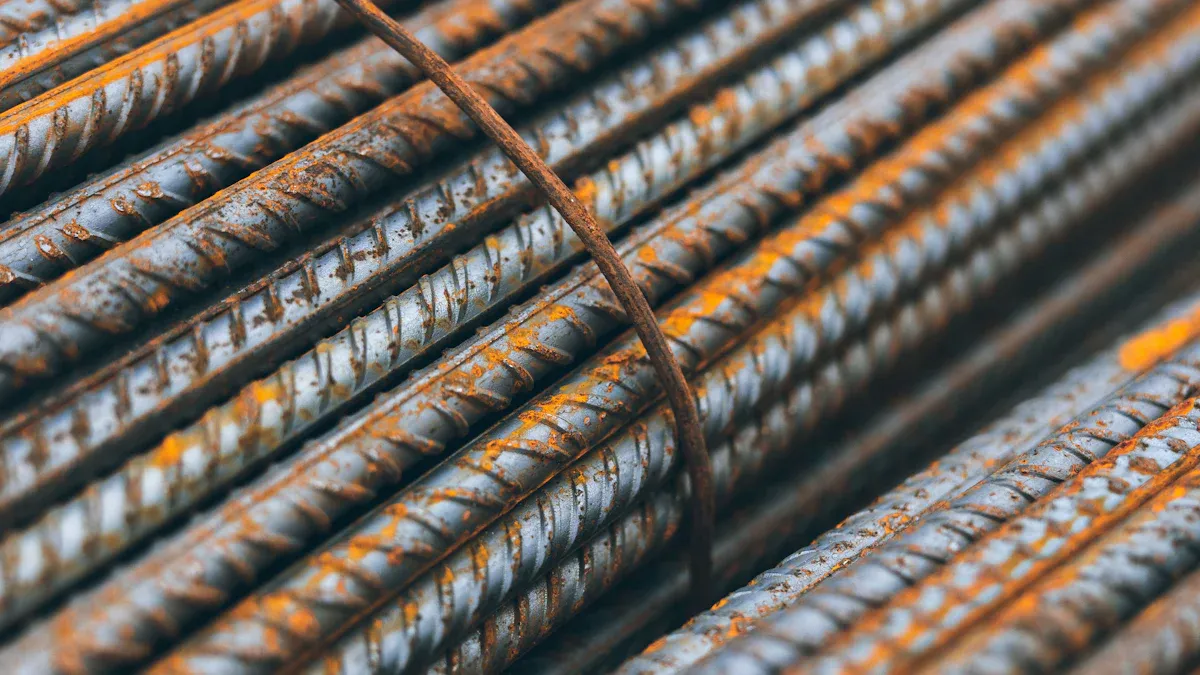
Some materials shout for attention. Big beams. Heavy columns. Obvious strength.
Others just get on with the job.


T Bar Steel falls firmly into the second category.
It rarely headlines a design discussion. It doesn’t look dramatic in drawings. Yet walk through warehouses, plant rooms, mezzanines, and platforms, and you’ll see it everywhere. Doing work most people don’t notice. Supporting loads. Holding alignment and keeping structures honest.
And that’s precisely why it keeps being specified.
The Shape That Explains Everything
At first glance, T Bar Steel looks almost too simple. A vertical stem. A horizontal flange. That’s it.
But that shape does something clever. It distributes load efficiently while staying relatively light. The vertical section takes compression. The flange resists bending. Together, they provide strength without bulk.
Engineers like that. Fabricators appreciate it. Installers definitely notice it when things line up easily.
Where T Bar Steel Fits Best
You’ll often find T Bar Steel in spaces with limited space. Mezzanine floors. Edge supports. Framing where depth is limited but strength is still required.
It’s also common in secondary structural elements. Not the hero beam, but the one that makes the hero beam work properly.
That supporting role is why it’s sometimes overlooked. But remove it, and things get complicated fast.
Less Steel, Smarter Use
One of the quiet advantages of T Bar Steel is efficiency. It often achieves the same structural outcome as heavier sections using less material.
That doesn’t just save steel. It reduces weight. This can minimize footing requirements. This can reduce the overall project cost.
These savings don’t show up as a single dramatic number. They show up as a smoother build. Fewer compromises. Fewer adjustments on site.
Fabrication Without the Fuss
From a fabrication perspective, T Bar Steel is friendly. It cuts cleanly. Welds predictably. Aligns well with other sections.
Because the geometry is straightforward, tolerances are easier to manage. That means fewer surprises when parts arrive on site. Less grinding. Less forcing things into place.
Fabricators appreciate materials that behave consistently. T Bar Steel usually does.
Design Clarity Matters More Than People Think
Designers sometimes default to heavier sections simply because they’re familiar. Bigger feels safer.
But T Bar Steel rewards thoughtful design. When loads are understood and spans are realistic, it often becomes the cleaner solution.
Not because it’s cheaper by default. But because it’s appropriate.
There’s a difference.
Strength Where It’s Needed
The strength of T Bar Steel isn’t just about load ratings. It’s about directional performance.
That vertical stem gives excellent resistance in one plane. The flange stabilises in another. Used correctly, it creates rigidity without overengineering.
Used carelessly, like any material, it underperforms.
This is where experience matters—knowing when a T section works and when another profile is better.
Australian Conditions Are Part of the Equation
In Australia, materials deal with heat, moisture, coastal exposure, and long service lives.
T Bar Steel performs well when specified with the right grade and finish. Galvanising. Protective coatings. Correct detailing to avoid water traps.
Local suppliers understand this context. That matters more than people realise, especially in regional or coastal projects.
Cost Is About More Than the Invoice
It’s tempting to compare steel purely on price per metre. But real cost includes fabrication time, installation ease, and long-term performance.
T Bar Steel often reduces complexity—fewer components. Cleaner joins—faster installation.
Those efficiencies don’t always show up in early estimates. They show up when schedules hold and labour hours stay controlled.
When T Bar Steel Is Not the Answer
It’s worth being clear. T Bar Steel is not a universal solution.
Heavy primary beams. Long unsupported spans. High torsional loads.
These situations demand other sections. And a good supplier or engineer will say that without hesitation.
The strength of T Bar Steel lies in using it where it makes sense, not everywhere.
Why It Keeps Appearing in Smart Projects
Projects that run smoothly often have something in common. Materials are chosen for function, not habit.
T Bar Steel appears repeatedly in these builds. Not because it’s trendy. Because it works.
It integrates well with other sections. It supports without dominating. It does what it’s supposed to do and stays out of the way.
That’s not glamorous. But it’s effective.
Specifying It Correctly Makes All the Difference
Correct specification matters. Size. Grade. Finish. Connection details.
When T Bar Steel is specified clearly, everything downstream improves. Fabrication. Delivery. Installation.
Ambiguity creates delays. Precision creates momentum.
The Quiet Backbone of Many Structures
If you walk through an industrial site and look past the obvious elements, you’ll start noticing patterns. Repetition. Consistency. Efficient use of materials.
T Bar Steel is often part of that pattern. Holding things straight, taking a load, and allowing other components to do their job correctly.
It doesn’t ask for attention. It doesn’t need it.
Final Thought
Not every structural solution needs to be bold. Some just need to be right.
T Bar Steel from NewGen Steel continues to earn its place in Australian construction and fabrication by balancing strength, efficiency, and practicality. It supports without excess. Performs without drama.
And in an industry where complications are easy to create, that quiet reliability is worth a lot more than it seems at first glance.









