


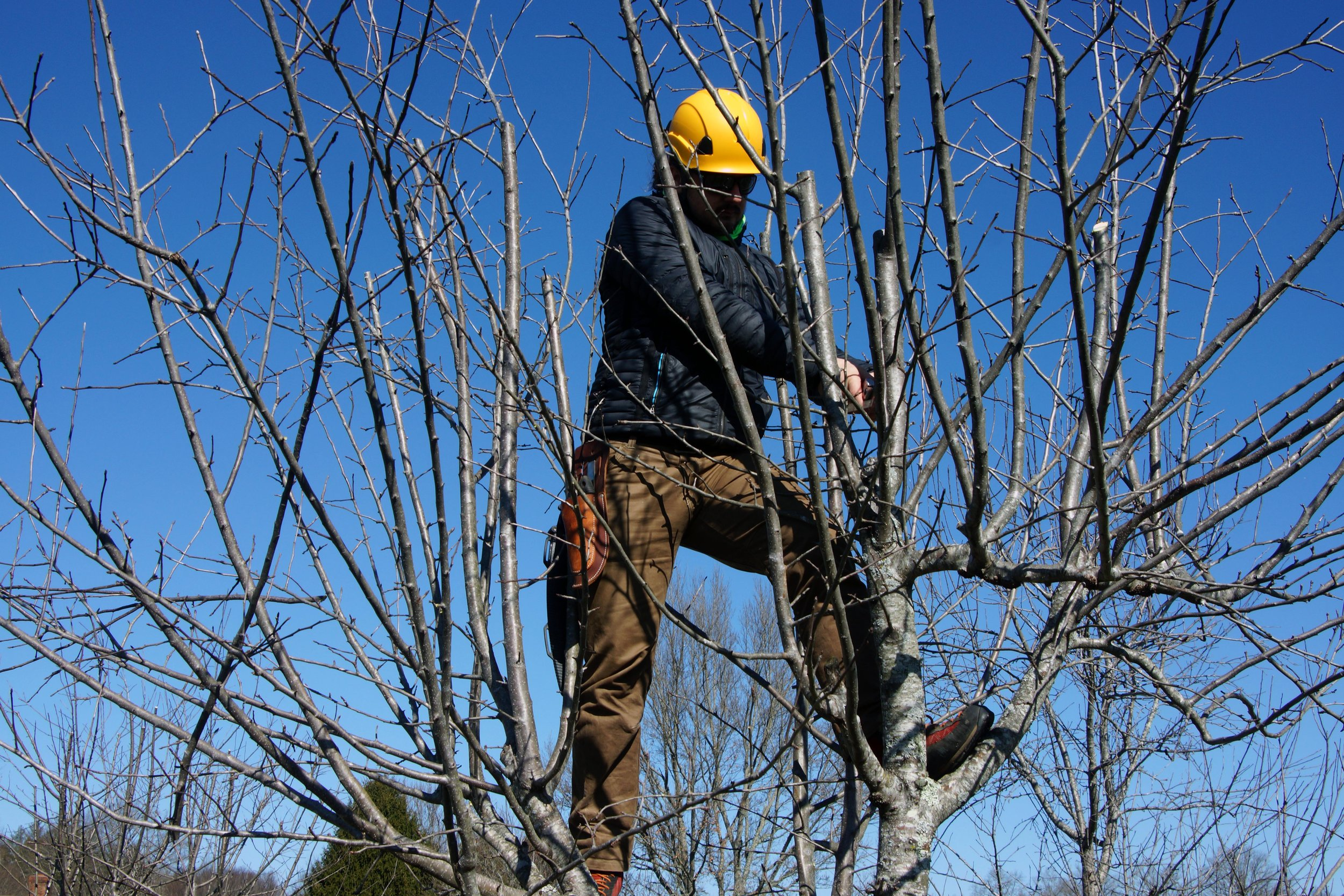
Structural pruning is an early training method that helps a young tree grow into a strong, stable form rather than a weak shape that splits during storms. Many trees fail later in life because the structure was never guided when the branches were small and easy to correct. Tight branch angles, multiple competing leaders, and heavy limbs that start too low can all create weak attachment points that are prone to cracking as the tree gains weight. The goal of structural pruning is not to make the tree look trimmed. The goal is to shape the framework so that one central leader and well-spaced scaffold branches can carry future growth without creating stress points. When pruning is done early and thoughtfully, the cuts are smaller, the tree heals faster, and the risk of major limb failure years later drops significantly.


Shape now, save later.
- What Structural Pruning Targets in the First Years
Young trees grow quickly, and they often produce several vigorous shoots that compete for dominance. Structural pruning first focuses on identifying the main trunk leader and reducing competition from co-dominant stems. Co-dominant stems are two upright leaders of similar size that form a narrow V shape, which can trap bark between them and create a weak union that splits as the tree matures. By selecting one leader and subordinating the others through reduction cuts, you encourage a stronger trunk line without removing too much foliage at once. Next, structural pruning looks at scaffold branches, the major limbs that form the permanent framework. These should be spaced vertically along the trunk, not clustered at one point, and they should have wide attachment angles that distribute stress. Pruning also addresses temporary branches lower on the trunk. Some lower branches are useful early because they thicken the trunk and protect the bark from sunscald. Still, they should be managed so they do not become heavy permanent limbs that interfere with walkways, vehicles, or future canopy clearance. The overall approach is gradual and planned, with small changes repeated over time rather than drastic cuts.
- Timing, Frequency, and How Much to Remove
Structural pruning works best when it is scheduled rather than reactive. Many young landscape trees benefit from light pruning every year or every other year during their early establishment period. Timing depends on species and climate, but the general idea is to avoid heavy pruning during extreme heat or drought stress and to focus on seasons when the tree can recover steadily. A common guideline is to avoid removing too much live foliage at once, because leaves are the tree’s energy source. Over-pruning can slow growth, reduce root development, and trigger weak, fast regrowth that creates new structural problems. Instead, use targeted cuts that reduce competing leaders, remove crossing branches, and shorten overly vigorous limbs that are outpacing the rest of the framework. If you are working with a service such as Wiese Tree Service LLC of Mobile, the conversation often centers on a multi-year plan that sets a clear leader, improves branch spacing, and reduces future risk with small cuts rather than one aggressive session. A planned cadence keeps the tree balanced and prevents the need for large removal cuts later, which are harder for the tree to seal and can increase decay risk.
- Key Techniques: Subordination, Spacing, and Branch Angle Management
Three techniques recur in structural pruning plans. The first is subordination, which means reducing the length and vigor of a competing stem or branch without removing it entirely. This keeps foliage on the tree while shifting dominance toward the chosen leader. The second is spacing. Scaffold branches should be distributed along the trunk so the tree does not develop a top-heavy cluster where all major limbs originate from the same height. Poor spacing creates a weak zone where multiple large limbs compete for the same wood tissue. The third technique is managing branch angles. Branches attached at wider angles generally form stronger unions, while narrow angles often develop included bark that acts like a wedge. You cannot always change the angle, but you can influence which branches become permanent by selecting those with better attachment and reducing or removing those with poor angles. Structural pruning also removes rubbing branches and those growing toward the interior, where they will cross later. When making cuts, proper placement matters. Cuts should be made at the branch collar to support natural sealing, and stubs should be avoided because they die back and invite decay. Clean, well-placed cuts support long-term strength.
Strong Structure Starts Early
Structural pruning of young trees helps prevent future breakage by guiding growth while branches are small and easy to correct. Selecting a clear leader, reducing co-dominant stems, and developing well-spaced scaffold branches creates a framework that handles wind and weight more safely as the tree matures. Regular light pruning sessions, timed to support recovery, reduce the need for large cuts later and help the tree keep a balanced canopy. Techniques like subordination, spacing management, and attention to branch angles build strength at the attachment points where failures often begin. When structural pruning is done early, the tree grows into a stable form that needs fewer major interventions, withstands storms better, and remains safer around homes and walkways for years.
Wiese Tree Service LLC of Mobile








