


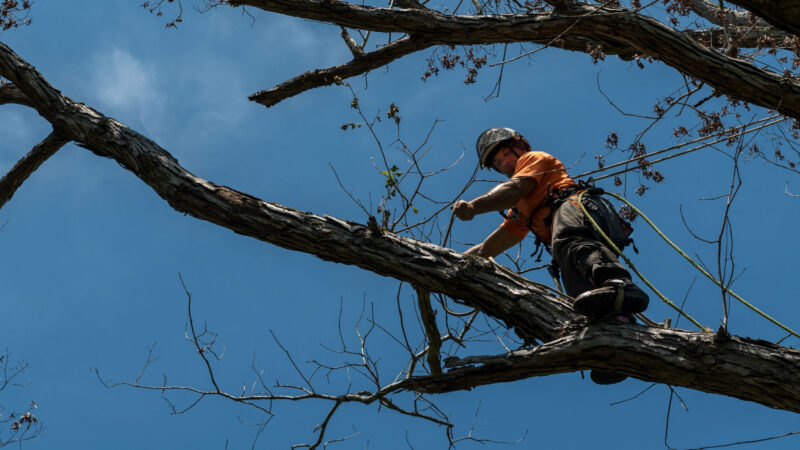
Deadwood removal sounds simple, because it often starts with a few dry twigs or a small branch that snaps off during a breeze. In reality, those little dead pieces can be the first visible clue that a tree is under stress. Trees shed minor growth for many reasons, but repeated dieback in the same area, scattered dead tips across the canopy, or a sudden increase in dead limbs can indicate problems occurring below the bark or in the root zone. Older trees may be reacting to compaction, changes in drainage, construction damage, or prolonged heat and dryness. Younger trees may show deadwood due to improper planting depth, trunk injury, or pests that target tender tissues. Removing deadwood helps reduce falling-limb hazards, but it also provides an opportunity to see where the tree is struggling. When deadwood appears in patterns, it often tells a story that deserves attention before the damage becomes harder to reverse.


Reading the canopy for clues
- Why small dead limbs often show up first
Small dead limbs are usually the first parts to fail because they sit at the edge of the tree’s resource system. The outer canopy relies on steady water flow and stored energy, and when those supplies get tight, the tree begins to cut losses. That can happen during drought, but it can also occur when roots are damaged by digging, trenching, or repeated impacts from lawn equipment near the trunk. When a tree cannot move enough water, the tips dry out first, leaves may become smaller, and some minor branches die back. Sometimes the cause is not water shortage but transport failure, such as a canker that girdles a twig or a crack that interrupts sap flow. Pests and diseases often begin in small branches, too, because thinner wood is easier to colonize and harder for the tree to defend. The branch collar may also show changes, such as sunken areas or peeling bark, that indicate the tree has been trying to compartmentalize the injury. Scheduling a site visit through https://thetreeguyservicesllc.com/ can help confirm whether the deadwood is normal self-pruning or a sign that the tree is losing more living tissue than it should.
- Patterns that suggest a bigger issue
One dead twig does not always mean trouble, so contractors look for patterns that repeat or spread. If deadwood is concentrated on one side of the canopy, the tree may be reacting to root loss on that side, soil grade changes, or reflected heat from pavement. If dieback is scattered throughout the crown, the issue may be more systemic, such as drought stress, poor soil oxygen, or a root disease that reduces uptake. Deadwood that appears suddenly after a storm can be linked to limb fractures that are not obvious from the ground: the branch still hangs, but the wood fibers are torn. Another pattern is dead tips paired with thin foliage and longer gaps between leaf clusters, which can indicate the tree is stretching growth while lacking the resources to support it. Insect activity can also leave clues, such as tiny exit holes, sawdust-like frass, or woodpecker damage from birds searching for larvae. Fungal growth at the base of the trunk, mushrooms in nearby turf, or oozing areas on bark can suggest that decay organisms are present, and dead branches may be one of the first outward signs. When these patterns exist, deadwood removal is helpful, but it is only one part of a response plan.
- What deadwood removal reveals during pruning
Removing dead limbs provides a closer look at the wood, bark, and attachment points, which can confirm or rule out certain causes. When a dead limb is cut correctly at the branch collar, the cut surface may show discoloration rings, soft wood, or streaks that hint at decay or vascular issues. Healthy wood is typically firm and consistent in color, while decayed wood may crumble or show a spongy texture. Contractors also consider the branch union because tight V-shaped attachments can trap bark and create weak points that crack over time. A limb that died because of poor attachment may show a split that started years earlier and finally broke the flow of nutrients. Pruning also allows the contractor to inspect nearby living branches for buds, leaf density, and new growth, since strong new shoots can indicate the tree is recovering, while weak growth can indicate ongoing stress. Another practical benefit is hazard reduction. Dead limbs are unpredictable, and smaller deadwood can fall into walkways, onto vehicles, or onto roofs, even without a storm. By removing deadwood, the canopy becomes lighter and less likely to shed debris, while the inspection notes gathered during cutting can guide follow-up actions such as mulching, watering adjustments, or soil remediation.
Deadwood removal protects safety and long-term health.
Small dead limbs can be an early warning, not just yard clutter, because the outer canopy often shows stress before the trunk or roots show obvious damage. Deadwood removal reduces the risk of falling branches. Still, it also creates an opportunity to observe patterns, check the wood’s condition, and notice clues such as decay, pest activity, or repeated dieback zones. When contractors connect those observations to root-zone conditions, watering habits, soil compaction, and recent site changes, they can recommend steps to reduce the risk of deadwood returning. Consistent monitoring matters because trees change slowly, and small signals become clearer over time when someone pays attention to where and how the canopy is declining. If the tree is stable and the deadwood is minor, routine pruning and basic care may be enough. If deadwood is spreading, paired with thin foliage or other symptoms, early action can help prevent larger limb loss and preserve the tree’s structure. Deadwood is not always a crisis, but it is often a message worth reading carefully.









