Brands are competing in a landscape where attention is fragmented, patience is thin, and static experiences are easy to ignore. Traditional pop ups, even when well designed, rely on audiences choosing to come to them. Mobile-first brand activations flip that equation by bringing the experience directly to the audience.

Pop up motorcycles and Airstream pop ups have become two of the most effective formats in experiential marketing because they combine mobility, flexibility, and cultural relevance. These vehicles are not just attention grabbers. When executed strategically, they drive real demand by meeting people where they already are and delivering experiences that feel intentional rather than interruptive.
Why Mobility Changes the Outcome
Static pop ups depend heavily on location, timing, and foot traffic patterns that brands cannot fully control. Mobile activations remove that risk. A pop up motorcycle or Airstream pop up can move with the audience, respond to energy in real time, and show up in places where traditional pop ups would never be viable.
Mobility allows brands to:
- Activate multiple high value locations instead of committing to a single address
- Align appearances with events, cultural moments, or peak traffic windows
- Test markets quickly without long-term real estate commitments
- Build momentum city by city rather than hoping for walk-ins
This flexibility directly impacts performance. Instead of waiting for attention, mobile activations earn it through presence and relevance.
The Advantage of Smaller, Smarter Formats
Pop up motorcycles and Airstream pop ups work because they are scaled to human interaction. They do not overwhelm the environment or feel like temporary storefronts. They feel approachable, curious, and intentional.
Pop up motorcycles excel in fast-moving environments. They are ideal for sampling, product drops, and surprise moments that feel personal rather than promotional. Their compact size lowers the barrier to engagement and encourages spontaneous interaction.
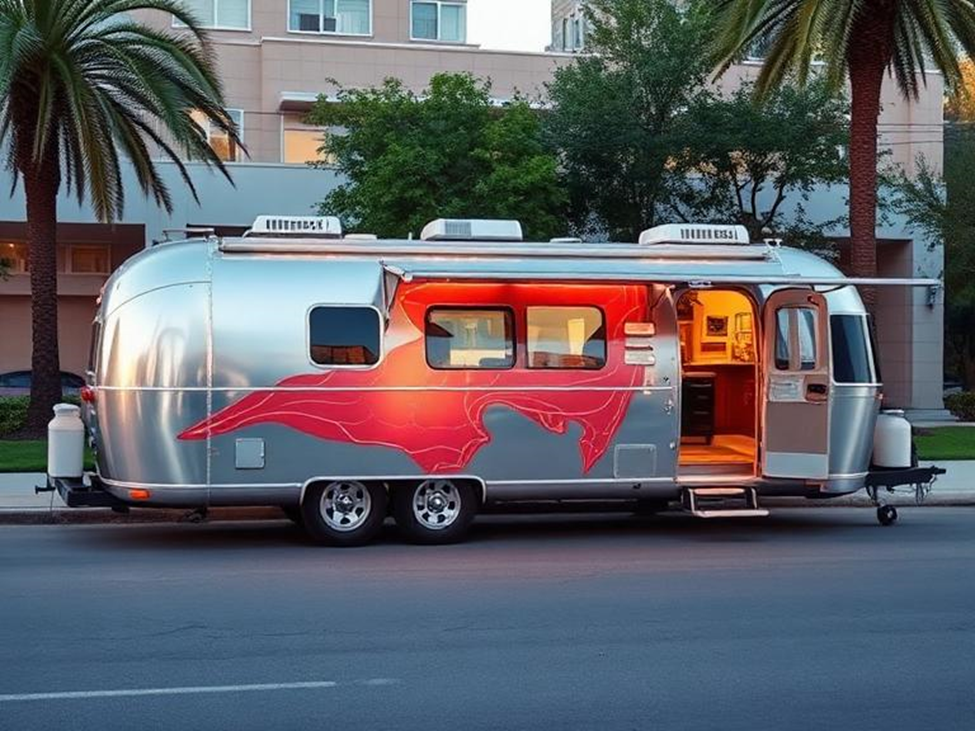
Airstream pop ups offer a different but equally powerful advantage. They create a premium, self-contained environment that feels immersive without being intimidating. An Airstream can function as a showroom, tasting lounge, content studio, or brand experience hub while remaining mobile and adaptable.
Together, these formats prove that impact is not about size. It is about design, placement, and execution.
Designed for Attention and Shareability
In 2026, if an experience is not visually compelling, it is forgettable. Mobile activations naturally lend themselves to shareability because they are unexpected and visually distinct. Pop up motorcycles and Airstream pop ups generate organic content because people want to document what they did not expect to see. This leads to:
- Higher quality user generated content
- Social sharing that feels authentic rather than staged
- Earned reach that extends far beyond on-site attendance
Unlike static pop ups that rely on signage to draw people in, mobile formats create curiosity first. That curiosity drives engagement both in person and online.
Engagement That Converts
Real demand is built through interaction, not exposure. Mobile activations excel at creating moments where consumers can engage directly with the product, the brand story, and the people behind it.
Because these experiences are intimate by design, brand teams can focus on quality of interaction rather than volume alone.
Why Mobile First Matters in 2026
Audiences today expect brands to be agile, responsive, and culturally aware. Mobile-first activations signal exactly that. They show that a brand understands where attention lives and how to earn it without forcing the interaction.
Pop up motorcycles and Airstream pop ups also scale intelligently. A brand can start with a single vehicle, refine the experience, and expand into a multi-city tour without rebuilding from scratch. This makes them especially valuable for brands that want measurable impact without unnecessary overhead.
The Takeaway
Pop up motorcycles and Airstream pop ups are not trends. They are strategic tools for brands that want to move faster, connect deeper, and convert more effectively. By prioritizing mobility, human-scale design, and real-world relevance, these formats consistently outperform static pop ups in attention, engagement, and demand generation.
For brands looking to create moments that people remember, talk about, and act on, the road often delivers better results than the storefront.