


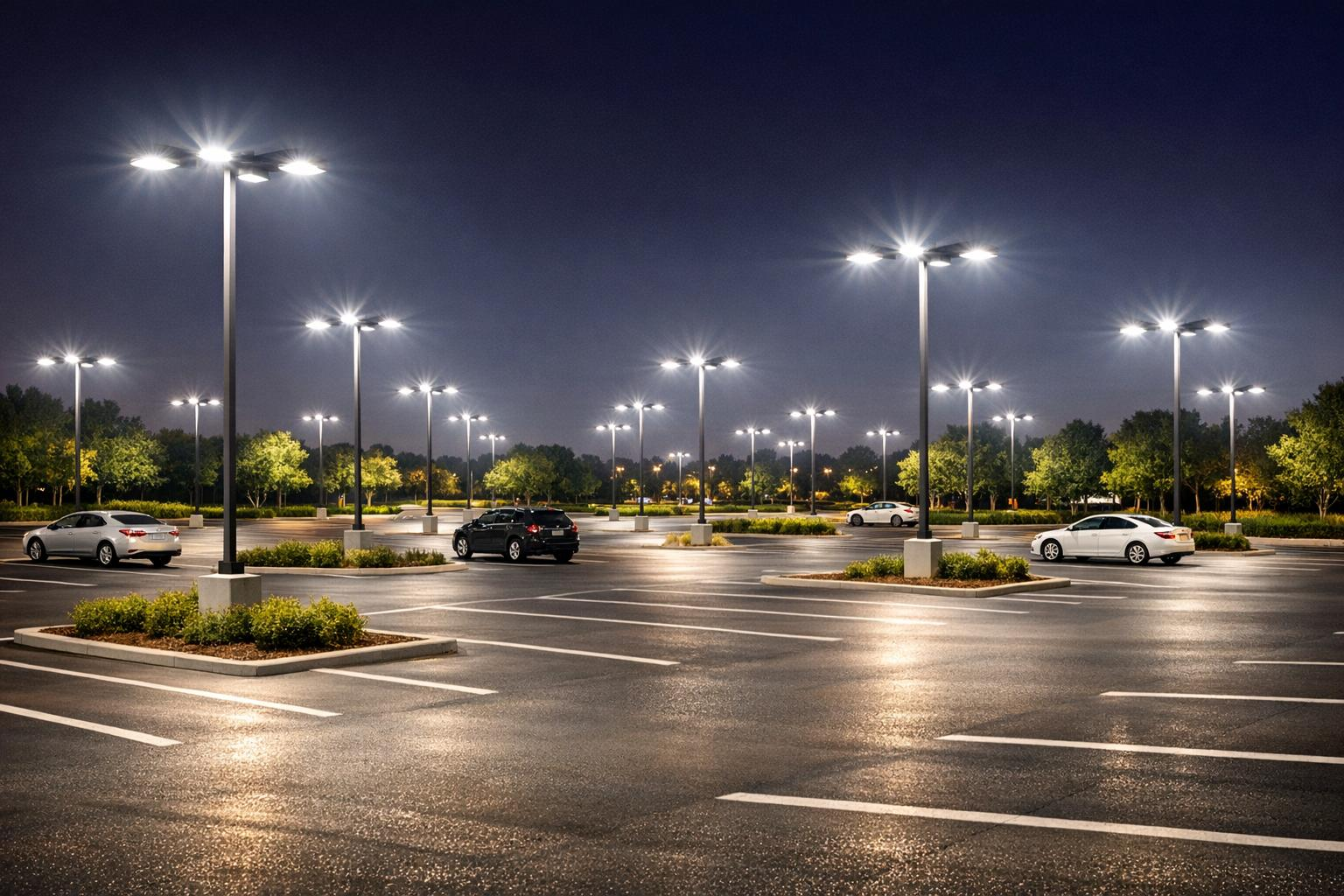
LED shoebox lights are rectangular fixtures mounted on poles or building edges. They light parking lots, roadways, and sports fields. The box shape concentrates light downward. This reduces wasted light in unwanted directions. Traditional sodium lights spread light inefficiently. LED shoebox lights direct 80-90% of light to target areas. They contain semiconductor technology instead of gas-filled tubes. Heat generation is minimal compared to older fixtures. Most models last 50,000-60,000 operating hours. This equals 10-15 years of typical use.


Key differences from traditional fixtures:
- Instant on without warm-up time
- No mercury or hazardous materials inside
- Cooler surface temperatures during operation
- Smaller physical footprint on poles
- Directional light beam patterns
- Compatible with motion sensors and controls
Energy Consumption Reality
LED shoebox lights use 80-120 watts for standard installations. Older high-pressure sodium fixtures required 250-400 watts. A parking lot with 20 fixtures shows dramatic differences.
Sodium fixture scenario:
- 20 × 250 watts × 8 hours daily = 40,000 watt-hours
- Annual consumption: 14,600 kWh
- Cost at $0.12 per kWh: $1,752 yearly
LED shoebox light scenario:
- 20 × 100 watts × 8 hours daily = 16,000 watt-hours
- Annual consumption: 5,840 kWh
- Cost at $0.12 per kWh: $701 yearly
Savings: $1,051 per year from one parking lot. Multiply this across 100 facilities and annual savings reach $105,100. Five-year totals exceed half a million dollars for medium-sized operations.
Real-world measurement data:
- 65% average energy reduction reported by facility managers
- Peak demand charges decrease significantly with LED switching
- Utility rebates cover 20-40% of upgrade costs in many regions
Installation Requirements and Specifications
LED shoebox lights mount on 20-40 foot poles depending on coverage needs. Parking lots typically need 25-foot mounting height. Sports fields require 35-40 feet for uniform coverage. Wall-mounting exists but pole-mounting dominates commercial use.
Electrical specifications matter for compatibility:
- Standard 120-240V systems work without modifications
- Circuit breakers: 15-20 amps per fixture group
- Quick-disconnect plugs simplify maintenance
- No ballast required like older fluorescent lights
Mounting pole considerations:
- Existing poles support LED fixtures if structurally sound
- Older sodium fixture poles generally work without replacement
- Wind load capacity: modern poles handle standard weather
- Foundation inspection prevents unexpected failures
LED shoebox light beam patterns vary by model:
- Type II: 60-degree beam width suits parking rows
- Type III: 90-degree pattern covers wider areas
- Type IV: 120-degree spread for intersections
Wrong beam type creates dark spots or excessive light spill. Specify pattern before purchasing.
Brightness Levels and Coverage Area
Foot-candle measurement determines adequate lighting. Parking lots need 1-2 foot-candles. Residential driveways require 0.5-1 foot-candle. Sports courts demand 5-20 foot-candles depending on activity.
LED shoebox lights with 12,000-15,000 lumens cover:
- Small parking lots: 40 × 60 feet with 25-foot mounting
- Medium commercial: 80 × 100 feet with 30-foot mounting
- Large facilities: multiple fixtures for coverage gaps
Lumen output directly affects visibility and safety. Higher lumens increase detection distances for moving vehicles and pedestrians. Lower lumens reduce costs but create safety risks in high-traffic areas.
Color temperature selection impacts visibility:
- 4000K (cool white) improves detail recognition
- 5000K+ increases alertness in nighttime environments
- 3000K (warm white) works for low-traffic residential areas
Maintenance and Longevity Facts
LED shoebox lights require minimal maintenance compared to sodium fixtures. The semiconductor diode approach eliminates filament degradation. No ballast means fewer failure points. Dirt accumulation reduces light output over time.
Maintenance intervals:
- Cleaning every 6-12 months maintains 90% output
- Water-resistant seals last 5-7 years before replacement
- Electrical connections stay stable with surge protection
- Most fixtures operate 8-12 years before replacement
Cost of ownership calculation over 10 years:
- Initial purchase and installation: $800-1,200 per fixture
- Annual electricity: $70-140 per fixture
- Maintenance labor: $50-100 per fixture
- Total LED cost: $2,500-2,800 per fixture
Sodium fixture 10-year cost:
- Initial purchase and installation: $400-600
- Annual electricity: $210-420 per fixture
- Maintenance and replacements: $300-500 per fixture
- Total sodium cost: $4,400-6,900 per fixture
LED fixtures cost less over their lifetime despite higher upfront pricing.
Practical Installation Considerations
Site surveys determine optimal fixture placement before purchasing. Poor placement creates dark areas or excessive spillover. Professional installers measure mounting locations 10 feet apart in grid patterns. This ensures uniform coverage without gaps.
Electrical infrastructure assessment prevents costly surprises:
- Existing wiring capacity must support total fixture load
- Circuit breaker panel availability for new circuits
- Underground conduit conditions affect installation difficulty
- Utility disconnection procedures ensure safety during work
Timing affects labor costs and project complexity:
- Winter installations may cost 15-25% more due to weather
- Staged replacements maintain partial illumination during work
- Weekend installations prevent traffic disruption
- Bulk replacements reduce per-fixture labor costs
Building code compliance is mandatory:
- Local setback requirements limit pole placement
- Height restrictions vary by zoning district
- Light pollution ordinances require shielding in sensitive areas
- Electrical codes mandate proper grounding and protection
ROI Timeline and Financial Impact
Initial investment spans $15,000-40,000 for medium parking lots. Annual savings reach $1,000-2,000 through reduced electricity use. Rebate programs from utility companies offset 20-50% of costs.
Three-year projection example (20-fixture lot):
- Year 1: -$1,051 savings (after $2,000 rebate)
- Year 2: +$1,051 additional savings
- Year 3: +$1,051 additional savings
- Three-year net: +$1,051 (investment recovered)
Maintenance cost reduction amplifies returns:
- Labor savings from fewer replacements: $200-400 yearly
- Reduced downtime improves facility operations
- Brightness consistency reduces accident liability
- Enhanced appearance attracts customers and tenants
Property value increases correlate with modern outdoor lighting:
- Commercial properties show 3-5% value increases
- Rental rates command premiums for safe, well-lit areas
- Tenant satisfaction improves with quality lighting
Selecting the Right LED Shoebox Lights
Specifications guide fixture selection for specific needs. Wattage alone doesn’t determine performance. Lumen output, beam type, and color temperature matter equally.
Decision framework for purchase:
- Measure mounting height on existing poles
- Count current fixture quantity and spacing
- Determine required brightness for use type
- Identify utility rebate eligibility
- Obtain quotes from 2-3 suppliers
- Compare warranties and support availability
Quality indicators worth investigating:
- IP65 or higher rating ensures water resistance
- Five-year manufacturer warranties indicate confidence
- Third-party certifications verify performance claims
- Local installer availability supports maintenance needs
Budget allocation strategy:
- Premium fixtures cost 20% more but last longer
- Mid-range options balance cost and durability
- Bulk purchases reduce per-unit prices 10-15%
- Extended warranties add $100-200 per fixture
Conclusion
LED shoebox lights reduce operating costs by 50-70% compared to traditional fixtures. Installation on existing poles simplifies upgrades. Maintenance burdens drop significantly from fewer replacements. Initial investment typically recovers within 3-4 years. Utility rebates and tax incentives reduce upfront expenses. Long lifespan means 10-15 years of reliable service. Modern facilities and municipalities find LED shoebox lights essential for cost-effective outdoor illumination.









