


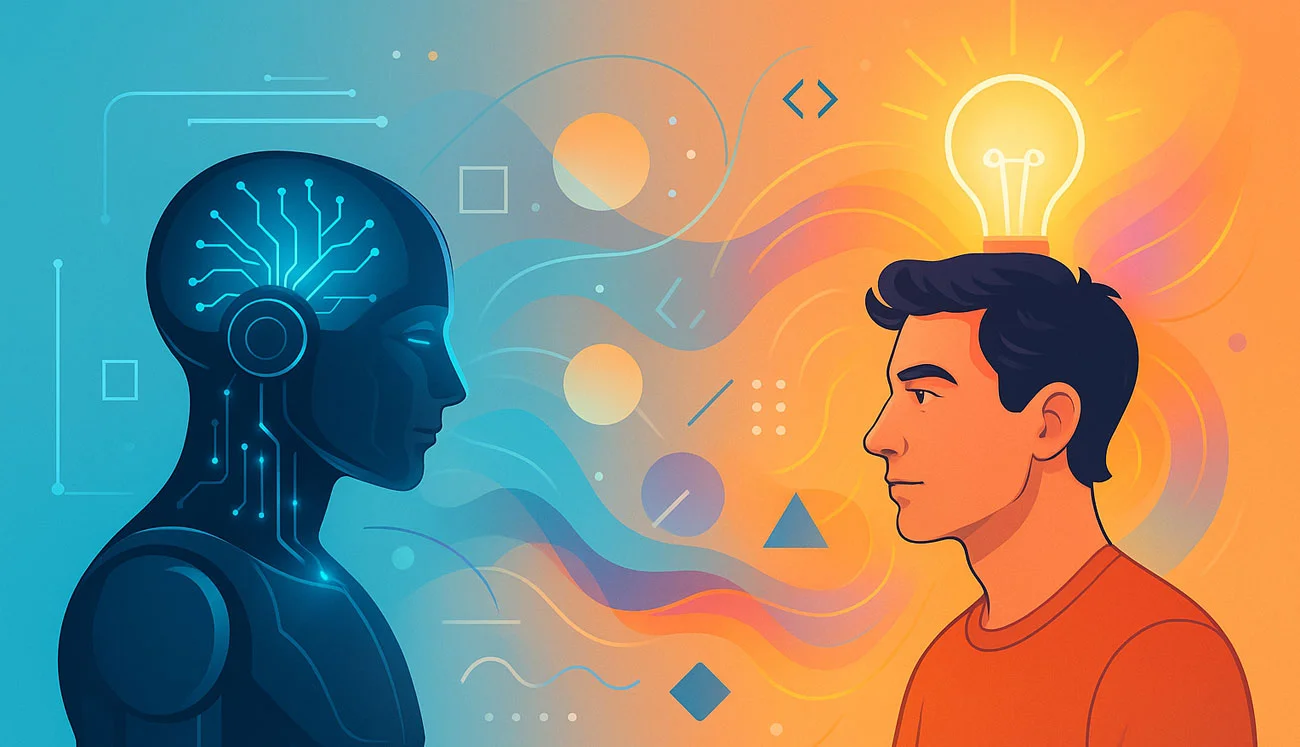
AI videos make people ask the same question again and again.


If a machine can generate visuals, motion, and scenes, what happens to human creativity?
I think that question is useful, but I also think people often frame it the wrong way. They treat creativity and automation like opposites. One is human. One is mechanical. One is meaningful. One is empty.
Real creative work has never been that simple.
Cameras automated parts of image-making. Editing software automated parts of post-production. Templates automated parts of design. Every time a new tool appeared, people worried that the tool would flatten expression. Sometimes it did. Sometimes it opened new forms of expression instead.
AI video belongs in that same conversation. It does not end human expression. It changes where expression happens, and that shift matters.
Why AI video has made the creativity question feel bigger
AI video is no longer a niche experiment. It is now part of real workflows.
Creators use it for:
- short-form content
- product videos
- concept drafts
- visual storytelling
- ad creative testing
- landing page explainers
Once AI moves from demo to workflow, the creative question becomes more urgent. People stop asking whether the technology is impressive. They start asking whether it changes authorship, originality, and meaning.
That is why the debate feels bigger now.
The output is not just abstract anymore. It is being published, monetized, shared, and used inside real creative systems.
I think that makes people uneasy for a reason. When a tool gets fast enough and good enough, it forces us to define what we value in the process itself.
Is the value in manual effort? Is it in taste? Is it in intention? Or is it in the final piece?
AI video pushes those questions to the surface.
Creativity vs automation is the wrong simplification
I do not think the real debate is creativity versus automation.
Automation has always existed inside creative work. Most creators already rely on systems, presets, templates, rules, workflows, and shortcuts. They do not start from raw materials every time. They use tools that compress effort.
That does not make the work less human.
The deeper issue is authorship.
Who is making the key decisions?
Who defines the direction, emotional tone, pacing, framing, and meaning?
That is where human expression still lives.
If someone uses AI video to generate a random clip and publishes it without thought, then yes, the output often feels generic. But that is not because AI removed creativity. It is because the person contributed very little creative direction.
The problem is not automation by itself. The problem is weak authorship.
What human expression actually means in the age of AI video
A lot of people talk about human expression as if it only exists in hand-made execution. I do not agree.
Expression also lives in selection, sequencing, framing, judgment, taste, restraint, and narrative intention.
A director does not paint every prop by hand. A photographer does not build the camera sensor. A video editor does not invent time itself. Creative expression often comes from choices, not raw fabrication.
That is why AI videos do not erase expressions. It moves more of the expressive weight toward direction and curation.
The creator becomes less of a manual operator and more of a creative orchestrator.
That can be a loss for some people. It can also be an expansion for others.
It depends on how the tool is used.
How AI video changes the creative process
The old process often looked like this:
Idea → plan → shoot → edit → revise → publish
The AI-assisted process looks more like this:
Idea → generate → evaluate → refine → compare → publish
That difference changes the job.
From manual production to creative orchestration
When AI handles part of generation, the creator spends less time on raw production and more time on direction.
That means more time goes into:
- deciding what the scene should feel like
- choosing visual style
- testing multiple approaches
- refining output
- combining generated assets into a clear final piece
This can be a real gain. It can also become lazy if the creator stops making strong choices.
From one final piece to many fast variations
AI video lowers the cost of trying things, and that is powerful.
A creator can test different openings, different visual moods, different pacing, and different scene structures.
That kind of experimentation used to be expensive. Now it is much cheaper.
This supports creativity because it expands the number of possible paths. But it can also flatten the work if every variation is shallow.
Again, the tool increases possibility. The creator determines meaning.
Editing and iteration become part of expression
With AI video, the first output is rarely the final one. A big part of the process becomes iteration.
That matters because the expressive act is not just in prompting. It is in deciding what to keep, noticing what feels wrong, and pushing the piece towards a point of view.
This is why creators who edit well often get stronger results than creators who only generate.
Where AI video supports human expression
I think AI video helps creativity most in four areas.
1. It lowers the barrier to visual storytelling
A solo creator can now build work that once required a team.
That does not mean AI replaces craft. It means more people can attempt ambitious visual ideas.
A small creator with a strong story can now explore motion, mood, and scene design without waiting for a production budget.
That is good for expression because it expands access.
2. It helps creators explore more ideas
Some ideas are hard to justify under old production economics. AI makes them easier to test.
That freedom matters. A creator can move from “I cannot afford to try that” to “I can test that today.”
That opens space for experimentation.
3. It supports different entry points into the process
Not every creator starts with a full script. Some start with an image. Some start with a phrase. Some start with a mood.
AI video workflows work well here because they can begin from text, static images, reference clips, or existing scenes.
That flexibility helps creators work in ways that feel natural to them.
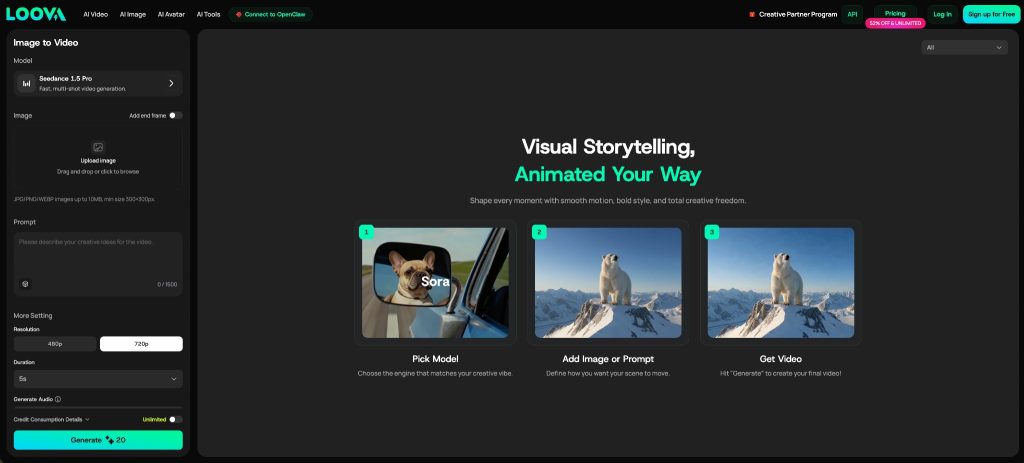
For example, if I already have a still image or concept frame, using an image to video workflow can help turn that visual idea into motion quickly. That changes the speed of exploration.
4. It gives solo creators more leverage
A single person can now handle more of the pipeline. That does not make them a full studio overnight, but it does increase leverage.
For people with strong taste but limited resources, that matters a lot.
Where AI video can flatten originality
I do not think AI video automatically improves creativity. It can just as easily weaken it.
Template culture creates sameness
When everyone uses the same prompts, the same aesthetic references, and the same trend loops, the output starts to blur together. And that is already happening in some parts of AI content.
The issue is not the model. The issue is dependence on default taste.
Speed can reduce reflection
Fast tools are useful. But speed can also make people publish before they think.
When production becomes easy, some creators stop asking whether the piece says anything at all. They optimize for output volume and lose depth.
That is not a technical failure. It is a creative discipline problem.
Prompting can become a substitute for ideas
Some people mistake prompt complexity for creativity. They spend more time decorating instructions than developing a clear point of view.
A long prompt is not the same as an original concept. Without strong source material, AI video often looks polished but empty.
What separates creative AI video from generic AI video
I think the difference is easier to spot than people admit. Creative AI video usually has four things.
Strong source material
The best outputs usually begin with a real idea, for example, a clear message, a story, a visual identity, or a tone worth exploring.
AI amplifies source material. It does not replace it.
Clear point of view
The creator knows what the piece is trying to do. That affects every decision.
Without point of view, the output may still look impressive, but it rarely feels memorable.
Consistent decisions
Strong work usually has coherence. The style, pacing, movement, and framing feel intentional.
This is where human judgment matters most.
Human review and curation
The creator has to notice what works and what does not. That step is still very human.
Good AI video often comes from strong rejection, not just strong generation. A creator says no to weak outputs until the work feels right.
How creators are adapting in 2026
The most effective creators I see are not treating AI as a one-click replacement for creativity.
They are using it in more specific ways.
As a draft tool
AI is useful for early exploration. It helps creators get something visible fast.
That draft can then be refined, edited, restructured, or rebuilt.
As a variation engine
Creators use AI to test multiple approaches without spending the full cost of traditional production each time.
As a leverage tool
Instead of replacing their voice, they use AI to amplify the formats they already know work. That is an important difference.
The strongest creators are not handing authorship to AI. They are using AI to extend reach, speed, and experimentation.
Why workflow matters more than people think
One part of this conversation gets ignored too often: workflow design.
If the tool stack is fragmented, the creative process suffers.
Too many creators now work like this: one platform for generation; one for image cleanup; one for video editing; one for voice; and one for thumbnails.
That stack creates friction. Friction interrupts thought. And a cleaner workflow supports better expression because it keeps the creative loop intact.
That is one reason unified platforms matter. If a creator wants to explore AI video without jumping across multiple tools, a system like Loova can make experimentation more fluid. When generation, iteration, and visual refinement stay connected, the creator spends less energy on logistics and more on actual creative judgment.
The workflow does not make the art. But it can absolutely affect the quality of thinking.
What AI video means for the future of creative work
I do not think AI video reduces the value of human expression. I think it changes what kinds of human skills matter most.
Manual execution may matter a little less in some contexts. But taste, narrative control, visual judgment, and concept design matter more.
That means originality may become more strategic.
In other words, the future advantage may not belong to the person who can manually produce every frame. It may belong to the person who can direct better, choose better, edit better, reject weak outputs faster, and build stronger systems for meaning.
That is not the end of creativity. It is a shift in where creativity lives.
I also think AI videos will raise the value of taste.
When more people can generate more visuals, the scarce thing becomes discernment.
Not everyone will know what to keep, what to remove, what actually feels original, and what supports a larger point of view.
That is why I do not see AI as replacing human expression. I see it as raising the value of higher-order creative judgment.
Final thoughts
AI video changes the creative process. That much is clear.
But I do not think it removes the human role. It moves the expressive center from manual execution toward direction, sequencing, judgment, and narrative control.
That is a real shift. It is worth taking seriously.
Some creators will use AI video to produce generic content faster. That is already happening. Others will use it to explore ideas they could not afford to attempt before. That is also happening.
The difference is not the tool alone. The difference is authorship.
If I had to sum it up simply, I would say this:
AI video does not kill human expression. It forces creators to define where their expression actually lives.
For anyone who wants to explore that question in practice, not just in theory, I think the best next step is to test AI video inside a workflow that does not fight you. A platform like Loova can help creators experiment with generation and motion while keeping the creative process more connected.
That will not answer the philosophical question for everyone.
But it will make the practical one clearer.
Frequently Asked Questions
Does AI video replace human creativity?
No. It changes where creativity happens. The human role shifts more toward direction, selection, editing, and judgment rather than pure manual execution.
What does AI video mean for human expression?
It means expression becomes less tied to raw production labor and more tied to intention, taste, framing, and narrative choices.
Can AI-generated video still be original?
Yes, if the creator brings a strong point of view, good source material, and careful review. Without that, the output often feels generic.
Is AI video good for artists and creators?
It can be. It lowers the barrier to visual storytelling, supports experimentation, and gives solo creators more leverage. But it also increases the risk of repetitive output if used carelessly.
What are the risks of using AI video in creative work?
The main risks are sameness, weak authorship, shallow output, and overreliance on speed instead of thought.
How do creators use AI video without losing their voice?
They use it as a draft and variation tool, not as a substitute for their ideas. The strongest creators keep control over tone, structure, and final decisions.
What is the future of AI video for creators?
It will likely become more integrated into normal workflows. The biggest advantage will go to creators who combine strong ideas with efficient systems and clear creative direction.
Do AI video tools make creativity easier or weaker?
They make execution easier. Whether creativity gets stronger or weaker depends on how the creator uses that extra speed and leverage.









