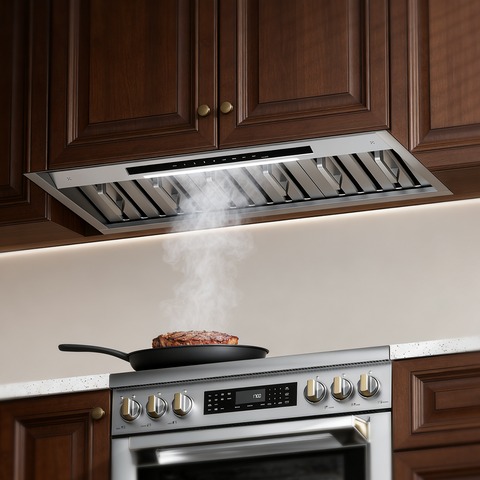
Wall mounted range hoods occupy a unique space in kitchen ventilation — they’re both functional powerhouses and visual focal points. Unlike under-cabinet hoods that tuck away discreetly, a wall mount hood announces itself with a statement-making stainless steel chimney that commands the space above your range.


If you’re upgrading your kitchen’s ventilation or building from scratch, this guide covers everything you need to make an informed, confident choice.
Why Wall Mount Hoods Are So Popular
Wall mounted range hoods are installed on the wall above a range or cooktop that isn’t positioned under cabinetry. This is the typical configuration when a range is centered on a wall, surrounded by countertops and cabinets on the sides but open above.
The design is both practical and beautiful. The chimney section spans from the hood body up to the ceiling, covering the ductwork and adding architectural drama to the kitchen — especially in open-concept spaces.
The Stainless Steel Chimney Hood Aesthetic
The stainless steel chimney hood has become iconic in modern kitchen design. Its clean lines, reflective surface, and professional kitchen associations make it the default choice for a wide range of kitchen styles — from sleek contemporary to warm transitional.
Brushed stainless steel resists fingerprints better than polished, and it’s far more forgiving in active kitchens where the hood gets touched frequently. Many people prefer the slightly softer look of brushed finishes for this reason.
Performance Metrics to Evaluate
When comparing wall mount range hoods, focus on:
- CFM output at each speed setting
- Noise rating (measured in sones) — 1 sone is roughly the sound of a quiet refrigerator
- Filter type and cleaning requirements
- Boost mode availability — useful for brief high-heat cooking bursts
- Auto-shutoff timer functionality
- LED lighting wattage and coverage area
Duct Size and Layout
Wall mount range hoods connect to round ductwork, typically 6 or 8 inches in diameter. Larger duct diameter reduces airflow restriction and operating noise. If you’re installing new ductwork, go as large as the hood supports — it makes a noticeable difference at higher speed settings.
Keep the duct run as short and straight as possible. Each elbow or extra foot of run reduces effective CFM output.
Complete Your Kitchen with the Ciarra Nosh Oven
A well-ventilated kitchen pairs perfectly with quality cooking appliances. The Ciarra Nosh Oven gives you reliable, precise countertop cooking performance, while your wall mounted range hood keeps the air above your range clean during stovetop sessions. These two elements — one for cooking, one for ventilating — work together to elevate your overall kitchen experience.
Installation Tips
Hire a professional for the ductwork if you’re not confident doing it yourself. Proper sealing of all duct connections is critical — leaky ducts waste energy and reduce hood efficiency dramatically.
Use mastic sealant or foil tape (not regular duct tape, which fails over time) on all joints and connections.
Making the Decision
A wall mounted range hood is one of the best investments in a kitchen’s functionality and aesthetics. Choose the right width, match the CFM output to your cooking style, and ensure professional installation — and you’ll enjoy fresh, clean air in your kitchen every time you cook for years to come.