Waiting for something to break before taking action is a strategy that organizations can no longer afford. As device fleets grow and remote work becomes permanent, the gap between what IT teams can see and what is actually happening across their endpoints widens. Proactive monitoring closes that gap, and a well-designed compliance dashboard is the instrument that makes it possible.

From Reactive to Proactive: Why Real-Time Visibility Matters
Traditional IT management often relied on scheduled scans, manual checks, and periodic reports. These approaches worked adequately when teams shared the same building as the machines they managed, but they fail in distributed environments. An unpatched vulnerability, a device drifting out of compliance, or a failing health metric may not surface for days or weeks under a reactive model. By that point, exposure has already occurred.
Real-time dashboards change the equation entirely. When patch status, device health, and compliance indicators are visible at all times, IT teams can respond to problems as they emerge rather than after they escalate. The shift is not just operational; it is a fundamental change in how organizations approach risk.
What a Compliance and Device Health Dashboard Should Show
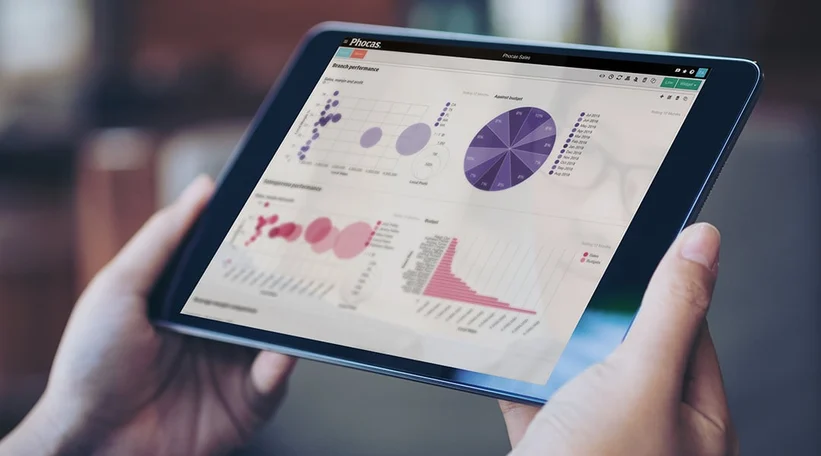
Not all dashboards are created equal. A genuinely useful compliance and device health dashboard goes beyond displaying a list of connected devices. It surfaces the information that matters most, organized in a way that supports fast decision-making.
At a minimum, an effective dashboard should track applied and pending patches across all managed devices, highlight endpoints with critical or high-severity vulnerabilities, display compliance status against defined policies, show device health indicators such as disk usage, uptime, and operating system version, and log scheduled and completed tasks. Each of these data points individually is useful. Together, they give IT teams a complete picture of where the environment stands at any moment.
Compliance data is particularly important for organizations subject to regulatory requirements. Audit readiness is much simpler when patch history, remediation records, and device status reports are always current and accessible from a single location. For remote teams especially, this kind of centralized reporting replaces the fragmented, time-delayed picture that comes from managing distributed endpoints without a unified platform.
Remote Teams Add Complexity That Demands Better Tools
Managing device compliance for an office-based team is already challenging. For organizations with distributed or fully remote workforces, the challenge multiplies. Devices may be running on home networks, connecting from different time zones, and may go weeks without being near an IT professional.
This is where a patch management solution for remote teams becomes indispensable. The approach to patch management provides real-time visibility across Windows, macOS, and third-party applications, regardless of device location. Its centralized dashboard allows IT administrators to track patch status, review device health, identify missing updates, and export compliance reports without needing physical access to any managed endpoint.
The platform also supports policy-based automation, meaning compliance monitoring is not dependent on an administrator remembering to check. Patches can be scheduled, update rings defined, and remediation triggered automatically based on endpoint conditions. The dashboard reflects the outcomes of those automated processes in real time, giving teams both the control and the confirmation they need.
CVE Visibility and Vulnerability Prioritization
A proactive dashboard is not just about tracking what has been done. It also needs to surface what still needs attention. CVE-based insights enable IT teams to identify and prioritize OS-level threats by severity, so the most critical vulnerabilities are addressed first rather than in the order they were discovered.
AI-powered summaries that contextualize each CVE and suggest remediation steps reduce IT staff’s cognitive load, enabling faster action with less research time. When this intelligence is integrated directly into the compliance dashboard, the path from identifying a vulnerability to resolving it is significantly shorter. Organizations that build this kind of prioritization into their monitoring workflow consistently reduce their mean time to remediate and maintain a stronger overall security posture.
Continuous Monitoring as an Organizational Standard
Continuous monitoring is increasingly recognized not as a best practice but as a baseline expectation. Regulatory frameworks across industries require organizations to demonstrate that their security controls are operating as intended on an ongoing basis, not just at audit time. A proactive dashboard makes this demonstrable by maintaining a persistent, time-stamped record of device health and patch compliance.
For IT teams managing endpoint security, the connection between continuous visibility and compliance readiness is direct. When every device state is logged and every remediation action recorded, organizations can respond to audit requests with confidence rather than scrambling to reconstruct a history from incomplete records.
Understanding how continuous monitoring fits within a broader security strategy is also important. NIST’s guidance on information security monitoring provides a structured framework that organizations can use to align their dashboard-driven oversight practices with recognized standards for risk management.
Building the Case for Proactive Infrastructure
Beyond compliance and security, proactive dashboards have a practical business case. Unplanned downtime is expensive, and a significant portion of it is preventable with sufficient visibility. Devices that are consistently patched, monitored, and maintained simply fail less often. When they do encounter issues, they are identified earlier and resolved faster because the data needed to diagnose them is already available.
IT teams with full dashboard visibility spend less time on reactive firefighting and more time on work that improves the environment over time. That reallocation of effort compounds: fewer incidents mean more capacity for proactive improvement, which in turn means fewer incidents.
FAQ
What does a real-time compliance dashboard track?
A real-time compliance dashboard monitors patch status, device health metrics, vulnerability exposure, and policy adherence across all managed endpoints. It provides a continuously updated view of the environment so IT teams can identify issues as they arise rather than discovering them after the fact.
How does proactive monitoring help remote teams stay compliant?
Remote devices are harder to manage manually because they are not physically accessible to IT staff. Proactive monitoring platforms automatically track patch status and device health across distributed endpoints, enforce policies without requiring manual intervention, and generate compliance reports that keep organizations audit-ready regardless of where their devices are located.
What is the relationship between patch management and compliance reporting?
Patch management and compliance reporting are closely linked, as unpatched systems are among the most common sources of compliance failures. When a patch management platform logs every applied update, pending patch, and remediation action in a centralized dashboard, that data becomes the evidentiary record that supports compliance reporting and simplifies audit responses.