Most deck projects don’t go wrong during construction. They go wrong the moment a homeowner picks the wrong contractor. I’ve heard too many stories: half-built decks abandoned mid-project, deposits that vanished, structures that failed inspection before the first barbecue. The frustrating part? Most of these situations had warning signs that showed up before a single nail was driven. Finding the best deck contractor isn’t just about getting the lowest quote. It’s about recognizing who to avoid before you sign anything.


Why Choosing the Right Deck Contractor Matters
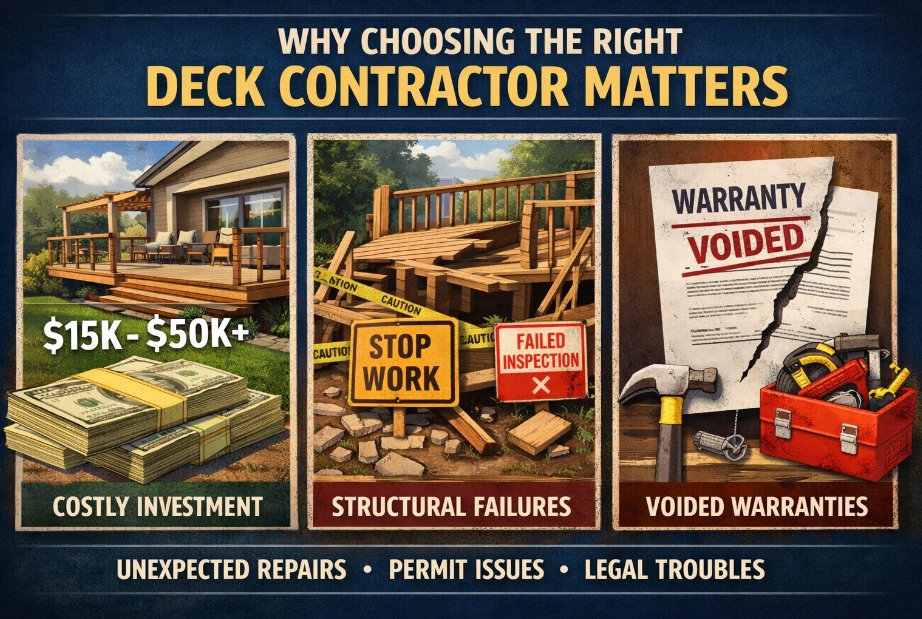
A new deck is a serious investment. Depending on size, materials, and design, you’re looking at anywhere from $15,000 to $50,000 or more. Get it wrong, and you’re not just out of money. You’re dealing with structural issues, permits that were never pulled, warranties that are void, and repairs that cost more than the original build. The good news is that legitimate contractors are easy to verify. They welcome your questions, share credentials without hesitation, and don’t flinch when you ask for references. The ones to avoid? Just as easy to spot, if you know what to look for.
Red Flag #1: No License or Credentials on File
This one sounds obvious, but there’s a difference between asking if a contractor is licensed and actually verifying it. Don’t just take their word for it. Every state has a licensing board where you can search a contractor’s license number online. It takes five minutes. If that number isn’t on their contract, their vehicle, or their website, that’s already a problem. An unlicensed contractor offers you zero protection if something goes wrong. No licensing board to file a complaint with, no recourse at all.
Red Flag #2: They Can’t Show You Recent, Local Projects
A portfolio of photos from five years ago, all from a different state, doesn’t tell you much. Deck building is heavily influenced by local building codes and climate. A contractor who works regularly in your area knows what materials hold up in Georgia’s humidity or how frost depth affects footings in Illinois. If they can’t point to recent, local work and ideally give you an address you can drive past, that gap is worth questioning.
Red Flag #3: They Pressure You to Sign Quickly
“This price is only good until Friday.” Classic. A contractor who rushes you to sign is usually a contractor who doesn’t want you reading the fine print. Legitimate builders know that a big project takes time to evaluate. They’re comfortable with you comparing quotes, asking questions, and slowing down before committing. Pressure tactics are a sign they’re afraid of what you might find if you take a breath and look more carefully.
Red Flag #4: The Estimate Has No Line-Item Breakdown
A quote that just says “Deck build: $22,000” is not an estimate. It’s a number with no accountability attached. You have no idea what you’re paying for, and neither party can refer back to it when something changes mid-project. A proper estimate breaks things down: materials with brand names, labor, permit fees, debris removal, and any subcontracted work. Vague estimates almost always lead to change orders later, and change orders always cost more than expected.
Red Flag #5: They Ask for Full Payment Upfront
Standard practice in this industry is a deposit of 10% to 30%, with the rest tied to project milestones. Full payment upfront removes any financial incentive for the contractor to finish on time, or finish at all. Many states actually cap how large a deposit can legally be. If a contractor insists on full payment before work begins, that’s your cue to walk. Milestone-based payments protect you and keep both sides accountable throughout the project.
Red Flag #6: No Permit Discussion, Ever
If permits never come up in conversation, bring them up yourself. A contractor who suggests skipping permits to “save money” is quietly handing all the risk to you. An unpermitted deck can fail inspection when you sell your home, create problems with your homeowner’s insurance, and put you on the wrong side of HOA rules. The savings aren’t worth it. A professional contractor handles permits as a standard part of the job, not as an optional extra.
Red Flag #7: Vague or Missing Contract Terms
A contract without specific completion dates, a detailed material list, a change order process, and warranty terms isn’t really a contract. It’s an open door to disputes down the line. Scope creep, where a project slowly expands beyond what was agreed, almost always starts with loose contract language. Good contractors provide detailed paperwork without being asked. Anything promised verbally but not written down doesn’t legally exist, no matter how confident they seemed when they said it.
Red Flag #8: They Badmouth Previous Clients or Competitors
Pay attention to how a contractor talks about past projects that didn’t go well. If every story ends with a difficult client or an incompetent competitor, you’re looking at a pattern. The best deck contractor you’ll work with talks about their own results, not other people’s failures. Blame shifts easily. If they’re talking this way about others now, you’ll eventually become the subject of the same conversation.
Red Flag #9: No Clear Subcontractor Policy
Subcontractors are common in deck building, and that’s completely fine. The problem is when a contractor is evasive about who will actually be on your property. You have every right to know if subcontractors are involved, whether they carry their own insurance, and who holds liability for their work. If your contractor dodges this question, you don’t actually know who’s building your deck, and that’s a serious gap in accountability.
Red Flag #10: They Can’t Provide Verifiable References
Online reviews are useful, but they’re not the same as a real phone call with a past client. Ask for two or three contacts you can actually speak with. A confident contractor hands these over without hesitation. Evasion usually means one of two things: there aren’t many satisfied customers, or there are conversations they’d rather you not have. Either way, you deserve better than that before committing to a major project.
What the Best Deck Contractors Do Instead
Here’s a quick checklist of what a trustworthy contractor actually looks like:
- License: the number is searchable in your state’s registry.
- Insurance: carries liability coverage of $500,000 or more.
- Estimate: fully itemized with materials, labor, and permits.
- Payment: deposit of 10%-30%, the rest tied to milestones.
- Permits: pulled by the contractor as part of standard work.
- References: 2-3 live contacts shared without hesitation.
- Contract: includes timelines, materials, warranty, and change order process.
Not complicated. Just professional.
Don’t Ignore the Signs
If a contractor gets uncomfortable when you ask basic questions, that discomfort is your answer. A solid contractor will pass every check on this list without blinking. You’re spending serious money on something attached to your home. You’re allowed to be thorough. If you’re ready to move forward and want to work with someone who’s upfront from the very first conversation, reach out for a free consultation. Good work starts with the right conversation.