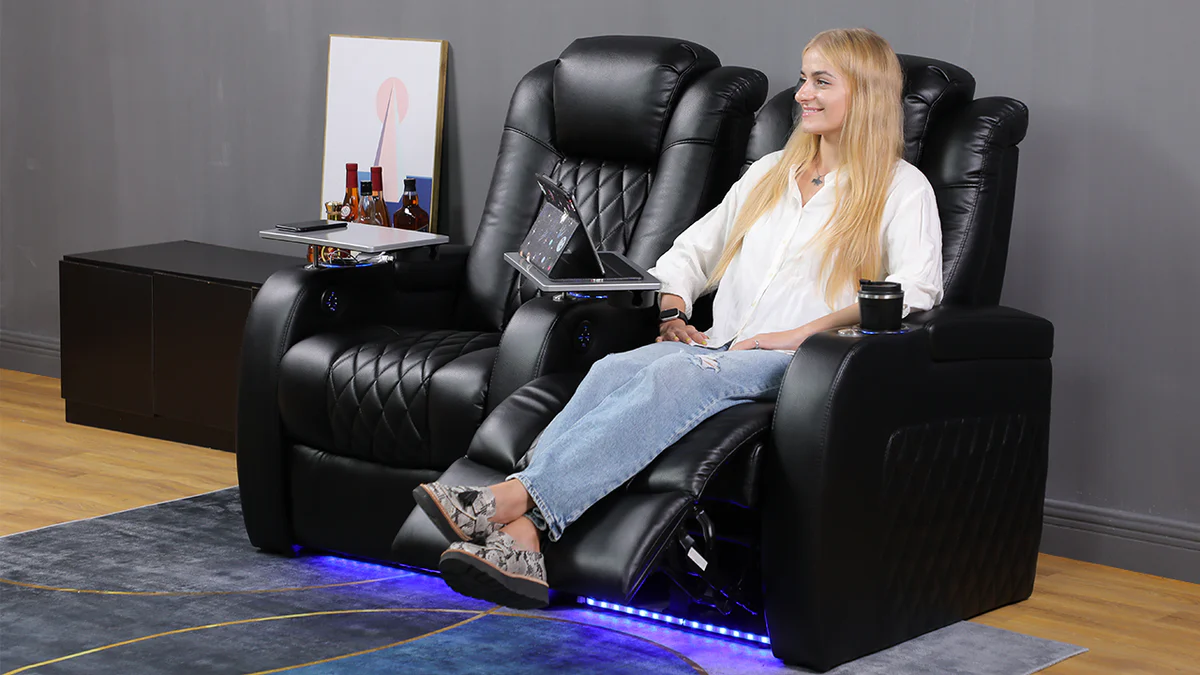
Most people spend months researching projectors, screens, and speaker systems when building a home theater. The seating often gets treated as an afterthought, something to sort out once the “real” decisions have been made. That approach tends to backfire.


The chairs people sit in for two-plus hours shape the entire experience. Uncomfortable seating makes even the most technically impressive setup feel like a chore. And generic furniture, while fine for a living room, rarely holds up in a dedicated theater space where sight lines, row layouts, materials, and dimensions all need to work together.
Custom home theater seating solves problems that off-the-shelf options simply cannot. Here is why it is worth the investment.
What Custom Home Theater Seating Actually Gets Right
Buying furniture for a purpose-built room is a different exercise from furnishing a living room. The stakes are higher, the constraints are tighter, and the margin for error is smaller. These five benefits explain why custom-made home theater seating consistently outperforms stock alternatives in dedicated theater spaces.
Benefit 1: The Fit Is Built Around the Room, Not the Other Way Around
Standard theater recliners come in fixed sizes. If the room is an unusual shape, has a low ceiling, or needs a specific row configuration, stock furniture forces compromises. The rows end up too close together. Seats are slightly too wide for the wall-to-wall clearance. The layout does not work for the number of people the room is meant to hold.
Custom home theater seating starts from the room dimensions outward. A manufacturer working from the actual floor plan can specify seat width, depth, row spacing, and riser height to fill the space properly without wasting any of it.
This matters more than most people realize until they try to fit a standard three-seat row into a room and find it is four inches too wide. Custom-made home theater seating sidesteps that entirely. The seats are built for the room, not adapted to it after the fact.
What sizing customization actually covers:
- Overall seat width: Narrower seats fit more viewers in a given row; wider seats prioritize comfort for smaller groups.
- Seat depth and recline arc: Critical in rooms where the riser-to-screen distance is fixed. A seat that reclines too far can push viewers out of the optimal viewing angle.
- Row count and riser integration: Custom seating can be designed alongside a tiered platform, with seat heights calculated to keep sight lines clear from every row.
- Armrest clearance: In tight side-wall situations, shared or slimmed armrest profiles free up meaningful inches without sacrificing function.
Benefit 2: Comfort That Actually Holds Up Through a Full Film
A home theater is not a place people sit for twenty minutes. Films run for two hours. A sports event or a binge session can stretch considerably longer. Generic furniture is designed for living rooms where people shift positions and get up frequently. It was not made for sustained, stationary viewing.
Custom home theater seats are built around extended use. That means foam density selected for long-term support rather than initial softness, lumbar positioning that reduces lower back fatigue, headrests that hold a natural viewing angle, and recline mechanisms that allow full relaxation without disrupting the person in the next seat.
The difference between well-made custom home theater seating and a standard couch after two hours is not subtle. The custom option tends to feel better at the end of the film than it did at the start. That is the actual goal.
Material choices matter here, too. Breathable performance fabrics prevent the warm, sticky feeling that bonded leather creates during longer sessions. Temperature-regulating foam is available through some manufacturers for rooms that run warmer. In a dedicated theater room, these are practical choices, not upsells.
Benefit 3: The Aesthetic Matches the Room Instead of Fighting It
Home theaters are designed spaces. Significant time and money go into acoustic panels, lighting, wall treatments, flooring, and screen surrounds. Dropping a row of standard black recliners into a room that has been carefully considered in every other respect tends to look exactly like what it is: furniture that was never part of the plan.
Custom home theater seats allow the seating to be designed as part of the room rather than added to it afterward. Fabric and leather options can match or complement wall colors, flooring, and trim details. Row configurations can reinforce the room’s overall aesthetic, whether that is a clean modern look with low-profile armrests or a classic cinema feel with high backs and deep tufting.
The finer details that custom upholstery makes possible include contrast stitching, integrated LED lighting along seat bases, personalized headrest embroidery, and choice of leg or base finish. These are the things that separate a room that looks finished from one that just looks assembled.
For rooms with a clear design direction, custom home theater seating is not a cosmetic indulgence. It is what makes the room coherent.
Benefit 4: Features Matched to How the Room Is Actually Used
Mass-market theater recliners come with a fixed feature set. Cup holders in a standard position, armrests at a standard height, and power recline as an add-on if the model supports it. That works for most people most of the time.
Custom home theater seats allow the feature set to be built around how the specific room will be used. A family with young kids might prioritize easy-clean fabrics, flush cup holder lids, and simple manual recline. A setup built for adult entertaining might go in a completely different direction: motorized recline with memory positions, chilled cup holders, tray table extensions, and headrest speakers.
A cup holder at the wrong height, a USB port on the wrong side, or a tray table that blocks the recline are small frustrations. They are easy to dismiss at the point of purchase and impossible to ignore after the tenth time they get in the way.
Custom-made home theater seating lets these decisions be made intentionally. Features worth specifying:
- Power recline with individual controls: Each seat operates independently, so one person reclining does not force an adjustment from everyone else.
- Lighted cup holders: Easier to use in a darkened room and add a clean ambient glow that looks intentional.
- Armrest storage compartments: Useful for remotes, small snacks, or anything that would otherwise end up on the floor.
- Headrest speakers: Available through select manufacturers, these bring audio closer to the ear without requiring headphones.
- Heat and massage: Genuinely useful in cooler rooms or for long evening sessions, not just a premium checkbox.
Benefit 5: Durability That Justifies the Upfront Cost Over Time
Standard theater recliners from big-box retailers are built to a price point. The mechanisms are adequate for moderate use. The foam softens within a few years. Bonded leather starts to peel and crack on a fairly predictable schedule. For a living room piece that gets replaced every five to seven years, that may be acceptable.
A dedicated home theater is a different calculation. These rooms are built to last and represent a real investment in the home. Replacing the seating every few years because the foam has collapsed or the upholstery has failed is both expensive and disruptive.
Custom home theater seating is built with higher-grade components. Frame construction tends to use hardwood or reinforced steel rather than particleboard. Foam is higher density and rated for longer-term use. Upholstery options are either genuine leather or commercial-grade fabric built to handle sustained contact and regular cleaning.
The upfront cost of custom home theater seats is higher than comparable mass-market options, no question. But over a ten-year horizon, the gap narrows considerably when the cost of replacement and repairs on cheaper alternatives is factored in.
Custom Home Theater Seating Is Infrastructure, Not Decor
The right way to think about custom home theater seating is not as furniture but as part of the room’s infrastructure, as fundamental to the experience as the speaker system or the screen.
A room where the audio is exceptional and the image is stunning, but the seating is uncomfortable, poorly sized, or visually out of place, is still a room that does not work. Getting the seating right means the room delivers for every person in it, for the full duration of whatever is being watched.
Custom-made home theater seating makes that possible in a way that stock options, regardless of price tier, generally cannot. For anyone serious about building a home theater that holds up over time and actually looks like it was designed rather than assembled, the seating deserves the same level of attention as every other element in the room.