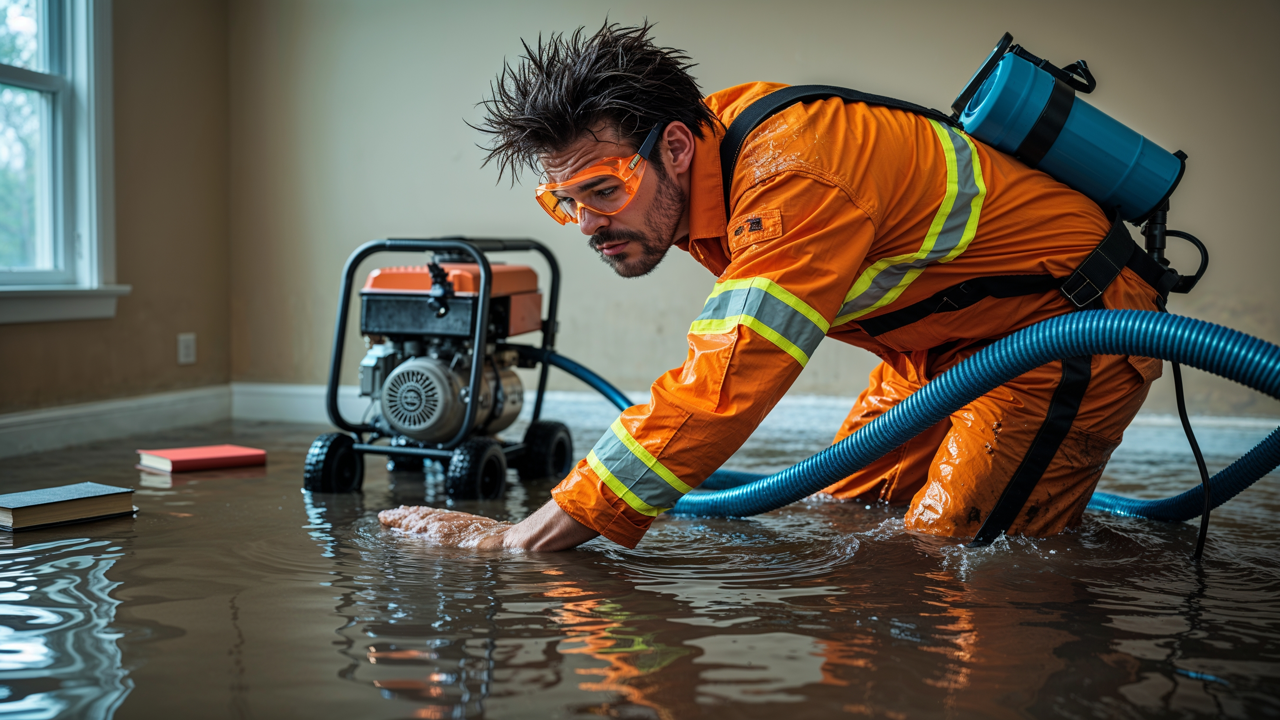
Water damage gets exponentially worse with every hour you wait. What starts as a burst pipe or roof leak becomes structural damage, mold growth, and ruined belongings if you don’t act fast. Professional water extraction services use industrial equipment that removes water hundreds of times faster than household wet vacs or mops could manage. The difference between amateur cleanup and professional extraction often determines whether you’re looking at a $2,000 repair bill or a $20,000 renovation project. Insurance companies know this too, which is why most policies specifically cover professional water extraction as a preventative measure rather than making you wait until secondary damage occurs.
How Professional Extraction Differs from DIY Cleanup
A standard shop vacuum pulls about 5 to 10 liters per minute. Professional truck-mounted extraction systems can remove 200 to 400 liters per minute. That’s not just faster, it’s the difference between surface water removal and actually pulling moisture from carpet padding, subfloors, and wall cavities.
The equipment uses both positive pressure to push water toward extraction points and negative pressure to pull it out. This dual action reaches water trapped in materials that would stay wet for weeks with conventional drying. Research from the Restoration Industry Association shows that proper extraction removes 90% to 95% of water from affected materials, while mopping and basic vacuuming only removes about 50% to 60%.
Types of Extraction Equipment and Their Applications
Portable extractors work for smaller incidents like a single room flood from an overflowing bathtub. These units typically have 40 to 80 liter capacity tanks and plug into standard power outlets. They’re maneuverable enough to work in tight spaces and can handle water depths up to 25mm on hard floors.
Truck-mounted systems are what pros use for serious flooding. The extraction unit sits in a van or truck outside, with hoses running into the building. These systems generate way more suction power because they’re not limited by household electrical circuits. They can pull water from deeper carpets and extract through multiple rooms simultaneously.
Submersible pumps handle standing water situations where extraction equipment can’t reach. Flooded basements or crawl spaces need pumps that can sit underwater and push water out through discharge hoses. Heavy-duty models move up to 15,000 liters per hour.
The Science Behind Moisture Detection
Moisture meters measure water content in materials using either pin-type probes or non-invasive sensors. Pin meters insert two probes into the material and measure electrical resistance. Higher moisture content conducts electricity better, giving lower resistance readings. These meters show percentages from 0% to 100%, though anything above 17% in wood or 3% in drywall indicates excess moisture.
Thermal imaging cameras detect temperature differences caused by evaporative cooling. Wet materials appear cooler than dry ones because evaporation pulls heat away. Technicians use these cameras to map affected areas without destructive testing. This technology has improved dramatically over the past decade. Modern cameras can detect moisture behind walls without cutting holes.
Timing and Its Impact on Total Costs
Water extraction within the first 24 hours typically prevents secondary damage. Mold spores start germinating after 24 to 48 hours in wet conditions. Once mold establishes itself, you’re not just paying for water extraction anymore, you’re paying for mold remediation too, and that easily triples the cost.
Structural materials also deteriorate faster than most people expect. Drywall begins losing integrity after 48 hours of saturation. Hardwood flooring starts cupping and warping within 72 hours. Carpet padding becomes unsalvageable after about 48 hours because it compresses and loses its structure.
Standard pricing for water extraction runs $3 to $7 per square meter for basic service. That covers initial water removal and basic moisture monitoring. More extensive work involving wall cavity extraction or subfloor drying costs more, typically $8 to $15 per square meter. Emergency callouts after hours usually add 25% to 50% premium, but the cost savings from preventing additional damage make it worthwhile.
What Happens After Extraction
Extraction is just the first phase. Affected areas still contain residual moisture that needs controlled drying. Professional services set up air movers and dehumidifiers that create optimal drying conditions. Air movers aren’t just fans, they direct airflow across surfaces at specific velocities to maximize evaporation rates.