Motorcycles have always been about more than engines and horsepower. They are machines that depend on balance, precision, and the invisible force of air that surrounds them every time the wheels start turning. As bikes have become faster, lighter, and more technologically advanced, aerodynamics has quietly moved from the race track into everyday riding.


Just a decade ago, most riders didn’t think much about airflow science. Fairings were mainly for looks, and winglets were something you only saw on MotoGP broadcasts. But today, riders are far more aware of how a motorcycle behaves at different speeds, how crosswinds affect stability, and how even small aerodynamic tweaks can transform a riding experience.
This shift has happened because motorcycles—across all classes—are now capable of performance levels that demand smarter airflow management. Even a 300–400 cc bike today has enough torque and top-end speed to be affected by unstable wind patterns. And as riders spend more time on highways, expressways, and open terrain, the need for aerodynamic stability grows even stronger.
Modern aerodynamic components improve safety, comfort, handling, and even fuel efficiency. They’re no longer “race-only” accessories. They’re shaping the future of everyday motorcycling.
Winglets: From MotoGP Experiment to Real-World Game Changer
The story of winglets is the perfect example of racing technology influencing street bikes.
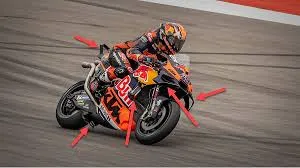
They began as small fins on MotoGP machines designed to prevent wheel lift during explosive acceleration. At that time, they were controversial—some said they looked strange, others felt they made racing too technical. But the effect they had was undeniable. Riders described their front ends as more planted, more predictable, and more stable.
Once manufacturers saw the results, winglets began appearing on production motorcycles. Today, they are seen on everything from liter-class superbikes to middleweight machines. In the real world, winglets help in more ways than most riders expect:
- They reduce front-end lift at high speeds.
- They help the bike stay steady during sharp corner exits.
- They create stability during overtakes or strong wind gusts.
- They make the steering feel more controlled at highway speeds.
Even casual riders feel the difference. A bike with winglets simply feels more confident, especially when airflow becomes unpredictable.
In the coming years, winglets are expected to evolve further. Instead of being “add-ons,” manufacturers may integrate them directly into the body shape, making them functional yet invisible. Adaptive winglets—those that adjust with speed—are also a future possibility as electronic systems become more advanced.
Fairings: The Unsung Heroes of Stability, Comfort, and Speed
If winglets are the new stars of modern motorcycles, fairings have always been the quiet backbone of aerodynamic design. They define how a motorcycle looks and how it slices through the air.
A well-designed fairing does far more than add beauty. It controls the air that hits the bike and shapes it into a smoother, cleaner flow. This makes the ride:
- Less tiring
- More stable
- More fuel-efficient
- Better balanced at different speeds
Fairings also play a huge role in rider comfort. Anyone who has ridden a naked bike at 120 km/h knows how exhausting wind pressure can become. A proper fairing reduces buffeting, directs airflow away from the rider’s chest and helmet, and creates a calm zone behind the windshield.
This is why upgrading to better fairings has become a popular trend—not just for aesthetics, but for real-world riding comfort. Owners of lightweight sport bikes especially benefit from improved aerodynamics. Many riders look into options like Kawasaki Ninja 400 Fairings because even small improvements in airflow make a noticeable difference on bikes in this category.
What’s even more exciting is how fairing designs are evolving. Manufacturers are blending sharp edges with soft curves to guide airflow more efficiently. Air ducts, slits, and vents are becoming functional elements rather than decorative ones. In the next few years, we may see bikes with fairings shaped by AI wind simulations, offering a balance of styling and pure aerodynamic efficiency.
How Airflow Affects the Rider and the Machine
To understand why aerodynamics matters so much, it helps to break it down into simple terms.
When a motorcycle moves, it is pushing itself against a wall of air. The faster you go, the thicker that invisible wall becomes. At higher speeds, airflow becomes the biggest force working against the bike—even more than the weight of the machine.
This affects several things:
Stability: Uncontrolled air can make the bike feel nervous, especially the front end. Aerodynamic parts help calm this movement.
Rider fatigue: Windblast hits the helmet and chest the hardest. Proper fairings reduce strain on the neck and shoulders.
Fuel efficiency: A streamlined motorcycle moves with less resistance, which helps reduce fuel consumption.
Heat management: Modern bikes run hot. Airflow channels help pull heat away from the engine and ride
Handling: Smooth airflow improves cornering stability and allows the bike to stay predictable.
Even at moderate speeds, riders feel the difference immediately. Highway touring becomes more relaxed, corners feel cleaner, and the whole motorcycle feels more “sorted.”
The Rise of Carbon Fiber and the Next Phase of Aerodynamic Evolution
Carbon fiber has added a new layer to the world of motorcycle aerodynamics. Because the material is incredibly light yet extremely strong, engineers can design sharper, more precise aerodynamic shapes without worrying about weight. Carbon fiber fairings and winglets can achieve angles and contours that ordinary plastic simply can’t maintain.
The result is a motorcycle that feels quicker, responds better, and looks far more aggressive.
Riders increasingly choose carbon fiber not only for its premium look but also for the performance benefits it brings. The reduced weight improves acceleration and handling, while the rigid structure ensures that the aerodynamic shape remains stable even at high speeds.
In the future, aerodynamic components will likely combine carbon fiber with intelligent design features, such as:
- Micro-venturi channels for smoother airflow
- Integrated winglets hidden inside body lines
- Fairings that flex slightly based on wind pressure
- Aerodynamic body parts designed using real-time simulation data
Electric motorcycles will also push aerodynamic innovation forward. Because electric bikes depend heavily on efficiency to maximize range, manufacturers will invest more in wind-tunnel shaping and airflow optimization.
The next generation of motorcycles may look radically different—not because of styling, but because aerodynamics will influence every curve, angle, and line.
Why Aerodynamics Will Define the Next Era of Riding
Motorcycles are entering a new phase—where performance isn’t just about speed but about harmony between machine and air. Aerodynamics affects how a bike feels, how safe it is, and how enjoyable each ride becomes.
Today, fairings and winglets are more than accessories. They are essential tools that shape stability, comfort, and confidence.
And as technology continues to blend with riding culture, the importance of aerodynamics will only grow.
In the coming years, we can expect:
- More production bikes with integrated winglets
- Fairings designed by computational airflow simulations
- Increased use of lightweight materials like carbon fiber
- Bodywork that adapts to speed and wind
- Aerodynamic shapes influencing even commuter and mid-range motorcycles
The future of motorcycling isn’t just about more power. It’s about better control, better comfort, and better connection to the road—all made possible through smarter airflow science.
For riders, this is an exciting era. Whether you love fast weekend rides, long-distance touring, or simply cruising to work, aerodynamics is shaping a world where every motorcycle feels sharper, smoother, and more stable than ever before.
And this is only the beginning.