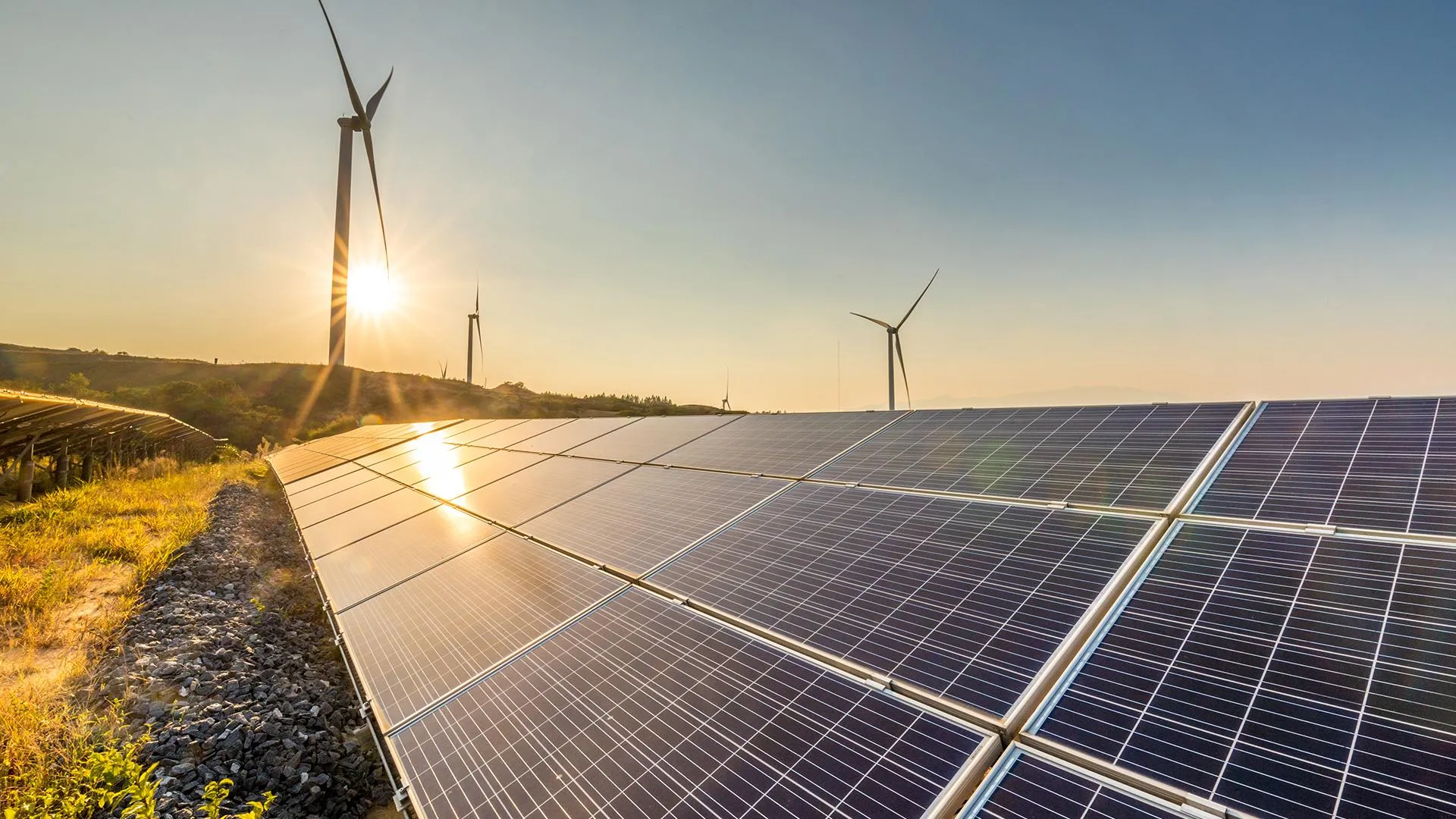
The world is shifting towards cleaner energy to combat rising temperatures, and the Inflation Reduction Act supports this transition. The Act accelerates green energy adoption by expanding long-term tax incentives, particularly the Investment Tax Credit (ITC) and Production Tax Credit (PTC).


Out of these, the Investment tax credit is one of the most impactful incentives. It is aimed at helping businesses, municipalities, nonprofits, and energy developers reduce the cost of clean energy adoption. The Investment Tax Credit can significantly lower upfront costs and boost clean energy projects.
In this article, we’ll understand how that works, while also giving you some Practical Steps to leverage the Investment Tax Credit for Your Clean Energy Projects.
What Is the Investment Tax Credit?
The Investment Tax Credit gives businesses and homeowners money to put into renewable energy systems. It lets taxpayers take a percentage of the price of installing a renewable energy system off their federal taxes.
The amount of tax credit a taxpayer can get depends on the type of technology they installed and when they did it. Solar energy projects, for example, started building before the end of 2019 and were entitled to a 30% tax credit. However, this percentage goes down over time because the goal is to encourage quick adoption and market maturity. According to the U.S. Environmental Protection Agency, these types of projects are eligible for the investment Tax credit.
Eligible for ITCor PTC
- Multiple solar technologies
- Multiple wind technologies
- Municipal solid waste
- Geothermal (electric)
- Tidal
Eligible for Investment Tax Credit
- Energy storage technologies
- Microgrid controllers
- Fuel cells
- Geothermal (heat pump and direct use)
- Combined heat & power (CHP)
- Microturbines
- Interconnection costs
Difference between ITC and PTC
There are some major differences between Investment Tax credit and Production Tax credit. They are:
| Factor | Investment Tax Credit (Investment Tax Credit) | Production Tax Credit (PTC) |
| What it rewards | Upfront capital investment | Actual electricity produced over time |
| How credit is calculated | Percentage of total project cost | Cents per kilowatt-hour (kWh) generated |
| Best suited for | High-capex projects or technologies with variable output (e.g., storage, solar in some cases) | Large utility-scale projects with consistent, high energy production (e.g., wind, geothermal, biomass) |
| Duration of benefit | One-time credit applied at project commissioning | Annual credit for the first 10 years of operation |
| Key advantage | Reduces upfront cost burden | Rewards efficient long-term energy generation |
Investment Tax Credit Rates Under the Inflation Reduction Act
Now, let’s take a look at the Investment Tax Credit rates under the IRA. First, there is a base credit structure: projects < 1 MW AC automatically qualify for the full 30% Investment Tax Credit, while projects ≥ 1 MW AC start with a 6% base Investment Tax Credit and can increase to 30% by meeting labor requirements.
So, what are those labor requirements? Workers must be paid a prevailing wage, and qualified apprentices must complete a required percentage of labor hours. By meeting these requirements, large projects can achieve the full 30% credit
You can also stack the Investment Tax Credit to over 50% by using US-made steel, iron, and components, which strengthens the US supply chain and manufacturing, adding 10% to the credit. Another 10% boost can be added if the project is built on brownfields, former fossil fuel sites, or communities impacted by coal plant closures.
Additionally, projects < 5 MW AC can receive a low-income bonus of 10–20% if they are built on low-income or tribal lands. The full 20% applies to low-income residential or economic benefit projects. This not only benefits the planet but also supports low-income communities.
How Investment Tax Credit Lowers Clean Energy Project Costs
Now, let’s finally understand how the Investment Tax Credit lowers the Clean energy project costs.
Reducing Upfront Capital Expenditure
Clean energy isn’t exactly affordable; the equipment itself costs a lot, combine that with the construction and you have a big bill on your desk. The Investment Tax Credit effectively reduces this number by almost 30-50%.
Improving Project ROI and Payback Period
By reducing upfront costs, ITC shortens the payback period, making clean energy financially compelling for commercial, industrial, and municipal sectors. For example, a rough estimate suggests that a 30% Investment Tax Credit cut would reduce the payback period from 8 years to 5 years, depending on scale.
Boosting Project Feasibility for Nonprofits & Public Entities
Under new rules, certain organisations are tax-exempt and can use the Investment Tax Credit through direct pay; the institutions in question are:
- Schools, universities
- Local governments
- Tribal governments
- Public hospitals
- Municipal utilities
Practical Steps to Leverage the Investment Tax Credit for Your Clean Energy Projects
How can you avail of the Investment Tax Credit for your clean energy projects? Below is a step-by-step guide on how you can do that.
| Step | What You Need to Do | Why This Step Matters |
| Determine Investment Tax Credit Eligibility | • Confirm technology type• Verify project size (<1 MW or ≥1 MW)• Check construction timeline• Assess bonus credit eligibility | Ensures the project qualifies for the correct Investment Tax Credit rate and helps maximize total credit value. |
| Evaluate Labor Compliance Requirements | • Follow prevailing wage rules• Track apprentice hours• Maintain wage documentation | Needed to receive the full 30% Investment Tax Credit instead of the reduced 6%. Non-compliance = major loss in credit value. |
| Consider Financial Structuring Options | • Explore tax equity partnerships• Consider transferability or direct pay• Choose a structure based on tax appetite | Ensures you can fully monetize the credit even if you lack federal tax liability. |
| Maximize Bonus Opportunities | • Map Energy Community eligibility• Use domestic content procurement• Apply for Low-Income Program allocations | Bonus credits add an extra 10%-20%, significantly lowering total project costs. |
| Document All Project Costs Carefully | • Track equipment, labor, and interconnection costs• Maintain organized, audit-ready files | Ensures accurate IRS credit calculation and protects against compliance issues or audits. |
Conclusion
The Inflation Reduction Act is a great step towards the safety of our planet from climate change by providing credit to clean energy projects. The Investment Tax Credit can help you save a lot of money on these projects by giving a line of credit of at least 30-50% of the costs under certain conditions, and non-taxed sectors can avail it through direct repayment.