Selecting the right equipment to maintain your swimming pool is one of the most important decisions you will make as a pool owner. The market is flooded with options, ranging from simple manual tools to sophisticated machines that learn the layout of your backyard oasis. Making the wrong choice can result in wasted money, frustration, and a pool that is never quite as clean as you want it to be.

Finding the perfect match requires understanding your specific pool environment, your budget, and how much personal effort you are willing to invest. This guide breaks down the different categories of cleaners and helps you navigate the features that matter most, ensuring you spend more time swimming and less time scrubbing.
Assessing Your Specific Pool Needs
Before you even look at a product, you must evaluate the physical characteristics of your pool. An in-ground pool with a deep diving well has different requirements than a flat-bottomed above-ground pool. The size of the pool determines the cable length or hose reach you will need.
Consider the debris load in your yard. If your pool is surrounded by large oak or pine trees, you will battle heavy leaf fall and acorns. This environment demands a cleaner with a large throat and a spacious debris bag. Conversely, if your pool is in a screened enclosure or a desert environment, your primary enemy is likely fine dust and sand. In this case, a cleaner capable of filtering out micron-sized particles is essential.
Finally, look at your pool surface. Concrete or gunite pools are durable but abrasive, requiring sturdy wheels and brushes. Vinyl liners and fiberglass shells are smoother but more delicate; they need cleaners with softer tracks or foam rollers to prevent scuffing or tearing the material.
Understanding Suction-Side Cleaners
Suction-side cleaners are often the entry-level choice for automatic cleaning. These devices attach to your existing pool skimmer or a dedicated suction line. They utilize the suction power generated by your main pool pump to move around the floor and vacuum up debris.
The primary advantage of this type is simplicity and cost. They have fewer moving parts than other automatic cleaners, which generally means lower maintenance costs. They are excellent at removing medium-sized debris and fine silt. However, because they rely on your pool filter to trap the dirt, they increase the pressure on your filtration system. You will find yourself backwashing or cleaning your filter cartridges more frequently.
Suction cleaners can also inadvertently struggle with large debris like palm fronds or heavy twig loads, which can clog the throat of the cleaner or the skimmer basket itself, potentially starving the pump of water.
The Power of Pressure-Side Cleaners
Pressure-side cleaners operate on the opposite principle. Instead of sucking water out, they use water pressure returning to the pool to drive the unit and create a venturi effect that vacuums debris into an attached bag. Many of these units require a dedicated booster pump to function correctly, though some low-pressure models run off the standard return jets.
These are the workhorses for pools with heavy debris. Because they capture leaves and sticks in their own bag, they do not clog your main filter. This relieves strain on your filtration system and maintains better water circulation. They are also generally faster than suction cleaners and distribute filtered water around the bottom of the pool.
The downside is the initial cost and installation complexity. If your pool was not plumbed for a pressure cleaner during construction, retrofitting one can be expensive. They also consume more electricity if a booster pump is required.
The Rise of Robotic Cleaners
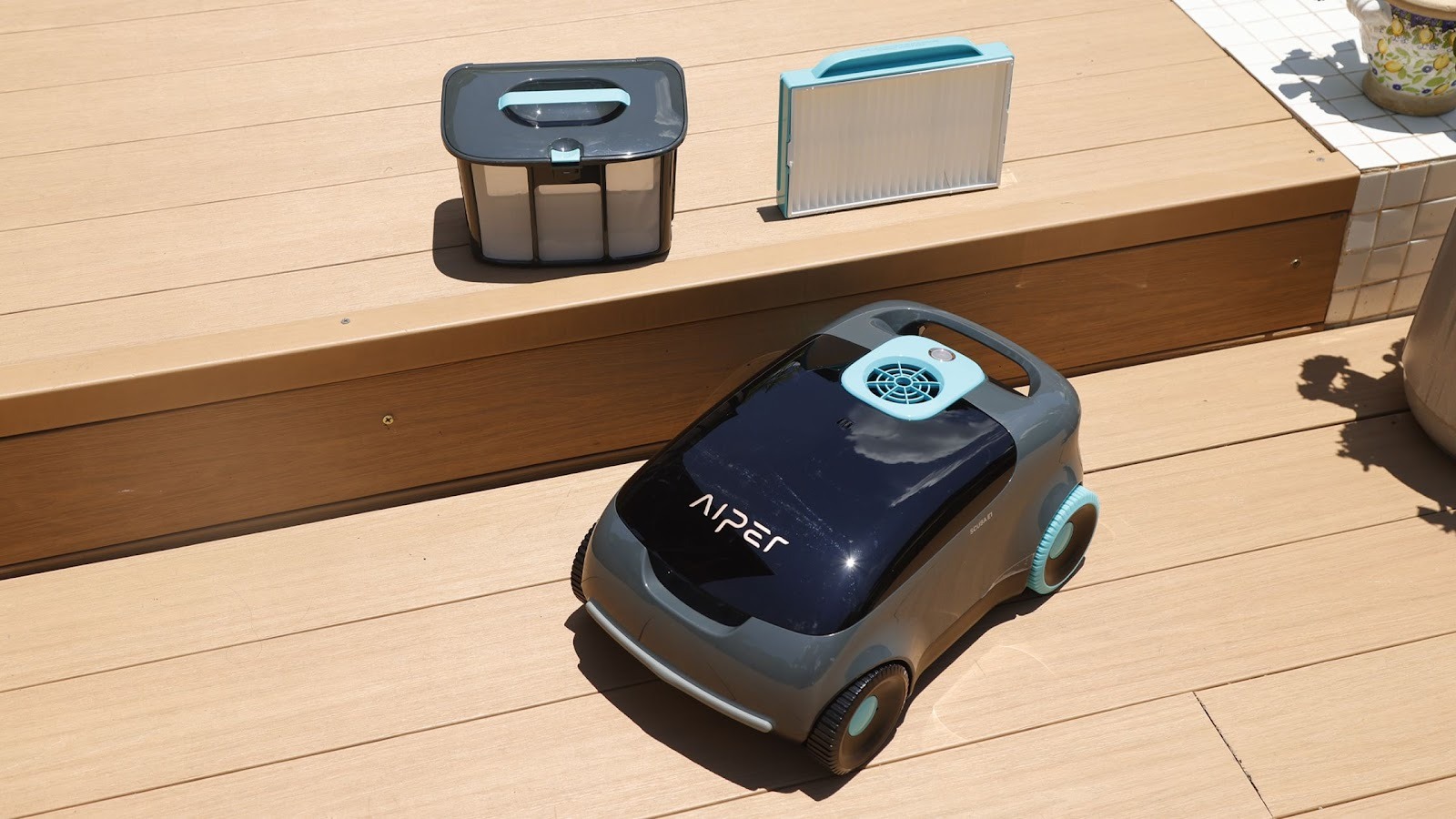
For energy efficiency and superior cleaning performance, the industry has shifted toward robotic cleaners. A pool vacuum robot is a self-contained unit that runs on low-voltage electricity from a standard outlet. It has its own pump and drive motor, meaning it does not rely on your pool’s plumbing system at all.
Robotic cleaners are often considered the best all-around choice. They scrub the floor, climb the walls, and often clean the tile line where scum builds up. Because they filter the water they vacuum, they actually act as a secondary filtration system, removing fine particulates and circulating chemicals.
While the upfront cost is higher than a suction cleaner, the operational cost is significantly lower. They cost pennies to run per cycle compared to the high energy consumption of running a main pool pump or booster pump. When choosing a robot, look for features like swivel cables to prevent tangling and programmable timers for convenience.
The Role of Manual Cleaning Tools
Even with the best automatic cleaner, manual tools remain relevant. There are spots that machines simply miss, such as tight corners on steps or swim-outs. A high-quality manual vacuum head and a telescopic pole are necessary backups for spot cleaning after a storm or for removing algae blooms.
Furthermore, no bottom cleaner can effectively handle floating debris. While your built-in skimmer does some work, an automatic pool surface skimmer is a valuable addition. These devices float on the water and move around independently, collecting leaves and bugs before they sink to the bottom. By catching debris at the surface, you reduce the workload on your bottom cleaner and prevent organic stains on the pool floor.
Smart Features and Connectivity
Modern pool cleaners are increasingly integrating with smart home technology. High-end robotic models now offer Wi-Fi connectivity and smartphone apps. This allows you to steer the cleaner manually to a dirty spot, schedule cleaning cycles while you are at work, or receive a notification when the filter canister is full.
While these features add convenience, they also add to the price. Determine if you truly need remote control capabilities or if a simple “press and go” model suffices. Often, a reliable cleaner with a good navigation algorithm is more valuable than one with complex electronics that may be prone to failure in a harsh saltwater environment.
Warranty and Repairability
A pool cleaner is a machine that operates underwater in a chemical environment; wear and tear are inevitable. Before making a final purchase, investigate the warranty terms. A two or three-year warranty is standard for quality robotic units.
Equally important is the availability of replacement parts. Check if local pool stores service the brand you are considering. Consumable parts like tracks, brushes, and filter bags should be easily accessible. Buying a cheaper, obscure model online might save money upfront but can render the unit useless if a specific gear or belt breaks and cannot be replaced.
Making the Final Decision
The best pool cleaner is one that fits your lifestyle. If you are budget-conscious and have a smaller pool with light debris, a suction-side cleaner is a logical choice. If you have a large pool surrounded by trees, the power of a pressure-side cleaner is unmatched. For those seeking the deepest clean with the highest energy efficiency and minimal wear on pool equipment, a robotic cleaner is the superior investment.
By carefully matching the cleaner’s capabilities to your pool’s specific challenges, you ensure a hygienic swimming environment and protect the longevity of your pool finish. The right tool transforms pool ownership from a chore into a pleasure.