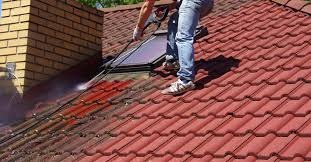
Cleaning a tile roof properly requires three main steps: soft washing with low pressure, using the right cleaning solutions, and manual scrubbing for stubborn spots. Never use high pressure as it damages tiles.

Waterfront homes, especially in Riviera Beach and in West Palm Beach, face unique challenges. Salt air, constant humidity, and coastal storms create perfect conditions for algae and moss. Your tile roof needs special attention in these environments.
Professional roof cleaning in West Palm Beach understands these coastal challenges. The salty environment speeds up deterioration and requires different approaches than inland properties.
Why Waterfront Tile Roofs Need Special Care
Living by the water is great, but tough on your roof. Salt corrosion can accelerate the deterioration of roofing materials and reduce their lifespan. The salt doesn’t just sit on the surface. It works its way into the pores of your tiles.
Coastal areas have higher humidity levels that can lead to mold, mildew, and rot. This moisture never really goes away. Even on sunny days, the air carries dampness from the ocean.
The combination of salt and moisture creates a breeding ground for organisms. Algae, moss, and lichen thrive in these conditions. They appear faster and grow thicker on waterfront properties.
Clay and concrete tiles maintain their integrity for over 50 years in coastal environments with minimal degradation from salt air. But only if you maintain them properly. Neglect cuts that lifespan in half.
Understanding Different Tile Roof Cleaning Methods
There are three primary methods to clean a tile roof: low-pressure washing, eco-friendly chemical treatment, and manual scrubbing. Each method serves a specific purpose. You often need to combine all three for the best results.
Soft Washing Method
Soft washing uses low-pressure water and specific cleaning products that target algae, dirt, and debris. This method protects your tiles from damage. High pressure can crack or dislodge tiles completely.
The soft wash process applies the cleaning solution first. The solution sits on the roof for 10 to 15 minutes. This dwell time lets chemicals break down organic growth at the root level.
Then you rinse with low-pressure water. The pressure should be under 500 PSI. Anything higher risks damaging the tile surface or protective coating.
Chemical Treatments
Eco-friendly chemical treatments use non-toxic, biodegradable cleaners designed for tile roofs that break down algae and moss without scrubbing. These solutions work differently from bleach.
Bleach might make the roof look cleaner temporarily. But it doesn’t kill growth at the root. The algae come back within a few months. Bleach can also hide the problem instead of getting rid of it, and moss and algae may still be there.
Proper roof cleaners contain surfactants and biocides. They penetrate deep into organic matter. The growth dies completely and takes longer to return.
Manual Scrubbing
Use a stiff-bristled brush and bucket of soapy water to scrub tiles, allowing you to target specific areas with more grime buildup. Manual cleaning works best for stubborn spots that chemicals alone won’t remove.
Use a soft-bristle brush to gently scrub affected spots without applying excessive pressure that could damage tiles or strip away protective coatings. Focus on shaded areas where moss grows thickest.
Scrubbing requires patience. Work in small sections. Keep the surface wet while you scrub. This prevents scratching and makes the work easier.
Safety Precautions You Cannot Skip
Always wear eye protection and gloves when using cleaning solutions. Chemical cleaners can splash or drift in the wind. Protect your skin and eyes at all times.
Make sure you have non-slip shoes to prevent slips and falls, and always walk along overlapping tiles to stay on the flattest areas of the roof. Wet tiles become extremely slippery.
Do not clean your roof in windy, wet, or overly hot conditions. Wind carries chemicals where you don’t want them. Wet surfaces increase fall risk. Extreme heat causes rapid evaporation of cleaning solutions.
Use proper ladder placement and stabilizers. Secure the ladder at both top and bottom. Have someone spot you when possible. Never work alone on a roof.
Check your insurance policy before starting. Many policies don’t cover damage caused by DIY roof maintenance. Walking on tiles wrong can void your coverage.
Step-By-Step Tile Roof Cleaning Process
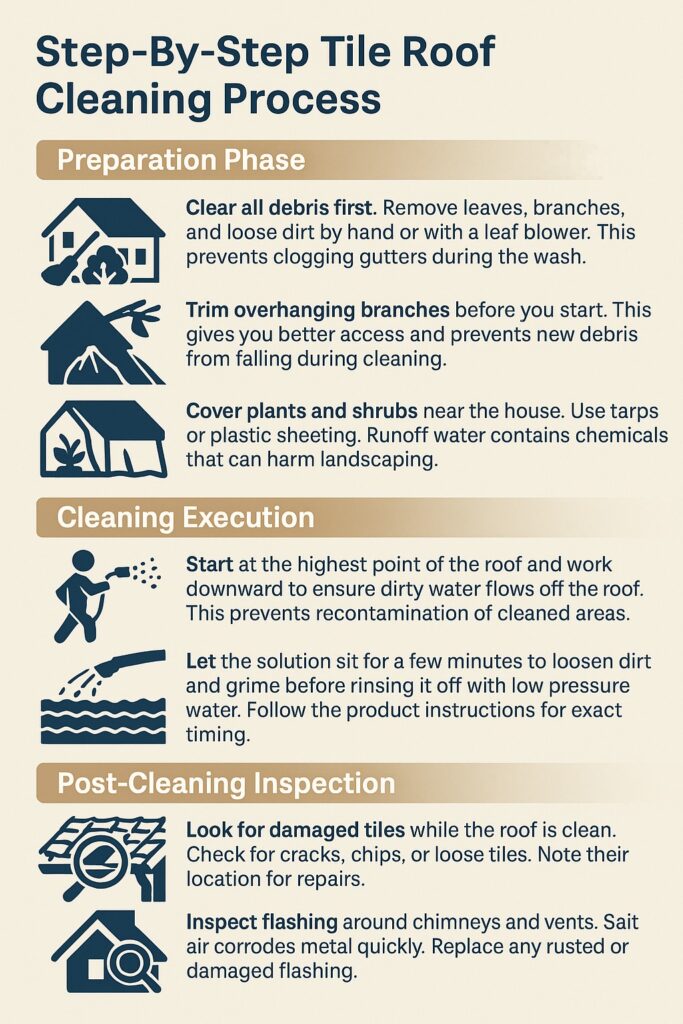
Preparation Phase
Clear all debris first. Remove leaves, branches, and loose dirt by hand or with a leaf blower. This prevents clogging gutters during the wash.
Make sure to clean off leaves, twigs, and other debris from your roof regularly to stop it from breaking down and hurting your roof tiles. Even small twigs can block water flow.
Trim overhanging branches before you start. This gives you better access and prevents new debris from falling during cleaning.
Cover plants and shrubs near the house. Use tarps or plastic sheeting. Runoff water contains chemicals that can harm landscaping.
Cleaning Execution
Start at the highest point of the roof and work downward to ensure dirty water flows off the roof. This prevents recontamination of cleaned areas.
Apply cleaning solution with a pump sprayer. Work in sections of about 100 square feet. Don’t let the solution dry on the tiles.
Let the solution sit for a few minutes to loosen dirt and grime before rinsing it off with low-pressure water. Follow the product instructions for exact timing.
Rinse thoroughly from top to bottom. Make sure no chemical residue remains. Leftover chemicals can damage tiles over time or attract more dirt.
Post-Cleaning Inspection
Look for damaged tiles while the roof is clean. Check for cracks, chips, or loose tiles. Note their location for repairs.
Inspect flashing around chimneys and vents. Salt air corrodes metal quickly. Replace any rusted or damaged flashing.
Check gutters and downspouts. Make sure they’re clear and water flows freely. Blocked gutters can cause water backup under tiles.
How Often Should Waterfront Homes Clean Tile Roofs
Tile roof cleaning should be completed every other year or as often as needed to remove dirt, dust, algae, lichen, and other debris. But waterfront homes need more frequent cleaning.
In rain-soaked, humid states such as Florida, you should get your tile roof cleaned at least once per year. The coastal environment accelerates organic growth.
Because of dampness and humidity in the area, Tampa roof cleaning should occur at least once per year. This applies to most waterfront locations.
Several factors affect your cleaning schedule. Homes with heavy tree cover need more frequent cleaning. If you’ve got a lot of trees hanging over your roof, you’ll have more leaves and debris falling on it, making it dirtier faster.
The type of tiles also matters. Concrete tiles need scrubbing more often than smoother, less absorbent tiles. Concrete’s porous surface holds moisture and attracts growth.
Common Mistakes That Damage Tile Roofs
Never use a pressure washer on high settings. High-pressure water from a pressure washer can crack or dislodge tiles, leading to potential leaks and expensive repairs.
Pressure washing can strip away the protective surface of tiles, reducing their lifespan and making them more susceptible to weather damage. Once you remove this coating, the tile deteriorates much faster.
A single misstep can cause damage that’s expensive to repair, with terracotta tile repairs costing between $700 and $1000 per square foot. Walk carefully and distribute your weight properly.
Avoid using bleach or other harsh chemicals when cleaning your tile roof as these substances can be highly corrosive. They damage both tiles and the underlying structure.
Don’t spray water upward against the tile direction. This can force water under tiles and into your home. Always spray downward with the slope.
When To Hire a Roof Cleaning Company
Tile roof cleaning involves high-risk conditions and specialized care, so if you’re unsure about doing it yourself, hire a trusted local roofing contractor. Most homeowners should use professionals.
Using a pressure washer safely and effectively is more complicated than many homeowners realize. The wrong technique causes permanent damage.
A professional power washing company ensures a safe, effective clean, and your tile roof cleaning costs are often far lower than you might realize. Professionals have proper equipment and insurance.
A good roof cleaning company uses soft wash systems. They understand tile materials and coastal conditions. They know which chemicals work best for waterfront properties.
Professionals can spot problems you might miss. As they are cleaning your roof, they may notice areas that need repairing. Early detection prevents expensive repairs later.
Protecting Your Waterfront Tile Roof Long-Term
Trim trees to reduce shade over your roof to help prevent moss from taking hold of your tile rooftop. Less shade means less moisture retention and slower growth.
Install zinc strips along the first shingle row or right below the roof’s ridge. When it rains, zinc particles wash down the roof. They inhibit algae and moss growth naturally.
Rinse your roof with fresh water periodically to remove salt deposits, especially after storms. This simple step significantly extends tile life in coastal areas.
Schedule regular inspections twice yearly. Check after major storms and before rainy seasons. Catching small problems early prevents major damage.
Consider applying a protective sealant after cleaning. Sealants create a barrier against moisture and salt. They make the next cleaning easier and extend the time between cleanings.
Seasonal Considerations For Coastal Cleaning
Late spring and early fall are optimal times for cleaning when weather is not too hot, making it safer and more comfortable for the cleaning crew. These seasons have the best conditions.
Avoid peak hurricane season from June through September. High winds could undo all your cleaning efforts. Schedule cleaning before or after storm season.
Clean in early spring to remove winter accumulation. Salt deposits build up during winter storms. Removing them before summer heat prevents baking them into the tiles.
Fall cleaning prepares your roof for winter weather. It removes organic growth that can trap moisture. This prevents freeze-thaw damage in cooler months.
DIY vs Professional Cleaning: Making the Right Choice
DIY cleaning saves money upfront. You have complete control over timing and methods. For minor cleaning or spot treatments, DIY makes sense.
But the risks are substantial. Unstable ladders, sloped surfaces, and improper safety gear can lead to devastating personal injury. Medical bills from a fall exceed any savings.
The best tile roof cleaning method is to call a power washing contractor specializing in soft wash pressure washing. They have the right equipment and training.
Professionals complete the job faster and safer. They carry liability insurance. If something goes wrong, you’re protected. Their experience prevents costly mistakes.
For waterfront homes specifically, professional cleaning is worth the investment. The unique challenges of salt air and coastal weather require specialized knowledge. A roof cleaning company familiar with coastal properties delivers better results.
Maintaining Your Clean Tile Roof
After cleaning, establish a maintenance routine. Inspect your roof monthly from the ground. Look for visible growth or damage. Use binoculars for a closer view.
Keep gutters clear year-round. Clogged gutters create moisture problems. Water backs up under tiles and causes rot.
Remove debris after storms promptly. Don’t let leaves and branches sit for weeks. They trap moisture and start the growth cycle again.
Document your cleaning schedule and any repairs. Keep photos of your roof’s condition over time. This helps track problems and shows proper maintenance for insurance or resale.
A clean tile roof protects your waterfront home for decades. Regular maintenance prevents expensive repairs. It preserves your home’s value and keeps it looking beautiful. The effort you put into proper tile roof cleaning pays back many times over in extended roof life and avoided damage.