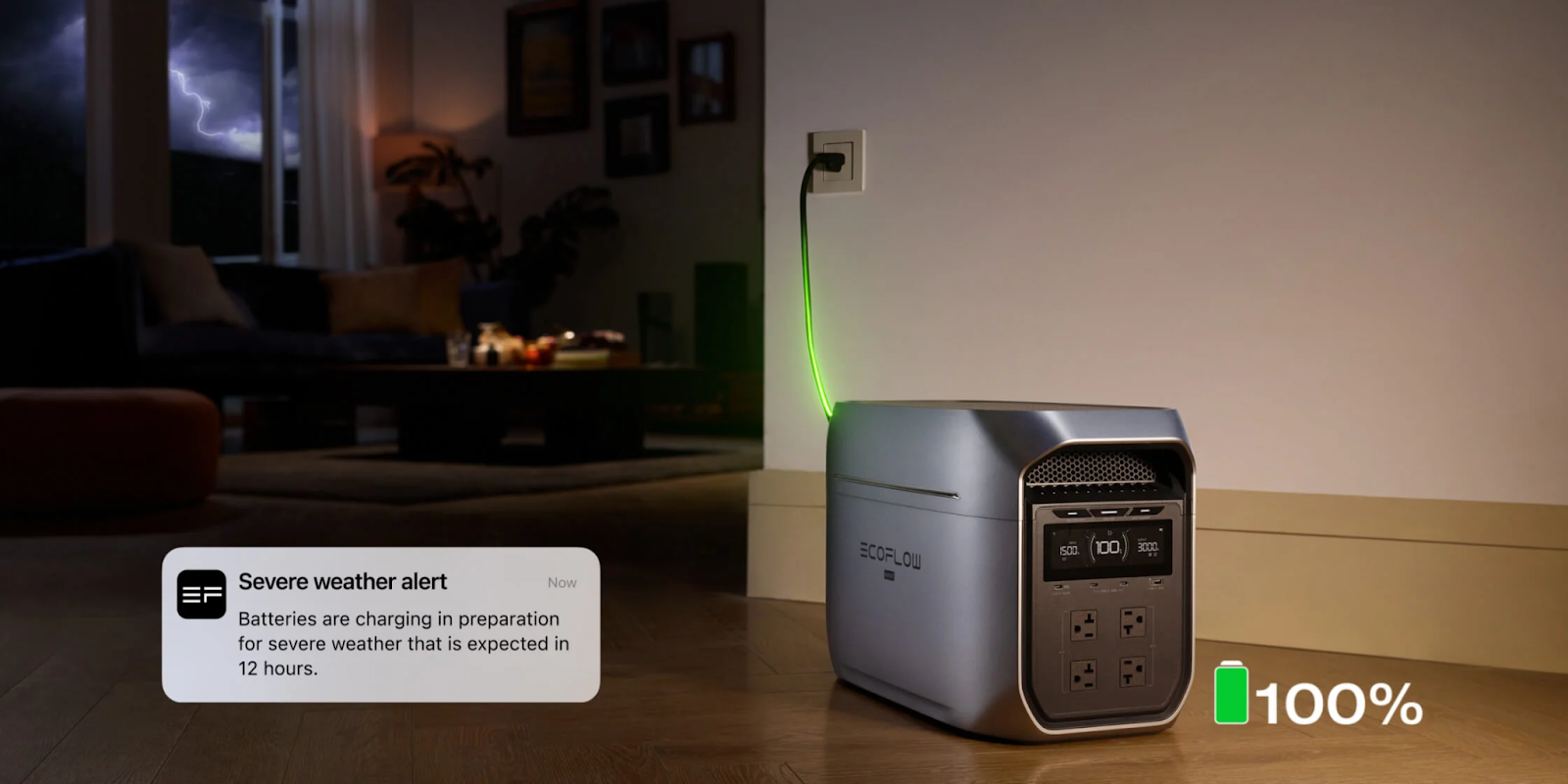
For decades, the gas generator has been the go-to solution for backup power. When storms hit, or when you’re off-grid, the deep rumble of an engine has meant safety, light, and heat. But times are changing.


Today, quiet, emission-free solar-powered batteries — often built into modern power stations — are challenging the old standard. They promise the same reliability without the noise, fumes, or constant refueling.
But can they really replace a gas generator? Let’s look closely at how these two technologies compare, and when one might be the better choice.
1. How Gas Generators Work
Gas generators create electricity by burning fuel — gasoline, diesel, or propane — to spin a motor connected to an alternator. The faster it spins, the more electricity it produces.
They’re simple in concept and powerful in output. A 3,000-watt generator can easily run a refrigerator, a sump pump, or even a small heater. That’s why they’ve long been a staple for homeowners, construction sites, and campers.
But there are trade-offs:
- Fuel dependency: You need to store or buy gasoline, which can be scarce during emergencies.
- Noise and fumes: Most produce 60–80 decibels of sound and emit carbon monoxide — unsafe indoors.
- Maintenance: Oil changes, filter cleaning, and periodic running are required to keep them reliable.
- Environmental impact: Burning fuel emits CO₂ and other pollutants, even during short outages.
They work — but not without cost, inconvenience, or risk.
2. How Solar-Powered Batteries Work
A solar-powered battery system uses photovoltaic (PV) panels to capture sunlight and convert it into electricity. That energy is stored in a battery for later use — day or night, rain or shine.
In a portable version, known as a solar power station, everything is built into one unit:
- Battery storage (measured in watt-hours, Wh)
- Inverter to convert DC to AC power
- Charge controller
- Multiple output ports (AC, DC, USB)
The system is silent, emissions-free, and can be charged from solar panels, wall outlets, or car adapters. Once full, you can use it to power lights, appliances, laptops, or even power tools.
The key advantage: no fuel, no exhaust, and no noise — just stored sunlight.
3. Comparing Power Output
Here’s where gas generators still dominate: sheer raw power.
A mid-size gas generator produces 2,000–5,000 watts continuously, enough for large home appliances or multiple heavy loads at once.
By comparison, even a high-end solar-powered power station might deliver 1,000–3,000 watts of continuous output — still impressive, but less than the strongest fuel models.
However, not every situation demands brute force. Many homeowners only need to keep essentials running during an outage — lighting, Wi-Fi, fridge, and a few electronics. For that, solar systems are more than capable.
The difference is this:
- Generators excel in total power output.
- Power stations excel in energy efficiency, safety, and convenience.
In short, if you need to run an entire household HVAC system or industrial tools, gas still wins. For 90% of everyday needs, solar can already do the job.
4. Duration and Runtime
Gas generators can run indefinitely — as long as you feed them fuel. That’s their biggest strength.
A solar-powered battery, on the other hand, has a fixed storage capacity. Once it’s drained, you need sunlight or grid power to recharge it.
But in practice, the difference isn’t as large as it seems:
- Many modern power stations have expandable battery modules, allowing you to double or triple capacity.
- Solar panels can recharge them daily, even during prolonged outages.
- Because there’s no fuel cost, you can keep recharging for free as long as there’s daylight.
Gas generators give you runtime flexibility; solar gives you endurance and sustainability.
If you plan for 24/7 operation — pairing panels, batteries, and smart usage — a solar setup can effectively run indefinitely, too.
5. Noise and Comfort
Ask anyone who’s camped near a generator: noise fatigue is real. Even the “quiet” models hum like a vacuum cleaner.
Solar-powered systems are completely silent. You can run them inside your home, RV, or tent without disturbance.
That’s not just a luxury; it’s safety. You can sleep soundly with a power station charging your devices right beside you — no exhaust fumes, no vibration, no earplugs needed.
For families with children, elderly members, or pets, this comfort alone can be worth the switch.
6. Safety and Indoor Use
Gas generators must always stay outdoors because they emit carbon monoxide, an odorless but deadly gas. Even a few minutes of exposure indoors can be fatal.
Solar-powered batteries produce zero emissions and generate no heat during operation. They can safely power your home office, medical equipment, or heater fan indoors.
This makes them ideal for:
- Apartment dwellers
- Condos and townhouses
- Cold-weather regions where keeping the generator outside isn’t practical
If you need indoor backup, the power station wins — hands down.
7. Maintenance and Reliability
Keeping a gas generator healthy takes work. You’ll need to:
- Check oil and filters regularly
- Drain old fuel between seasons
- Start it monthly to prevent carburetor issues
A solar power station, by contrast, is maintenance-free. Charge it periodically, store it in a dry place, and it’s ready whenever you need it.
For emergency readiness, that simplicity is powerful — because a system that “just works” is the one that saves the day.
8. Environmental Impact
The environmental argument is straightforward.
A standard 5,000-watt gas generator emits about 1 kilogram of CO₂ per hour. Running it for a 24-hour outage produces roughly the same emissions as driving a car for 300 kilometres.
A solar-powered power station emits nothing during use. Over time, the carbon savings are massive — especially when paired with renewable solar energy.
For Canadians looking to reduce their footprint or qualify for green energy rebates, this difference matters.
9. Cost Comparison Over Time
At first glance, a fuel generator looks cheaper. You can buy one for $800–$1,200, while a large solar battery system may cost $1,500–$3,000 or more.
But that’s just the upfront price. Consider lifetime costs:
| Expense | Gas Generator | Solar-Powered Battery |
| Fuel (gasoline) | $100–$300/year | $0 |
| Maintenance | Oil, filters, tune-ups | None |
| Lifespan | 3–5 years typical | 8–10 years (LiFePO₄) |
| Noise / Emissions | High | None |
Within a few years, the total cost of ownership often balances — and solar systems last longer. Once purchased, every recharge from sunlight is free energy.
10. Portability and Versatility
While both systems are “portable,” their usability differs.
- Gas generators: Heavier (often 25–40 kg), need space for fuel storage, and can’t be transported by air.
- Power stations: Lighter, compact, and airline-safe below certain sizes. They can charge from a car or solar panels anywhere.
For campers, overlanders, and RV owners, that flexibility is priceless. You can power a campsite, a mountain cabin, or even a film shoot — silently and sustainably.
11. Real-World Use Cases
Let’s see how both systems perform in real scenarios:
| Scenario | Gas Generator | Solar Power Station |
| Home blackout (12–24 hrs) | Powers full home; needs outdoor setup | Powers essentials quietly indoors |
| Camping or RV travel | Noisy; restricted in parks | Silent; recharges from solar |
| Medical equipment backup | Unsafe indoors | Ideal for continuous indoor use |
| Construction site | Best for heavy tools | Can supplement smaller tools |
| Long-term off-grid living | Requires constant fuel | Sustainable with solar panels |
No single system wins every category, but for everyday users seeking independence, solar increasingly covers nearly all needs.
12. When a Solar-Powered Battery Is Enough — and When It’s Not
A solar power station can fully replace a generator if your energy demand is moderate and predictable — for example:
- Powering lights, refrigerators, routers, and small appliances during outages.
- Camping, RV trips, and mobile work setups.
- Apartments or suburban homes without space for fuel storage.
It may not fully replace a generator if you rely on:
- Large HVAC systems or electric furnaces.
- High-draw tools or industrial equipment.
- Continuous multi-day power during cloudy, low-sun periods without solar backup.
In those rare cases, a hybrid setup — solar for daily use, generator as emergency backup — offers the best of both worlds.
13. The Future Is Hybrid and Quiet
The energy world is shifting rapidly. Battery prices keep dropping, solar efficiency keeps improving, and portable power stations are becoming smarter and more powerful every year.
Many Canadians now combine both: a solar + battery system for daily resilience, with a small fuel generator as backup for extreme weather. It’s a flexible, future-proof model that balances reliability and sustainability.
Over time, as solar charging speeds and storage capacities increase, the role of gas generators will keep shrinking — just as landlines gave way to mobile phones.
Conclusion
So — can a solar-powered battery replace a gas generator?
For most households, campers, and remote workers, the answer is yes. A well-sized power station, paired with solar panels, can provide safe, quiet, renewable electricity for nearly every modern need.
Gas generators still have their place for industrial loads or extreme emergencies. But for everyday life — from winter blackouts to summer adventures — the future of portable energy is clean, efficient, and solar-powered.
When you trade the rumble of fuel for the hum of sunlight, you don’t just change how you power your world — you redefine what reliable energy truly means.