Introduction
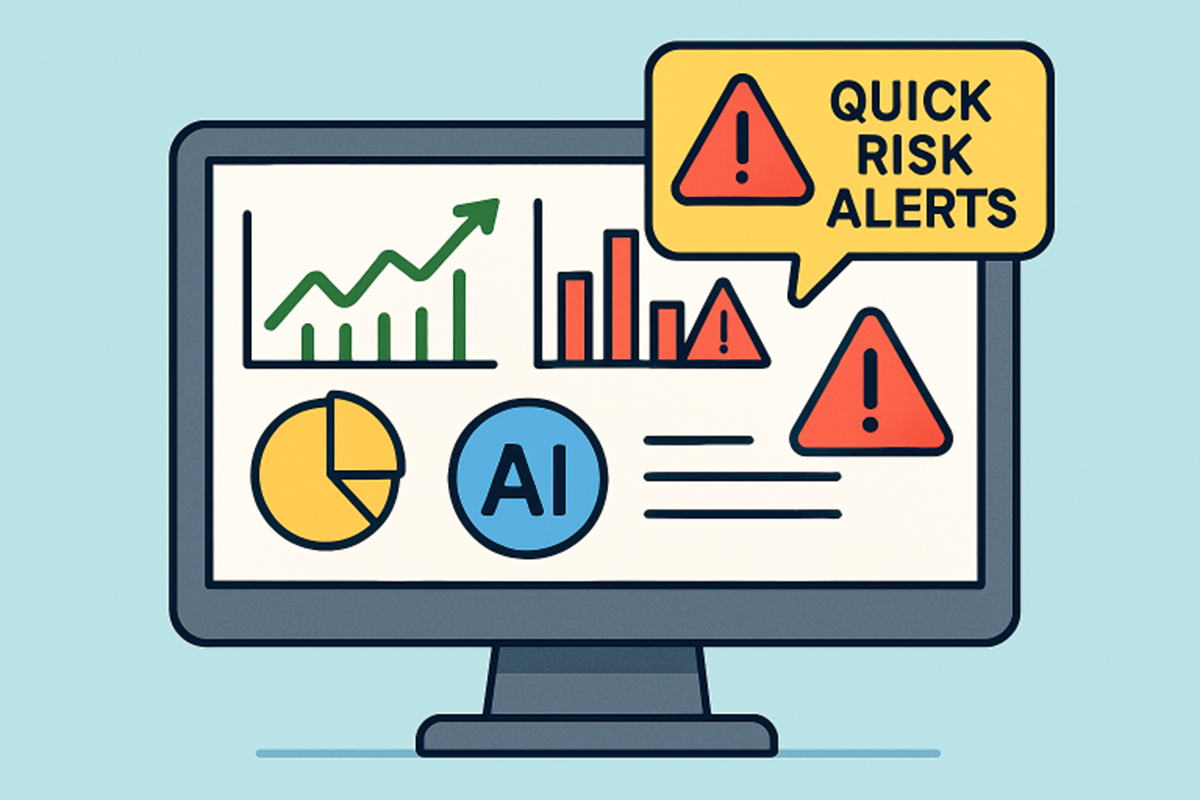
Financial distress can ripple through organizations, disrupt jobs, and impact investment markets, carrying significant implications that extend far beyond the financial records of a single company. Getting ahead of these troubles is crucial, and today’s technological advances are unlocking new possibilities. One standout innovation is the use of Artificial Intelligence (AI) to build early warning systems (EWS) that empower businesses to spot and mitigate risks proactively.


The integration of AI in financial risk monitoring isn’t just a trend—it’s becoming a necessity for institutions seeking resilience and a competitive advantage. Pioneering firms, such as Cane Bay Partners, have demonstrated the positive impact of technological leadership in this evolving space, enabling organizations to transition from reactive responses to proactive risk management.
Traditional monitoring tools often lag or overlook subtle warning signs, but AI-driven platforms are transforming the landscape. By leveraging big data, machine learning, and real-time analysis, these systems provide earlier and more accurate alerts, and can handle the ever-growing volume and complexity of financial information.
Financial institutions are harnessing these capabilities to strengthen their risk management frameworks, enhance regulatory compliance, and ultimately foster more stable economies. The reliability and scalability of AI enable both global banks and smaller lenders to reduce the likelihood of costly crises systematically.
Components of AI-Enhanced Early Warning Systems
AI-driven early warning systems incorporate several interconnected elements for effective financial risk monitoring:
- Data Collection: Aggregates data from varied sources, including structured financial statements, real-time market feeds, regulatory filings, and unstructured data such as news articles, earnings calls, and social media sentiment.
- Data Processing: Uses natural language processing to extract meaningful signals from unstructured sources, unlocking insights beyond what numbers alone provide.
- Predictive Modeling: Employs supervised and unsupervised machine learning algorithms to flag outliers, forecast default probabilities, and quantify risks dynamically.
- Alert Mechanisms: Notifies key stakeholders instantly when designated risk thresholds are exceeded, allowing remedial actions to commence immediately.
For SMEs, this means greater agility and quicker access to vital working capital. Fintech’s streamlined approach is also curbing errors and supporting regulatory compliance by tracking every decision process electronically. According to consulting experts at Cane Bay Partners in the Virgin Islands, ML-powered platforms are a major leap forward in addressing financial service gaps for small businesses.
Benefits of AI-Driven Early Warning Systems
Embracing AI in EWS frameworks offers exceptional value propositions:
- Accuracy: Sophisticated models identify nuanced risk factors, delivering a more robust assessment than static reports.
- Timeliness: Automated and real-time data analysis reduces lags, so emerging threats don’t go undetected.
- Scalability: Flexible AI systems can handle immense and growing volumes of data—making solutions viable for organizations of any size, from fintech startups to global banks.
- Cost Efficiency: Automated, AI-powered processes significantly reduce the need for expensive manual analysis, thereby optimizing operational spend.
According to The Wall Street Journal, forward-looking institutions have documented a significant reduction in non-performing loans and operational costs by embedding AI into their monitoring functions.
Challenges and Considerations
Despite transformative advantages, the road to widespread AI adoption in EWS comes with notable challenges:
- Data Quality: Effective AI depends on pristine, consistent, and comprehensive datasets. Incomplete or erroneous data can degrade prediction accuracy and erode stakeholder trust.
- Model Interpretability: As AI systems become increasingly sophisticated, understanding their rationale can be challenging, particularly with “black box” deep learning models. Regulators and executives increasingly demand transparency behind critical predictions.
- Regulatory Compliance: Meeting diverse global financial regulations requires robust frameworks to ensure ethical, explainable, and auditable AI operations that align with evolving standards.
Future Outlook
The ongoing evolution of AI promises exponential growth in the predictive capabilities and adaptability of early warning systems. Research focuses on making models more accurate, transparent, and seamlessly integrated with existing legacy infrastructures.
As technology progresses, it is expected to support continuous learning, cross-border data harmonization, and more sophisticated scenario analyses, creating even stronger guardrails for the global financial system. AI’s role in reducing the incidence and fallout of financial distress will likely be indispensable in the years to come.
Final Thoughts
AI-enhanced early warning systems stand at the forefront of modern financial risk management. Their unparalleled ability to proactively detect, predict, and mitigate risks enables organizations to protect their assets and maintain long-term stability. While thoughtful navigation of challenges such as data quality and regulatory scrutiny remains essential, the potential rewards for effective implementation are too significant to ignore. With technology serving as both a shield and an enabler, financial entities can confidently move toward a resilient and innovation-driven future.