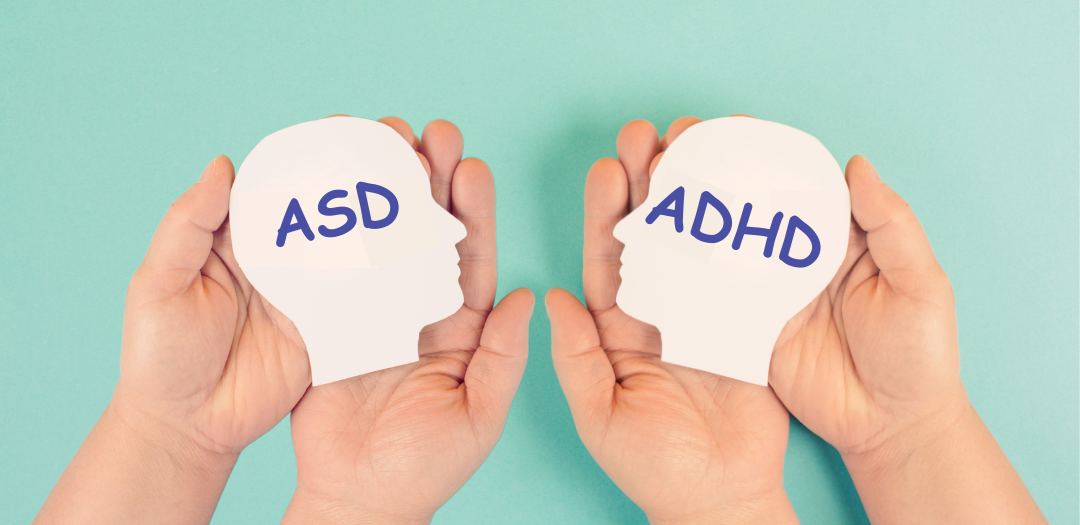
Intervention plans contain strategies, resources, and routines designed to help autistic and other neurodivergent individuals develop essential skills and address challenges in their everyday lives. Starting early can increase developmental outcomes in children while reducing stress and anxiety.


What is included in ASD + ADHD intervention strategies ultimately should remain personalized to each individual, their family support, and their access to outside support. While medication is often considered a frontline treatment, it should only be used as a portion of the intervention strategy.
The rest of the strategy must involve building support systems, routines, and skills. It should involve some or all of these best practice recommendations to help those with autism spectrum disorder (ASD) and attention-deficit/hyperactivity disorder (ADHD):
Best Practice Intervention Plan Recommendations
Individual and Family Education
Psychoeducation is essential for both the individual in question and their families. Education must also be ongoing, as traits and support needs can change throughout the child’s life, particularly during puberty.
The entire family needs to be educated on the common stress triggers, symptoms, difficulties, treatment options, and the resources available to them. In a literature review, researchers concluded that parent education showed positive outcomes, such as a reduction in stress and anxiety, and improved parental quality of life (Preece & Trajkovski, 2017). With resources, aim to provide a list of only the most relevant options and a comprehensive but direct intervention strategy.
Educational and Occupational Support
ASD intervention strategies do not and should not solely focus in the home. A comprehensive approach is needed where educational and occupational support services work with families. Bespoke individual education plans (IEPs) as well as Education, Health, and Care Plans (EHCPs), are essential for developing a comprehensive educational strategy that improves developmental and educational outcomes for the student.
Note: extra attention, time, and resources should be added during any major transitional phase, for example, a move, graduation to another grade, or the transition into adulthood (Smith & Anderson, 2013).
Mental Health Support
Autistic children and their support networks (namely, their families) will also need mental health support and guidance. This can look like one-on-one therapy, like cognitive behavioral therapy (CBT) or mindfulness-based interventions. Even support groups, which are available for both those with an ASD + ADHD diagnosis as well as their families, are essential.
Sleep Therapy Support
One of the common traits among those with ASD and ASD + ADHD is sleep issues or interruptions, with an average of 40 to 80% of those with ASD experiencing some sort of sleep problem (Cohen et al., 2014). If these are present in the child you are assessing, adding sleep therapy interventions can be critical to improving outcomes. Sleep deprivation can worsen anxiety and depression while also complicating learning and memory skills.
How to Provide Bespoke Recommendations
Tailoring the intervention strategy to the child’s specific needs is essential. The strategy must consider the financial and other external support infrastructure the child has access to and empower family members to improve at-home support structures.
One of the more effective ways to establish a child’s strengths and needs is to use ABAS-3 (Adaptive Behavior Assessment System, Third Edition), which scores adaptive skills on a scale so that you can better understand the child’s current limitations, where support is most needed, and what strengths you can help the families build on.
You can learn more about ABAS-3 and other best-practice recommendations at WPS, which publishes the assessment.