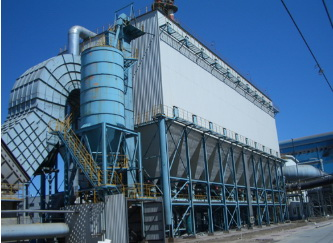
Cement production generates massive amounts of particulate matter at multiple process stages: raw material crushing, kiln operations, clinker cooling, and finish grinding. Cement plant dust filtration systems handle one of the most challenging industrial dust environments you’ll find anywhere. The dust particles range from coarse aggregate down to PM2.5 (particles under 2.5 microns), and the volumes are staggering, with large plants processing thousands of tons of material daily. Without proper filtration, this dust destroys equipment through abrasive wear, creates explosive hazards when concentrations reach critical levels, and causes serious respiratory damage to workers. Modern filtration systems need to capture 99.5% or more of these particles while withstanding extreme temperatures up to 350°C in some locations and operating continuously for years between major maintenance cycles.


Health risks that make filtration non-negotiable
Cement dust contains crystalline silica, which is classified by the International Agency for Research on Cancer as a Group 1 carcinogen. Chronic exposure leads to silicosis, an irreversible lung disease where silica particles scar lung tissue and reduce breathing capacity. Data from occupational health studies shows that workers exposed to respirable crystalline silica at cement plants have significantly elevated rates of chronic obstructive pulmonary disease and lung cancer compared to the general population.
The fine particles, especially those under 10 microns, bypass the body’s natural filtering mechanisms in the nose and throat, penetrating deep into the lungs. Even short-term exposure causes respiratory irritation, coughing, and reduced lung function. Australian workplace exposure standards set permissible exposure limits at 0.05 mg/m³ for respirable crystalline silica over an 8-hour time-weighted average, but achieving this requires comprehensive dust control including effective filtration systems.
Equipment damage from uncontrolled dust
Cement dust is highly abrasive. When it accumulates on conveyor systems, bucket elevators, or inside fan housings, it accelerates wear dramatically. Bearings fail prematurely, belt life gets cut in half, and maintenance costs spiral. I’ve seen plants where inadequate dust collection led to complete conveyor system replacements after just three years instead of the expected ten-year lifespan.
Dust buildup inside electrical enclosures causes short circuits and overheating. Control panels in dusty environments need positive pressure ventilation with filtered air, or they fail regularly. The cost of unplanned downtime when critical equipment stops due to dust-related failures often exceeds the cost of proper filtration systems by a factor of five or more.
Baghouse filters for high-volume cement applications
Baghouse dust collectors using fabric filter bags are the primary filtration technology in cement plants. These systems force dust-laden air through thousands of fabric bags that capture particles on the surface while clean air passes through. Modern baghouses achieve collection efficiencies above 99.9% for cement dust when properly designed and maintained.
The bags are typically made from polyester, polypropylene, or fiberglass fabrics depending on temperature requirements. For areas with exhaust temperatures above 260°C, bags need special heat-resistant materials like P84, Nomex, or PTFE membranes. Bag life varies from two to five years depending on dust characteristics, temperature exposure, and cleaning frequency.
Pulse-jet cleaning systems periodically reverse airflow through the bags to dislodge accumulated dust cake, which drops into hoppers for disposal or reclamation. The cleaning cycle timing affects both filtration efficiency and bag longevity. Too frequent cleaning wastes compressed air and stresses bag fabric, while insufficient cleaning allows excessive dust buildup that increases pressure drop across the system.
Electrostatic precipitators for hot gas streams
In kiln exhaust applications where temperatures exceed what fabric filters can handle, electrostatic precipitators (ESPs) provide an alternative. These systems charge dust particles electrically as they pass through a high-voltage corona field, then collect them on grounded plates. ESPs work effectively at temperatures up to 450°C and have very low pressure drop, reducing fan power requirements.
However, ESPs have lower collection efficiency for sub-micron particles compared to baghouses, typically achieving 95% to 98% efficiency. Cement dust with high resistivity can also cause back-corona problems that reduce collection efficiency. Most modern plants prefer baghouses for their superior particle capture despite the higher initial cost.
System design factors that determine effectiveness
Proper gas velocity through filter media is critical. Too fast and particles don’t have time to contact the filter surface, too slow and you’re oversizing equipment unnecessarily. Most baghouse systems target air-to-cloth ratios between 1.0 and 1.5 meters per minute, though this varies based on dust characteristics.
Dust loading affects sizing requirements. Primary dust sources like crushers and mills generate much higher concentrations (10 to 100 grams per cubic meter) than secondary sources like material transfer points (1 to 5 grams per cubic meter). Higher loading requires larger filtration surface area and more robust cleaning systems.