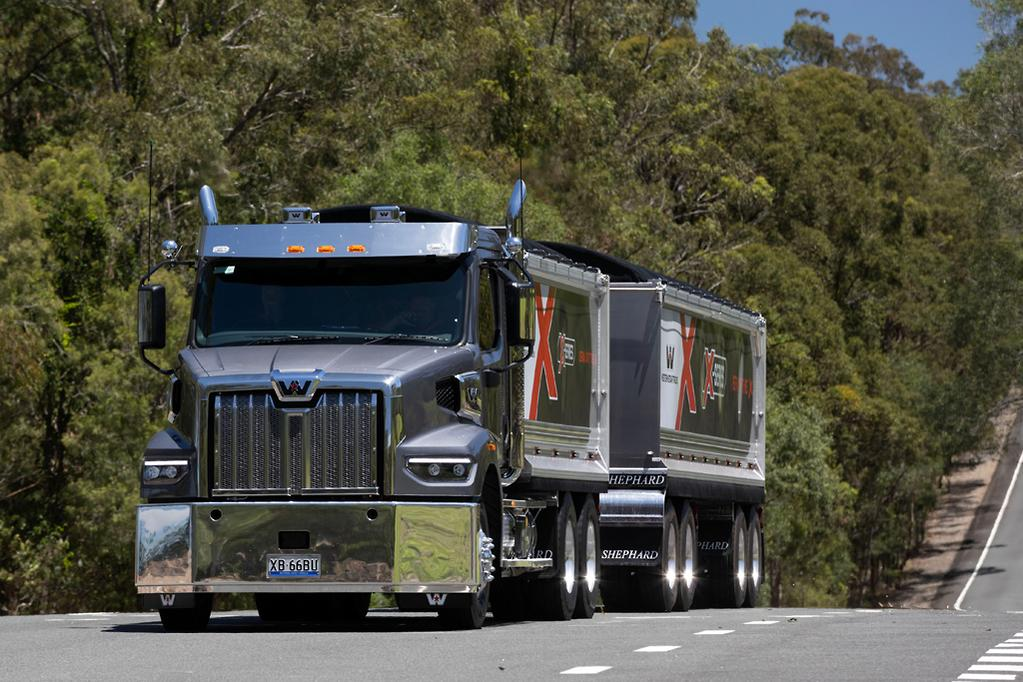
Detroit engines Australia market serves long-haul operators, construction companies, and fleet managers who need serious pulling power combined with reasonable fuel consumption. These engines, manufactured by Detroit Diesel Corporation (now part of Daimler Truck), power many of the heavy vehicles moving freight across the continent. The DD13, DD15, and DD16 series engines are particularly common in prime movers and heavy rigid trucks. What makes them popular isn’t just raw horsepower, though they’ve got plenty of that. It’s the combination of power delivery, integrated drivetrain systems, and surprisingly good fuel efficiency for engines that can haul over 60 tonnes of gross combination mass.


The DD Series Architecture
Detroit’s current lineup revolves around three main platforms. The DD13 produces 350-505 horsepower with torque ratings up to 1,850 lb-ft. It’s a 12.8-liter inline six-cylinder that uses a single overhead camshaft design, which is different from many competitors who still use pushrods. The overhead cam setup allows for more precise valve timing control and better breathing at higher RPMs.
The DD15 steps up to 14.8 liters and cranks out between 455 and 605 horsepower. Torque peaks at 2,050 lb-ft, which is substantial. These numbers matter when you’re pulling B-double configurations weighing 62.5 tonnes across the Nullarbor. That extra torque means the engine doesn’t have to work as hard to maintain highway speeds, which directly impacts fuel consumption and component wear.
Then there’s the DD16, which is honestly a beast. At 15.6 liters, it generates up to 600 horsepower and 2,050 lb-ft of torque. It’s not the most common engine you’ll see, but operators running consistently heavy loads or working in mountainous terrain often spec this one. The larger displacement means it operates at lower stress levels when producing the same power output as smaller engines, which can extend service life.
Integrated Powertrain Advantages
One thing Detroit does differently than many competitors is their integrated powertrain approach. When you buy a Freightliner or Western Star truck with a Detroit engine, it often comes paired with a Detroit DT12 automated manual transmission. This isn’t just random component matching. The engine and transmission communicate constantly through the vehicle’s electronic control systems.
The transmission knows exactly what the engine is doing at any moment, so it can time shifts to occur at optimal points in the power band. This reduces shift shock, improves fuel economy, and makes driving easier. The system can even adjust shift points based on load weight, grade, and driving style. If you’re climbing a steep grade, it’ll hold lower gears longer. On flat highway runs, it’ll shift up earlier to keep RPMs in the sweet spot for fuel efficiency.
This integration extends to other components too. The engine brake (commonly called a Jake brake, though that’s technically a brand name) coordinates with the transmission’s shifting strategy. When you’re descending a long grade, the system will downshift and apply engine braking in a way that maximizes retardation without overheating components or wearing brake pads excessively.
Fuel Efficiency Technology
Detroit has put serious engineering effort into fuel economy. The DD15 Gen 5 engine, which started appearing in Australian trucks around 2017, includes several technologies aimed at reducing fuel consumption. One is asymmetric turbocharging, which uses a turbocharger with different-sized turbine and compressor wheels to optimize performance across a wider RPM range.
Another feature is wave piston technology. The pistons have a specific bowl shape that creates organized air movement during combustion. This swirl pattern helps fuel and air mix more thoroughly, leading to more complete burning. It sounds like marketing speak, but dyno testing shows measurable improvements in thermal efficiency.
The downspeeding strategy is also worth mentioning. Detroit engines are designed to produce peak torque at relatively low RPMs, typically around 1,000-1,200 RPM. This allows trucks to cruise at highway speeds while the engine turns slower, which reduces friction losses and pumping work. Real-world operators report fuel economy figures between 1.5 and 2.2 kilometers per liter when running loaded, which is competitive for the power levels involved.
Emissions Control Systems
Meeting Australian emissions standards requires sophisticated after-treatment systems. Detroit uses a combination of exhaust gas recirculation (EGR), diesel particulate filter (DPF), diesel oxidation catalyst (DOC), and selective catalytic reduction (SCR). These systems work together to reduce nitrogen oxides, particulate matter, and unburned hydrocarbons.
The SCR system is particularly important. It injects diesel exhaust fluid into the exhaust stream, where it reacts with NOx over a catalyst to form nitrogen and water. Detroit’s implementation uses a decomposition tube that heats and vaporizes the DEF before it reaches the catalyst, which improves efficiency and reduces the formation of solid deposits that can clog the system.
One practical consideration is the DPF regeneration process. When the filter accumulates soot, the engine management system initiates a regeneration cycle where exhaust temperatures are raised to burn off the accumulated particles. Detroit’s system is designed to handle passive regeneration (burning off soot during normal highway driving) as much as possible, which reduces the need for active regeneration that can impact fuel economy.