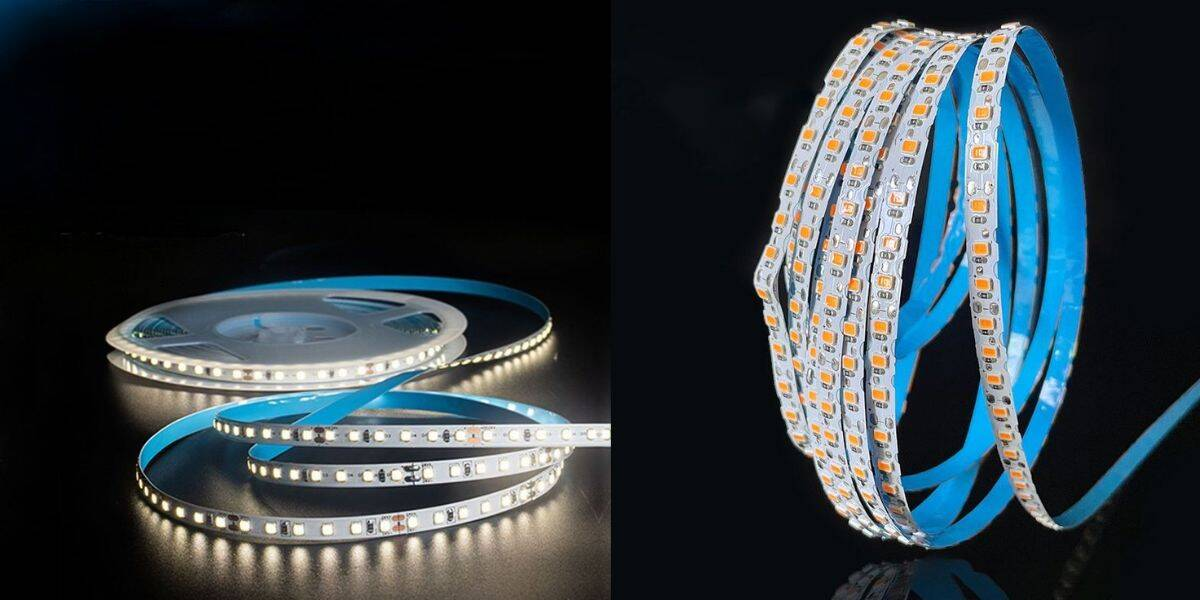
In the modern lighting landscape, linear accent lighting has transitioned from a decorative afterthought to a core architectural element. Whether integrated into coves, gypsum ceilings, retail displays, hospitality interiors, outdoor signage, or industrial control rooms, LED light strips have become foundational in delivering high-efficiency, flexible, and visually precise lighting solutions.


Yet, behind every stable and reliable LED installation lies an equally important component: the power system. Understanding the relationship between LED light strips and power supply is not only essential for efficiency but critical for long-term performance, photometric stability, project safety, and compliance with UL/CE/EMC standards. As LED technology evolves in 2026, the ecosystem around LED drivers, voltage selection, dimming protocols, and installation engineering is transforming rapidly.
This article provides a deep, industry-level exploration of LED strip + power supply engineering—covering system design principles, voltage selection, load calculations, wiring architecture, dimming integration, intelligent control, heat + PCB considerations, and emerging trends that lighting professionals should prepare for.
Why Power Supply Engineering Determines LED Performance
When LED strip failures occur in field projects, more than 70% of issues are connected to the power system—not the LEDs themselves. Common symptoms include:
- Brightness drop or inconsistent illumination
- Sudden failure after a few months
- Overheating power supplies
- Yellowing phosphor due to overcurrent stress
- Voltage drop causing dim ends
- Flicker when dimming
- EMI interference with nearby systems (for commercial installations)
From an engineering perspective, LED strips are current-driven semiconductor devices. They rely on stable, well-regulated DC power to maintain:
- Consistent lumen output
- Accurate color temperature
- LED junction temperature stability
- Driver IC lifespan
- Overall efficiency and safety
Therefore, the pairing of LED light strips and power supply must be executed with calculated precision, especially in 24/7 applications such as hotels, signage, and shopping malls.
Voltage Architecture: 12V, 24V, or 48V?
Voltage is the starting point of the entire system. As of 2026, the industry is shifting in the following pattern:
| Voltage | Main Advantages | Typical Applications |
|---|---|---|
| 12V | Low voltage drop, good for short runs; safer for small installations | Cabinet lighting, retail shelves, furniture |
| 24V | Best overall balance; longer runs; most professional-grade strips | Residential ceilings, hotels, commercial |
| 48V | Ultra-long run, low drop, centralized control | Stadiums, airports, facade lighting, industrial |
Why 24V dominates the industry today
- 24V systems reduce current by 50% compared with 12V
- Reduced current = reduced heat + reduced voltage drop
- Longer continuous runs (up to 10–15m depending on wattage)
- Better compatibility with DALI, 0-10V, and DMX power supplies
When 48V technology makes sense
In 2026, 48V is emerging rapidly, especially in:
- Architectural linear lighting
- Large-scale signage
- Commercial façade outlines
- Airports and transportation hubs
48V allows extremely long runs with fewer PSU locations, reducing installation labor and voltage drop engineering.
Wattage & Load Calculations: The Engineering Method
To size a power supply correctly, follow the standard load formula:
Power Supply Wattage = Total LED Load × 1.25 (25% safety margin)
Example:
- LED strip power: 14.4W/m
- Total length: 20m
- Total LED load: 14.4 × 20 = 288W
- Recommended power supply: 288 × 1.25 = 360W PSU
Why 25% Headroom?
Because power supplies operate most efficiently at 70–80% of rated output, providing:
- Lower heat buildup
- Higher driver efficiency
- Longer lifespan
- More stable performance during voltage fluctuations
Professional installers sometimes go up to 30–35% extra margin for 24/7 commercial jobs.
Voltage Drop Engineering: The Hidden Killer of LED Quality
Voltage drop becomes especially critical for:
- COB LED strips
- High-density strips (≥180 LEDs/m)
- High-power strips (20W/m–30W/m)
Symptoms include:
- Dimmer light at the far end
- CCT drifting warmer due to lower current
- Color inconsistency in RGB/RGBW strips
Three Solutions to Voltage Drop
1. Power from both ends
2. Use parallel power injection every 5–10 meters
3. Upgrade to 24V or 48V instead of 12V
Long-term projects—especially for hospitality—often standardize power injections at planned intervals to guarantee CCT uniformity.
Understanding Power Supply Types
There are five major PSU types used in today’s LED strip installations:
A. Non-Dimmable PSU (Basic)
- Pure DC output
- Most efficient and stable
- Not compatible with dimmers
Used in signage, industrial, and constant-output scenarios.
B. TRIAC-Dimmable PSU
- Compatible with household wall dimmers
- Requires high-quality dimmer for flicker-free output
Good for residential ceilings and restaurants.
C. 0–10V Dimmable PSU
- Industry standard for commercial dimming
- Smooth output, excellent for architectural lighting
- Requires control wires
Used in retail, hotels, office buildings.
D. DALI-2 Power Supply (2026 Industry Standard)
- Digital addressable
- Ideal for smart buildings
- High precision + individual fixture control
- Integrates with KNX, Lutron, Crestron
This is now the mainstream in high-end architectural lighting.
E. DMX Power Supply
- Designed for RGB, RGBW, Pixel lighting
- Instant response
- Required for large-scale dynamic façade lighting
Wiring Architecture & System Layout
In professional LED lighting projects, wiring architecture is not merely an installation detail—it is a core engineering decision that directly affects voltage stability, maintenance accessibility, scalability, and system lifespan.
A well-designed wiring topology ensures that LED light strips and power supply operate within optimal electrical parameters throughout the entire run, regardless of length or load variation.
A. Single-End Power Feeding (When It Works—and When It Fails)
Single-end power feeding is the most basic wiring method, where power is supplied from one end of the LED strip.
Recommended only when all of the following conditions are met:
- Strip length ≤ 5 meters (12V) or ≤ 10 meters (24V)
- Power density ≤ 10 W/m
- No strict color uniformity requirements
- Non-critical decorative applications
Engineering limitation:
As current travels along the copper traces of the strip PCB, resistive losses accumulate. Even with high-quality 2–4 oz copper PCBs, voltage drop becomes unavoidable in longer runs.
Result:
- Lumen decay at the far end
- Warmer CCT shift (especially noticeable in COB strips)
- Uneven RGB color mixing
This method is acceptable for small residential accents but not recommended for architectural or commercial projects.
B. Parallel Power Distribution (Industry-Standard Solution)
Parallel wiring is the preferred architecture in professional installations.
How it works:
Each LED strip segment is powered independently from the same power supply (or power distribution block), rather than daisy-chained.
Engineering advantages:
- Uniform voltage across all segments
- Balanced current distribution
- Reduced thermal stress on PCB traces
- Easier troubleshooting and replacement
This approach is widely adopted in:
- Retail lighting
- Hotel room coves
- Office ceiling lines
- Display shelving systems
Parallel architecture is strongly recommended when designing systems that combine high-density LED strips and power supply units above 150W total load.
C. Power Injection Engineering for Long Runs
Power injection is not a workaround—it is an engineering necessity for long or high-power LED strip runs.
Typical injection spacing guidelines (24V):
- ≤ 10 W/m → every 8–10 m
- 14–18 W/m → every 5–7 m
- ≥ 20 W/m → every 3–5 m
Injection can be done:
- From both ends
- From the middle
- Via parallel feeder cables
Critical engineering note:
Injection points must maintain common ground reference to prevent potential difference issues, especially in RGB/RGBW systems.
Well-designed injection layouts dramatically improve:
- Brightness consistency
- Color stability
- Long-term lumen maintenance
D. Centralized Power Supply Architecture (Commercial & Large-Scale Projects)
For large commercial environments, centralized driver layouts are increasingly preferred.
Typical use cases:
- Hotels
- Shopping malls
- Airports
- Stadiums
- Corporate headquarters
Key characteristics:
- Power supplies installed in service rooms or cabinets
- Often combined with 48V architecture
- Short low-voltage distribution lines
- Easy access for maintenance and replacement
This architecture simplifies:
- Fire safety planning
- Emergency lighting integration
- System upgrades
- Long-term asset management
In these systems, understanding how to properly connect LED light strips and power supply becomes essential for both installers and facility managers.
Thermal Engineering + PCB Structure
LED strips rely heavily on thermal stability. A well-designed system includes:
- Thick copper PCB
- Quality resistors / ICs
- Aluminum profile for heatsinking
- Proper driver current regulation
Key Indicators of Professional-Grade Strips
| Spec | Professional Level |
|---|---|
| Copper PCB | 2–4 oz |
| SDCM | ≤ 3-step |
| LM-80 LED Chips | Yes |
| R9 Value | > 80 (premium >90) |
| Warranty | 3–5 years |
| Certification | UL, CE, RoHS, EN62471 |
Dimming & Control Ecosystem Integration (2026 Update)
Lighting designers no longer consider strips as simple decorative elements. They expect:
- Smooth 0–100% dimming
- Flicker-free (IEEE 1789 compliant)
- Tunable white (CCT adjustable)
- RGBW color control
- Integration with BMS
- Low EMI output
Modern Control Protocols
| Protocol | Key Benefit |
|---|---|
| 0–10V | Smooth analog dimming |
| DALI-2 | Addressable, digital precision |
| DMX512 | Dynamic color, fast response |
| Bluetooth Mesh | Small-area smart control |
| Zigbee / Matter | Smart-home compatibility |
DALI-2 is expected to become the universal standard in smart commercial spaces by 2027.
Safety & Certification Engineering Considerations
Power supplies must follow strict certifications depending on the region:
- UL8750 / UL1310 (USA)
- CE EMC + LVD (EU)
- RoHS
- IP67/IP68 for outdoor use
- Class 2 for residential safety
For outdoor installations:
- Use silicone potting strips
- Choose IP67/IP68 PSU
- Add surge protection (>2kV recommended)
Future Trends (2026–2030)
1. 48V power architecture will dominate commercial spaces
HVDC (high-voltage DC) improves efficiency, reduces copper consumption, and supports long-distance runs.
2. DALI-2 + PoE hybrid lighting
More buildings will run lighting over Ethernet infrastructure with digital drivers.
3. Ultra-efficient drivers with 94–96% efficiency
Reducing heat is now a major competitive differentiator.
4. Integrated LED strip + driver modules
Pre-matched systems with guaranteed photometric stability.
5. AI-driven power distribution
Automatic fault detection, load balancing, and predictive maintenance.
Conclusion
In professional lighting engineering, LED strips should never be treated as standalone products. They are part of a power-driven system, where electrical design decisions determine visual quality, safety compliance, and operational lifespan.
Correctly pairing LED light strips and power supply affects:
- Brightness consistency
- Color accuracy
- Voltage stability
- Thermal performance
- Dimming smoothness
- Maintenance cost
- System scalability
For lighting designers, contractors, and specifiers, investing time in proper power system engineering is not an added cost—it is risk mitigation.
Projects that succeed long-term are those designed with:
- Accurate load calculations
- Adequate power headroom
- Thoughtful wiring architecture
- Certified, high-quality power supplies
- Clear understanding of how LED strips and power systems interact
When power engineering is done right, LED strip lighting delivers exactly what modern architecture demands: precision, reliability, efficiency, and control.