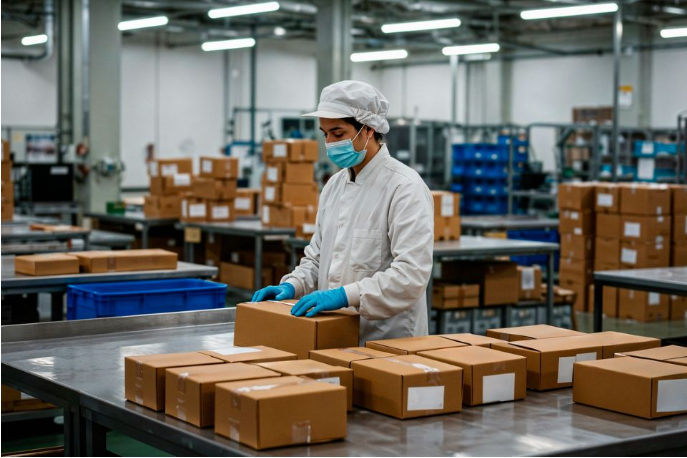
The pharmaceutical industry operates under more scrutiny than almost any other sector. Every pill, vial, and syringe that reaches a patient passes through a supply chain designed to protect both product integrity and public health. At the center of that supply chain sits the warehouse. What happens inside these facilities determines whether medications arrive safe, authentic, and ready to do their job. The companies that understand this are investing heavily in their storage and distribution capabilities. Those that treat warehousing as an afterthought risk losing access to key markets or facing costly compliance setbacks.


Regulations have tightened dramatically over the past decade. Modern pharmaceutical warehouses must meet standards that would have seemed excessive just fifteen years ago. Security systems track every person who enters and exits. Inventory management platforms log each product movement down to the individual unit. Documentation requirements have expanded to include everything from receiving logs to personnel training records. The facilities themselves need specific infrastructure for handling different product categories. Getting any of this wrong can trigger regulatory action that shuts down operations entirely.
The Compliance Challenge
Good Distribution Practice has become the baseline for pharmaceutical storage operations worldwide. The FDA enforces these standards through inspections that can happen with little advance notice. Inspectors want to see evidence that facilities maintain proper conditions, that staff receive appropriate training, and that documentation systems can produce complete product histories on demand. They look for gaps in procedures and inconsistencies in records. Documentation gaps, depending on their severity, can result in findings that damage relationships with manufacturers and delay product shipments.
The World Health Organization’s Good Distribution Practices guidelines establish minimum standards that apply across international markets. These cover everything from facility design to pest control programs. Warehouses must maintain sanitation schedules with documented cleaning procedures. Storage areas need protection from environmental contamination. Personnel handling products require verified training in proper techniques. The guidelines also address security measures designed to prevent theft, tampering, and diversion of controlled substances.
The Drug Supply Chain Security Act added another layer of requirements for companies operating in the US market. Serialization mandates mean every pharmaceutical package now carries a unique identifier that tracks its journey from manufacturer to patient. Warehouses must have systems capable of reading, recording, and transmitting this data at every handoff point. The goal is complete traceability that can identify and isolate compromised products within hours rather than weeks.
Security Has Become Non-Negotiable
Pharmaceutical products attract criminal attention because of their value. A single truckload of specialty medications can be worth millions of dollars. Warehouses storing controlled substances face even greater risks. The response has been a dramatic increase in security infrastructure across the industry.
According to analysis from Pharmaceutical Technology, maintaining product integrity ranks among the top priorities for logistics decision makers. Physical security now includes reinforced storage areas, biometric access controls, and surveillance systems that monitor every corner of a facility around the clock. Many operations require dual authorization for accessing high-value inventory. Background checks for personnel have become standard practice rather than optional policy.
Digital security matters just as much. Warehouse management systems contain sensitive data about inventory levels, shipping schedules, and customer information. A breach could enable targeted theft or allow counterfeit products to enter legitimate supply channels. Companies are investing in cybersecurity measures that match or exceed what they spend on physical protection.
Third-party logistics providers have stepped into this environment as essential partners. These specialists bring expertise that most pharmaceutical manufacturers cannot develop internally. Their facilities are purpose-built for regulatory compliance. Their staff is specifically trained in pharmaceutical handling protocols. For drug companies focused on research and development, outsourcing distribution to specialists makes strategic sense. It also provides geographic flexibility for companies launching products across multiple markets simultaneously.
Technology Transforms Operations
Automation has changed what happens inside pharmaceutical warehouses. Robotic systems now handle tasks that once required extensive manual labor. Automated storage and retrieval systems move products through facilities with precision that minimizes handling errors. Picking and packing operations run faster and more accurately than human workers could achieve consistently.
The real transformation comes from data. Modern warehouse management systems generate detailed records of every activity. Inventory counts update in real time as products move through receiving, storage, and shipping. Expiration dates trigger automatic alerts before products age out of usability. Lot tracking enables instant identification of affected inventory when quality issues arise.
Visibility platforms extend this information beyond warehouse walls. Manufacturers can monitor inventory levels at distribution centers across their network. Healthcare providers gain insight into expected delivery times for critical medications. Regulators can audit compliance remotely by accessing documentation systems directly. This transparency creates accountability throughout the supply chain.
Predictive analytics represent the next frontier. Machine learning algorithms analyze historical patterns to forecast demand fluctuations, identify potential compliance gaps, and optimize inventory positioning. Some systems flag anomalies that might indicate theft or diversion before losses become significant. The warehouses generating the most value are those converting their data into actionable intelligence.
What The Future Holds
The pharmaceutical warehousing market continues expanding. Industry analysts project it will exceed 31 billion dollars globally by 2030. Growth comes from multiple directions. The biologics pipeline keeps filling with products that require specialized handling. Generic drug production has globalized in ways that demand sophisticated distribution networks. Specialty pharmacies serving patients with complex conditions need reliable supply partners.
Consolidation is reshaping the competitive landscape. Larger logistics providers are acquiring regional operators to build national and international networks. Scale provides advantages in technology investment, regulatory expertise, and negotiating power with carriers. Smaller players are finding niches in specific therapeutic categories or geographic markets where specialized knowledge matters more than breadth.
Sustainability concerns have entered boardroom discussions. Warehouse operations consume significant resources. Packaging materials generate waste at an industrial scale. Forward-thinking providers are exploring energy-efficient facility designs, recyclable packaging alternatives, and route optimization that reduces transportation emissions. Balancing environmental responsibility with operational requirements will influence investment decisions for years to come.
The stakes extend beyond business metrics. Pharmaceutical warehouses sit between scientific innovation and patient care. Every product that moves through these facilities represents someone’s treatment plan. Getting storage and distribution right means medications work as intended when patients need them. Getting it wrong means compromised treatments and broken trust. The companies that recognize this responsibility are building operations worthy of what they handle. That commitment separates adequate logistics from excellent logistics in an industry where the difference matters.