Emergencies do not occur with warning, and being prepared in the workplace can make all the difference. The American Heart Association (AHA) reports that 10,000 cardiac arrests occur in the United States’ workplace each year. That is why Cardiopulmonary Resuscitation (CPR) training is essential for small enterprises. When employees understand how to respond to a medical emergency they can save lives.


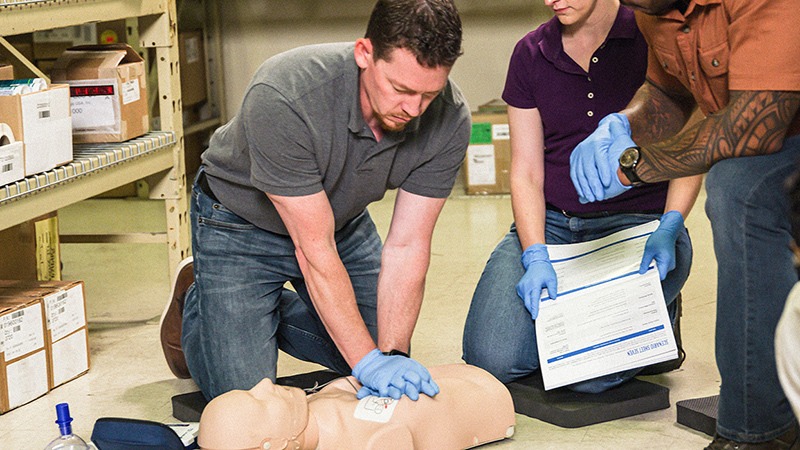
Occupational Safety and Health Administration (OSHA) recommends CPR certification as part of a comprehensive approach to workplace safety. For small businesses, getting managers and key team members trained shows a real commitment to keeping everyone safe. CPR certification programs teach life-saving skills like chest compressions, using an AED (Automated External Defibrillator), and what to do in different emergencies.
In this blog, we’ll break down why CPR training matters, what it includes, and how it can strengthen your overall safety program.
Why CPR Certification Is Required for Small Businesses
In small businesses like your local coffee shop, hair salon, boutique, or office, emergencies can catch everyone off guard. A customer might suddenly collapse, a coworker might choke during lunch, or a delivery person might show signs of a heart attack. In these moments, CPR (Cardiopulmonary Resuscitation) isn’t just useful, it’s essential.
This post breaks down how CPR directly benefits small teams, keeps your space safer, and helps your business stay ahead of risks.
1. Someone’s Life Might Depend on You
If a customer passes out or a team member has trouble breathing, waiting for an ambulance isn’t enough. CPR-trained employees can take action right away, helping keep blood and oxygen flowing until help arrives. It’s a skill that can literally save someone’s life in those first few critical minutes.
2. Your Staff Will Feel Safer and More Confident
When you work in a tight-knit team, knowing your coworkers are trained to handle emergencies builds trust. Staff feel more secure, especially if they’re working alone during slow hours or handling high-pressure situations.
3. Faster Response With the Right Tools
Many small businesses now keep an AED on-site. However, about 50% of U.S. workers cannot locate an AED at their workplace. Without training, most people don’t know how to use one. CPR certification teaches both the hands-on CPR techniques and how to use AEDs confidently, so employees don’t freeze when seconds matter.
4. Meets OSHA Recommendations and Industry Standards
CPR training is recommended by OSHA for safer workplaces, especially where public interaction is high. Some industries, like food service or childcare, may even require it. Having CPR-certified staff shows you’re taking safety seriously and staying compliant with health and safety guidelines.
5. Customers Notice When You’re Prepared
If something goes wrong in your store or office and your team jumps into action, it speaks volumes. Customers trust businesses that are calm under pressure and care about people. That trust can turn first-time visitors into loyal regulars.
6. Builds a Stronger, More Connected Team
CPR training is also a great team-building experience. It teaches problem-solving, communication, and teamwork under pressure skills that carry over into day-to-day work and improve how your team operates, even outside emergencies.
7. Reduces Long-Term Costs
Sure, training costs money up front, but it can save you more in the long run. Being prepared can reduce liability, lower insurance premiums, and prevent serious incidents that might disrupt business or lead to legal trouble.
Small Businesses that Require CPR Training
Medical emergencies can happen anywhere, but for certain types of small businesses, the risks are higher, and the need for a fast response is critical. That’s why CPR (Cardiopulmonary Resuscitation) certification isn’t just recommended in some cases; it’s required or strongly expected.
Below are the key business categories where CPR training is often essential for legal compliance, insurance requirements, or simply to keep people safe.
Healthcare-Adjacent Businesses
Examples: Elder care homes, rehabilitation centers, dental offices, clinics, and medical practices.
These workplaces deal directly with people who may already have health issues or are at higher risk of emergencies like heart attacks, choking, or falls. Having CPR-certified staff isn’t just a best practice; it’s expected. In many regions, state laws or licensing requirements make CPR and First Aid training mandatory for all staff.
Child-Facing Services
Examples: Daycares, nurseries, tutoring centers, schools, and after-school programs.
Children can be unpredictable, and emergencies like choking, allergic reactions, or breathing issues can escalate quickly. Most childcare regulations require at least one CPR-certified adult to be present at all times. Training must often include pediatric-specific CPR, which is different from adult techniques.
Fitness & Wellness
Examples: Gyms, yoga studios, martial arts centers, and personal training spaces.
These businesses involve physical activity, which increases the risk of sudden cardiac arrest, especially for clients with underlying health conditions. Industry guidelines and often insurance policies require trainers and instructors to hold current CPR/AED certification. It’s also a huge trust builder for clients.
Food Service & Hospitality
Examples: Restaurants, bars, food trucks, cafés, hotels.
Food-related businesses face a high risk of choking incidents and allergic reactions. CPR training ensures that staff can respond immediately if a customer or coworker has a medical emergency. While it may not be legally required everywhere, it’s highly recommended, especially for managers and front-of-house staff.
High-Risk Work Environments
Examples: Construction sites, factories, auto repair shops, and electrical and welding workshops.
Physical labor, heavy machinery, tools, and exposure to hazardous materials all increase the chance of injury. CPR along with First Aid training, is often required by OSHA or industry regulators to keep workers safe and reduce liability on the job site.
Remote or Isolated Locations
Examples: Farms, warehouses, delivery hubs, rural businesses.
In remote areas, emergency medical services (EMS) may take longer to arrive. Businesses in these settings are encouraged or required to ensure that at least one team member is CPR-certified and trained to use an AED. That way, help can be given immediately if someone’s life is at risk.
CPR Training: A Simple Step That Could Save a Life
In a small business, every second matters during an emergency. CPR certification is more than just a requirement. It shows your team is prepared, confident, and ready to act when it really counts. It’s a requirement based on the nature of the work, who you serve, and where you’re located. Whether it’s to meet legal standards or to protect your team and customers, investing in CPR training is a smart, often mandatory step toward a safer workplace. Ready to equip your team with life-saving skills? Enroll in our CPR training course today!