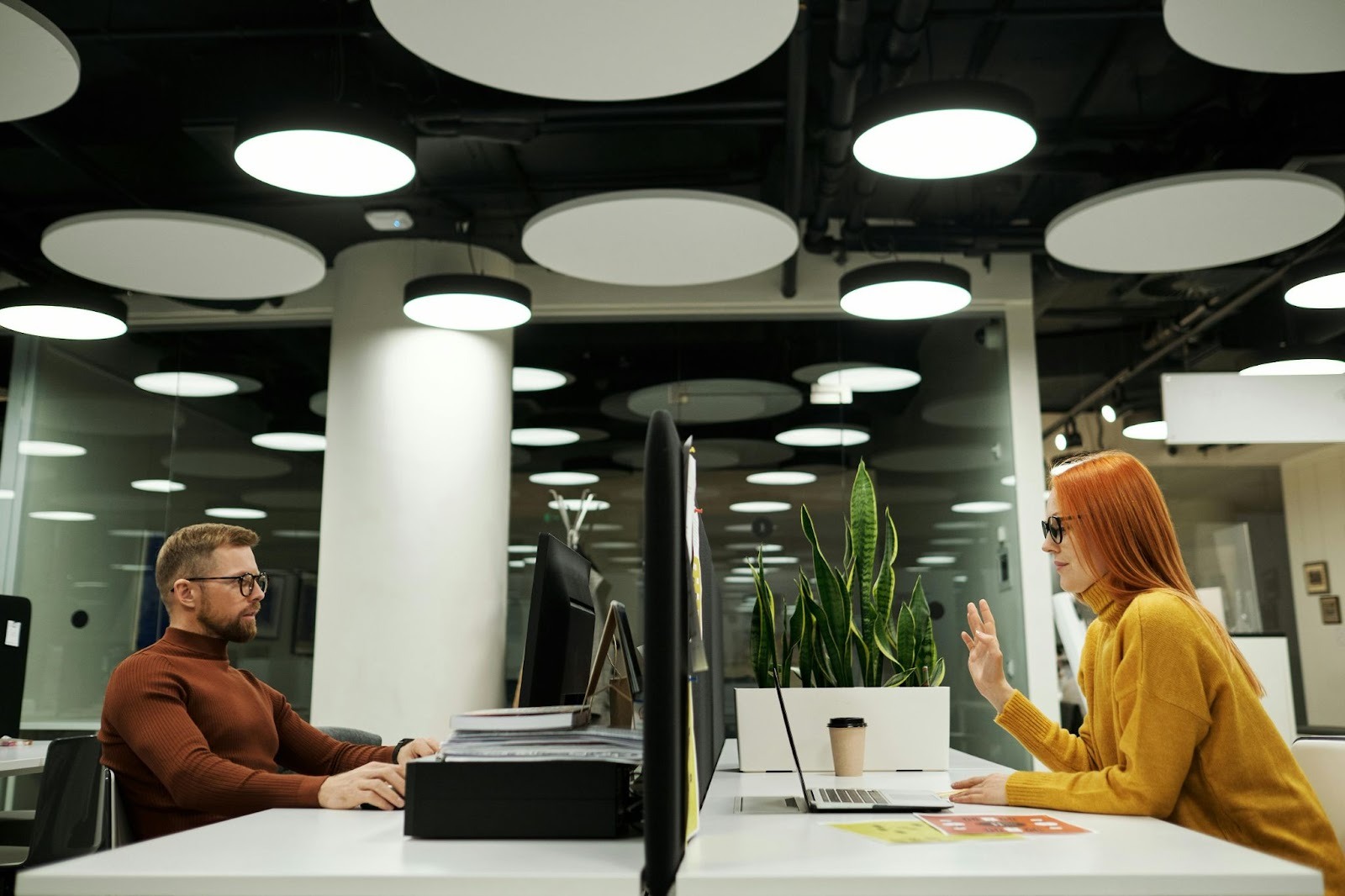
The modern office has undergone a radical transformation. We’ve traded cubicle farms for sprawling open-plan layouts and collaborative hubs. While this shift has boosted transparency and teamwork, it has introduced a silent productivity killer: noise pollution.


In 2026, creating a focused work environment isn’t just about aesthetics; it’s about managing sound. If your team is struggling with echoes, overheard conversations, and constant distractions, it is time to rethink your environment.
In this blog post, we will discuss about the modern office acoustic solutions.
Why Workplace Acoustics Matter for Productivity
Research consistently shows that auditory distractions can reduce cognitive performance by up to 66%. In an open office, the “cocktail party effect”—where you can’t help but tune into a nearby conversation—prevents deep work and increases employee stress levels.
Investing in workplace acoustics is more than a design choice; it is a strategic business move. High-quality sound management leads to:
- Enhanced Focus: Employees can complete complex tasks faster.
- Reduced Stress: Lower ambient noise levels decrease cortisol and mental fatigue.
- Speech Privacy: Critical for HR, legal, and executive discussions.
- Better Hybrid Meetings: Remote participants can hear clearly without the “hollow” sound of a reflective room.
Strategic Solutions for the Open-Plan Dilemma
The open-plan office isn’t going away, but it must be tamed. Effective acoustic design utilizes the “ABC” method: Absorb (panels), Block (screens), and Cover (sound masking).
High-Performance Wall Treatments
Sound bounces off hard surfaces like glass, concrete, and drywall. To stop the “ping-pong” effect of sound waves, you need vertical absorption. Acoustic wall panels are the most effective way to soak up mid-to-high frequency sounds, such as human voices.
Modern panels are no longer the drab, industrial blocks of the past. Today’s options include:
- 3D Textured Panels: Adding depth and visual interest while diffusing sound.
- Fabric-Wrapped Systems: Offering thousands of color options to match brand identity.
- Modular Designs: Allowing you to create custom art installations that double as sound absorbers.
Vertical Zoning with Baffles and Rafts
When wall space is limited, look up. Ceilings are often the largest reflective surface in a room. By suspending acoustic ceiling panels, acoustic baffles, or rafts, you catch sound waves before they can travel across the office. This is particularly effective in buildings with exposed soffits or industrial-style architecture.
Enhancing Privacy with Specialized Products
In a world of constant Zoom calls and “huddles,” privacy is a rare commodity. Businesses must provide areas where employees can speak freely without being overheard by the entire floor.
Acoustic Desk Screens: The Individual Shield
For heads-down work,acoustic desk screens provide a physical and auditory barrier between workstations. These screens:
- Attach directly to existing desks for a cost-effective upgrade.
- Utilize recycled PET materials for a soft, tackable surface.
- Reduce the travel of immediate voice noise by several decibels.
Meeting Room Optimization
Glass-walled meeting rooms are a design staple, but they are acoustic nightmares. Sound reflects off the glass, creating an echo that makes video conferencing difficult. Integrating discreet acoustic finishes or hanging rafts can normalize the room’s “reverberation time,” ensuring that every word is captured clearly by microphones.
Sustainability Meets Performance: The PET Revolution
In 2026, “green” building isn’t a luxury—it’s a standard. Many modern acoustic products are now manufactured from recycled PET (Polyethylene Terephthalate), which is essentially recycled plastic bottles.
Why choose recycled PET?
- Eco-Friendly: Diverts plastic waste from landfills and oceans.
- Non-Toxic: No formaldehyde or irritating fibers, making it safe for indoor air quality.
- Durability: Impact-resistant and easy to clean, unlike traditional fiberglass.
- Fire Safety: Most PET solutions come with high-level fire-retardant certifications.
How to Measure and Fix Poor Acoustics
You don’t need to be a scientist to know your office has a noise problem, but a professional assessment helps target the source.
1. The “Clap Test”
Walk into a meeting room and clap loudly. If you hear a ringing echo or a “flutter” sound, your reverberation time is too high. You need absorption.
2. Identify the Noise Sources
Is the noise coming from the HVAC system, outside traffic, or the “chatter” of the sales team? Identifying the source determines whether you need soundproofing (stopping sound from entering) or acoustic treatment (improving sound within the space).
3. Calculate Coverage
Generally, covering 15% to 30% of the wall and ceiling surface area with acoustic material will significantly transform the environment.
Summary of Modern Acoustic Options
| Product Type | Best For | Installation |
| Wall Panels | Echo reduction & aesthetics | Wall-mounted / Adhesive |
| Ceiling Rafts | Large open spaces | Suspended from the ceiling |
| Desk Screens | Individual privacy | Clamp-on / Freestanding |
| Baffles | High, industrial ceilings | Cable-hung |
| Fabric Panels | Meeting rooms & Studios | Track systems/Frames |
Conclusion
A quiet office is a productive office. By addressing the acoustic challenges of the modern workplace, you aren’t just buying panels; you are investing in the mental well-being and output of your team. Whether you are looking for a complete overhaul or a few targeted desk solutions, the goal is to create a space where people want to work.