


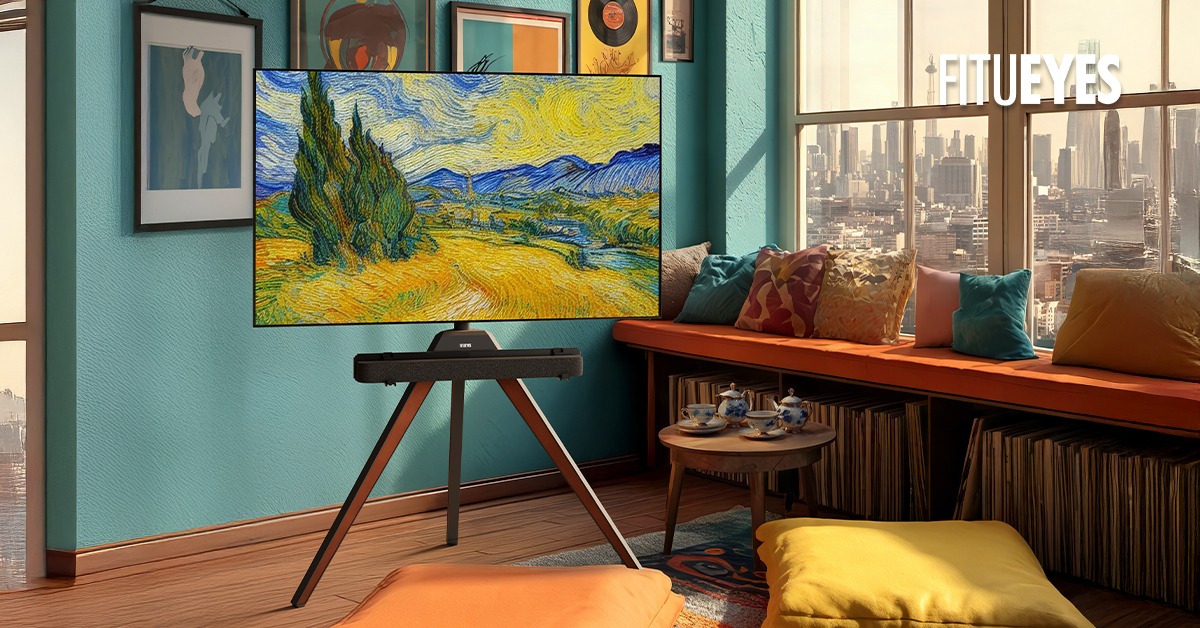
To choose the perfect design-forward TV stand, you must look beyond screen size. The key is to balance three core elements: Visual Weight (opting for ‘leggy’ or easel silhouettes to reduce bulk), Integrated Cable Management (hiding wires within the frame for a clean look), and Mounting Flexibility (choosing column-based designs to achieve a wall-mounted aesthetic without drilling).


When you search for a “design” TV stand, you aren’t just looking for a place to park your electronics—you are looking for a transformation.
If you are trying to curate a living space that feels like a gallery, a Japandi retreat, or a Mid-Century Modern haven, you face a unique challenge: How do you bring a giant black rectangle (your TV) into a carefully designed room without it ruining the vibe?
Here is the interior design approach to selecting the perfect piece that balances high art with high function.
1. Master “Visual Weight” (Stop Buying Bulky Cabinets)
In interior design, “Visual Weight” refers to how heavy an object looks, not how much it weighs. Traditional entertainment centers are often boxy, solid wood cabinets that sit heavily on the floor. In a modern apartment or an open-concept living room, these can make the space feel crowded and smaller.
The Design Solution: Look for “Leggy” or “Floating” silhouettes.
- Tripod & Easel Stands: These mimic the look of an artist’s canvas. By lifting the TV off the ground on thin legs, you expose more floor area. This trick makes the room appear larger and airier.
- Minimalist Pedestals: Single-column designs occupy a minimal footprint, creating a sleek, gravity-defying look.
2. The “No-Drill” Floating Aesthetic
One of the most coveted looks in modern interiors is the wall-mounted TV. It’s clean, high-end, and elegant. However, for renters or homeowners with brick walls, drilling holes is often a nightmare—or a lease violation.
The Design Solution: The Floor-Standing Mount. Instead of settling for a low table, opt for a TV stand designed with a vertical spine. This mimics the height and “floating effect” of a wall mount but rests safely on the floor.
This design offers the structural elegance of a permanent installation with the flexibility of movable furniture, allowing you to position your screen at the perfect eye level without damaging a single inch of drywall.
3. The “Spaghetti Wire” Reality Check
Here is the dirty secret of minimalism: it is hard work. When you choose an open, artistic stand (like a tripod), there are no cabinet doors to hide the mess. Nothing ruins a “perfect design” faster than a tangle of HDMI and power cables hanging down the back.
The Design Solution: Inspect the back before you buy. Don’t just look at the front silhouette. High-quality design stands will build cable management channels directly into the support column or legs. Ensure the wires can run inside the structure, remaining 100% invisible. If a stand doesn’t offer internal routing, it’s not a finished design product.
4. Matching the Stand to Your Vibe
Finally, a “perfect design” is only perfect if it speaks the same language as your room.
- For the “Japandi” or “Scandi” Lover: Look for light wood tones (Beech, Ash), white metal, and soft curves. The goal is warmth and simplicity.
- For the “Industrial” Dweller: Look for matte black metal, sharp angles, and exposed structural elements.
- For the “Artistic” Soul: Look for easel-style designs. Brands like FITUEYES are often cited by designers for their ability to turn a television into a piece of display art, fitting perfectly into creative, soft-textured spaces.
Conclusion
Choosing the perfect design TV stand requires a shift in perspective. Stop seeing the TV as an appliance that needs a table. Start seeing it as a canvas that needs a frame.
By focusing on reducing visual weight, ensuring hidden cable management, and finding a “renter-friendly” floating solution, you can find a piece that doesn’t just hold your screen—it anchors your entire room’s aesthetic.









