


Hills, sand, and loose terrain are where off-road riding stops being theoretical. These are the conditions that quickly reveal how a bike actually behaves once traction becomes unpredictable and mistakes are harder to recover from.


For riders new to electric dirt bikes, these surfaces often raise the same questions: Will an electric bike stall on climbs? Does sand expose weaknesses? Is loose terrain harder to manage without gears? The answers aren’t found in spec sheets, but in how electric power shows up when the ground starts working against you.
How Electric Dirt Bikes Approach Hills
Climbing hills is one of the first places riders notice how electric dirt bikes feel different. Instead of building revs or selecting the right gear, the focus shifts to throttle control and momentum.
Electric dirt bikes rely on consistent torque rather than bursts of power. On gradual climbs, this often feels intuitive. You roll on the throttle, the bike responds immediately, and the climb becomes about line choice and body position rather than engine timing. There’s no hesitation between input and movement, which can make maintaining traction easier on uneven slopes.
On steeper hills, the same principle applies. Successful climbs tend to be smooth rather than aggressive. Riders who rush the throttle often lose traction, while those who apply power steadily can keep the bike moving without drama. In this sense, hills reward patience more than power.
Riding Through Sand: What Changes with Electric Power
Sand is unforgiving. It amplifies every input and punishes sudden changes. This is true for any dirt bike, but electric power delivery makes the lesson more immediate.
In sandy sections, electric dirt bikes encourage a calmer approach. Smooth throttle application helps keep the rear tire floating rather than digging in. Because torque arrives instantly, small inputs matter more than they do on gas bikes. Abrupt throttle changes can break traction quickly, while gradual inputs help maintain forward momentum.
Riders often find that once they adjust their technique, sand becomes less intimidating. Instead of fighting the bike, they let it pull consistently while focusing on balance and direction. The bike doesn’t solve sand for you, but it makes your riding habits more obvious—good or bad.
Loose Terrain and the Importance of Throttle Control
Loose dirt, gravel, and scattered rocks are where predictability becomes crucial. These surfaces constantly shift under the tires, demanding subtle adjustments rather than aggressive corrections.
Electric dirt bikes tend to highlight throttle control in these conditions. With no delay between input and response, riders quickly learn how much power is too much. Gentle throttle application helps maintain stability, while sudden inputs can upset the bike.
This is where many riders start comparing how different electric dirt bikes respond across changing surfaces, rather than focusing on peak performance numbers. The bikes that feel easiest to manage are usually the ones that deliver power smoothly and consistently, allowing riders to react without overcorrecting.
Why Technique Often Matters More Than Specs
Challenging terrain has a way of exposing technique. On hills, sand, and loose surfaces, rider input matters as much as the machine itself.
Body position plays a major role. Keeping weight balanced, staying relaxed, and allowing the bike to move beneath you all contribute to better traction. Electric dirt bikes don’t remove the need for good technique—they simply make feedback more direct.
This can be an advantage. Riders receive immediate signals about what works and what doesn’t, which can speed up learning. Instead of masking mistakes with momentum or noise, electric bikes respond honestly to input, encouraging smoother riding habits over time.
When Electric Dirt Bikes Feel Different—and When They Don’t
There are moments when electric dirt bikes feel distinctly different from gas models. Tight climbs, technical sections, and low-speed terrain often highlight the benefits of consistent torque and immediate response. In these scenarios, riding feels deliberate and controlled rather than reactive.
In more open areas or higher-speed sections, the differences become less pronounced. Traction, suspension, and rider skill still dominate the experience. At that point, electric and gas bikes feel more alike than different, especially once riders settle into a steady pace.
This balance is why electric dirt bikes are increasingly viewed as a practical option rather than a novelty. They don’t rewrite the rules of off-road riding, but they do shift how riders interact with the terrain.
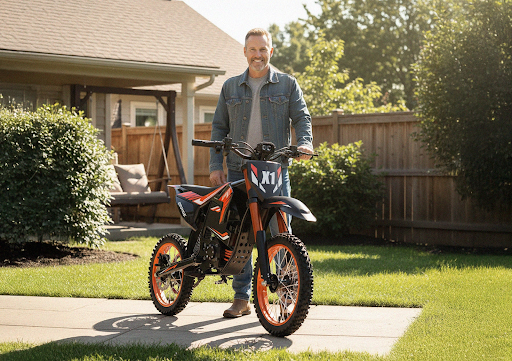
Some higher-output electric dirt bikes, including models like the Qronge X1 SPARK, illustrate how controllable torque and predictable response can matter more than raw speed when conditions become challenging.
Managing Expectations on Real Terrain
It’s important to approach electric dirt bikes with realistic expectations. Hills, sand, and loose terrain still demand attention, skill, and respect. Electric power doesn’t eliminate difficulty, but it can make responses more readable.
Riders who adapt their technique—using smoother throttle inputs, choosing cleaner lines, and maintaining balance—often find these bikes rewarding across varied terrain. Those expecting the bike to compensate for poor habits may struggle, regardless of power output.
Final Thoughts
Hills, sand, and loose terrain are where off-road riding becomes honest. These conditions reveal how a bike responds under pressure and how well it works with the rider rather than against them.
Electric dirt bikes handle these surfaces by emphasizing control, consistency, and rider input. They don’t flatten the learning curve, but they do make it clearer. For riders willing to adjust their approach, that clarity often leads to more confidence and a better overall experience on the trail.









